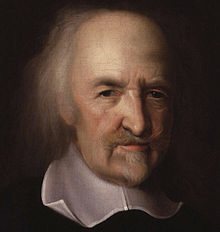
contract tradition; life in the state of nature is
"solitary, poor, nasty, brutish and short"
Influences: Aristotle, Thucydides, Euclid,
Grotius, Machiavelli, Galileo, Kepler, Francis
Bacon, Descartes, Zabarella, Montaigne
Influenced: Much of Western political
philosophy, including Spinoza, Locke, Hume,
Rousseau, Montesquieu, Vico, Strauss
From Wikipedia
Hobbes is best known for his 1651 book Leviathan, in which he expounds an influential formulation of social contract theory. He is considered to be one of the founders of modern political philosophy…. Hobbes contributed to a diverse array of fields, including history, jurisprudence, geometry, optics, theology, classical translations, ethics, as well as philosophy in general, marking him as a polymath. Despite controversies and challenges..., Hobbes's work profoundly influenced the understanding of political structure and human nature.
Introductory Comments
War has shaped philosophers and writers in surprisingly diverse ways. Homer made it the very theater of human existence, the place where heroism and honor are won. Machiavelli, watching Italy carved up by better-armed neighbors, concluded that a prince who clings to virtue will be devoured by those who don't. Tolstoy, who saw the siege of Sevastopol firsthand, eventually turned that horror into a thoroughgoing pacifism. Holmes, wounded three times in the American Civil War, came away distrusting absolutes and grand theories, legal or philosophical alike. And Sartre found in occupied France a laboratory for freedom, choice, and absurdity.
But no one absorbed war more deeply than Hobbes. The English Civil War - which sent him into a decade of exile in Paris - shaped nearly every corner of his thought: the state of nature as a "war of all against all," human nature as vain, grasping, fearful, and violent, government as the sole barrier against anarchy, and sovereignty as something that must be undivided and unopposed. Yet an irony sits at the center of the system. If men really are as Hobbes describes them, then the sovereign - being a man himself - is no better, and handing him everything is an open invitation to tyranny. Hobbes's answer: a tyrant still beats a civil war; plus, if the sovereign threatens your life, you may resist. (How reassuring. Hobbes ends the war of all against all by arming one man completely, then gives rest of us permission to duck. )
Some of Hobbes's Key Positions
In the state of nature, life is a war of every man against every man. Each person grasps at what others also want, defends himself against attack, or avenges injuries already suffered. In such a condition there is no room for industry, no leisure for culture, no opportunity for learning, and - worst of all - no relief from continual fear.
To escape this misery, men covenant with one another to lay down much of their natural liberty and transfer it to a sovereign power strong enough to keep the peace. Hobbes thought a single monarch the safest bearer of that power, but his argument admits an assembly as well; what matters is that sovereignty be undivided. The sovereign alone settles disputes between subjects and commands civil, military, judicial, and ecclesiastical affairs. Divided authority, in Hobbes's view, is merely civil war postponed.
Once the covenant is made, subjects have no right to rebel. The sovereign is not a party to the contract and so cannot breach it, and any injustice he commits is a price worth paying for peace. We must quietly endure such injustices - except in the one case reason cannot sign away: self-defense against immediate mortal danger.
But the bargain cuts both ways. If the sovereign grows too weak to protect his subjects, their obligation to obey him lapses - protection was the whole point of the arrangement to begin with.
Place in the History of Ideas
Hobbes's Place in History of Ideas
J. C. A. Gaskin: No more comprehensive, tightly structured, and closely argued political philos- ophy exists than Hobbes set out in Leviathan. It shocks our conventional assumptions, and it is disquieting.... To cure our political ills and contain the state of war we may have to submit to governments we thoroughly dislike. The most prevalent and powerful human traits of human nature are unpleasant and socially destructive. It is this insight which touches a raw nerve of truth with so many readers. Mod- ern man... is ominously close to Hobbes's ac- count of us - competitive, acquisitive, posses- sive, restless, individualistic, self-concerned, and insatiable in our demands.... It is this point of realism which almost all other political philosophies underestimate, and which Hobbes gets memorably right....
Mary Whiton Calkins: The allusions of Locke and Berkeley to "that atheist Hobbes" reflect the opinions of the generations following.... True, he... teaches that God is corporeal, but only in the sense in which, as he believes, men, also, are purely corporeal. However theoreti- cally unjustified the doctrine, it is certainly compatible - as Hobbes holds it - with religious teaching.... In a word, Hobbes was unfairly treated; his reputation suffered unjustly; and - more unfortunate than all - the suspicion of his atheism kept people from the study of his vigorous metaphysics and his acute psychology.
Random Thoughts on Hobbes
So much of Hobbes's political philosophy hangs on his idea of the "state of nature" - life before governments, laws, and grocery stores. Hobbes's verdict: pre-civilized existence was "solitary, poor, nasty, brutish, and short." (One might add: mercifully short.) Rousseau took the opposite view, imagining pre-civilized life as peaceful, even idyllic, unspoiled by the vanities and corruptions civilization would later invent.
Neither man, it should be said, had actually been out there conducting interviews. This wasn't fieldwork; it was philosophy doing what she often does - inventing a backstory to prop up a political theory. Still, the question of who guessed better is too juicy to resist, and Steven Pinker, armed with actual historical and archaeological evidence, hands the trophy to Hobbes. Pre-state societies, Pinker finds, really were violent - just not quite the nonstop bloodbath Hobbes imagined. And Pinker gives real credit to the rise of centralized states - with their courts, laws, and police.
Where Pinker breaks from Hobbes is on that word "solitary." Turns out early humans weren't lone wolves snarling at each other from separate caves - they lived in groups, cooperated, and had rules, however informal, for keeping the peace. Our ancestors may have been poor, and nasty, and brutish, but they weren't loners - which is a good thing, too, since a species of hermits would never have invented civilization in the first place.
Bentham (Our ultimate motive is always to experience pleasure and avoid pain.)
Democritus (Everything is the result of natural laws related to matter & motion)
Hooker (In the state of nature nothing constrains the perilous conflict of wills.)
Humboldt, W. (Freedom should be restricted only to prevent harm to others.)
Maistre (A strong & stable government requires loyality to a strong monarch.)
Schmitt (A strong leader must at times be above the law for the general good.)
Skinner (Our behavior can be reduced to matters of stimulus and response.)
Thinkers with opposing positions:
Bakunin (The state is an instrument of class rule of the rich over the masses.)
Butler, Joseph (Human motives are less selfish and simple than cynics claim.)
Davidson (Though mind springs from matter, it can't be reduced to matter.)
de Beauvoir (We can neither escape our personal freedom nor give it away.)
Durkheim (In modern society, the individual is the focus of rights & duties.)
More (Obedience to God must always transcend obedience to the sovereign.)
Peirce (Both mechanical necessity & absolute chance are at work in the world.)
Proudhon (All forms of absolutisms are evil: government, capitalism & religion.)
Strauss (A just and virtuous society needs a reliable set of moral beliefs.)
What others said about Hobbes
Rawls: Hobbes's "Leviathan" is the greatest single work of political thought in the English language.
Hayek: The primitive individualism described by Thomas Hobbes is hence a myth. The savage is not solitary, and his instinct is collectivist. There was never a "war of all against all."
Cassirer: [Hobbes's] charge against scholasticism is that it thought it could understand being, while in reality it considered being merely as a passive something with static properties and characteristics. This resulted in failure to grasp the structure of corporeal nature as well as that of thought, for both nature and thought are comprehensible only in process.
Burtt: Our current conception of mathematics as an ideal science, of geometry in particular as dealing with an ideal space, rather than the actual space in which the universe is set, was a notion quite unformulated before Hobbes....
Dennett: Thomas Hobbes was the first sociobiologist, two hundred years before Darwin.
John Richard Green: His hard and narrow logic dissected every human custom and desire, and reduced even the most sacred to demonstrations of a prudent selfishness. Friendship was simply a sense of social utility to one another.
Berlin: [Hobbes] thought that a good deal of coercion was needed to prevent human beings from destroying each other, from ruining each other's lives, from creating conditions in which life would be perilous, nasty, brutish and short for the vast majority of society. Therefore he left the area for individual liberty rather small.
Schmitt: [His insights sprang from] the terrible times of civil war, because then all legitimate and normative illusions with which men like to deceive themselves regarding political realities in periods of untroubled security vanish.
Main interests: Causality, Classics, Death, Desire, Equality, Ethics, Free/Unfree Will, Game Theory, Geometry, Government, Habits, History, Jurisprudence, Language, Law, Optics, Physics, Political Philosophy, Political Theory, Politics, Power, Property, Public Administration, Punishment, Social Philosophy, Theology, War, Wealth, Will