Pierre-Joseph Proudhon (1809 - 1865)
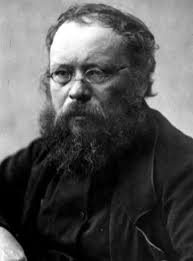
Open Proudhon's interactive page (graphs of influences, similar and opposing positions, and quotes)
Background
Pierre-Joseph Proudhon
Born: 15 January 1809 in Besançon, France
Died: 19 January 1865 (aged 56) in Paris, France
Schools: Socialism, anarchism, mutualism
Main interests: Liberty, property, authority,
poverty, social justice, egalitarianism, politics,
political philosophy
Notable ideas: Property is theft, anarchy is
order, economic federation, anarchist
gradualism, dual power
Influences: Hugo Grotius, Rousseau, Hegel,
Charles Fourier, Louis Blanc, Henri de Saint-
Simon, Cicero, Victor Cousin
Influenced: Marx, Bakunin, Joseph Déjacque, S.
Gesell, G. Sorel, Kevin Carson, Benjamin
Tucker, Mário Ferreira dos Santos, Buber,
Chomsky, Kropotkin, William B. Greene,
Tolstoy, Emma Goldman, Jacques Ellul, Émile
Armand, Alexander Herzen, Heliade Rădulescu
From Wikipedia
Proudhon was a French anarchist, socialist, philos- opher, and economist who founded mutualist philosophy and is considered by many to be the "father of anarchism." He was the first person to call himself an anarchist, using that term, and is widely regarded as one of anarchism's most influential theorists….. Proudhon described the liberty he pursued as the synthesis of community and individualism. Some consider his mutualism to be part of individualist anarchism while others regard it to be part of social anarchism.
Introductory Comments
A surprising number of freethinking writers began their working lives in a print shop: Franklin, Whitman, Twain, Howells, Bierce - and Proudhon. Why should setting type breed heresy? The simplest answer may be the best: printing was the one manual trade that required its apprentices to read. So the shop handed him literacy as a tool of the job and then left a library lying about in pieces. Other explanations suggest themselves. Printing sat at the crossroads of hand labor and intellectual work, an awkward place to stand and a useful one to think from. A compositor met heretical books on the same terms as pious ones, as so many letters to be picked up and set down, and that is not a posture that encourages reverence. The shop itself was noisy, collaborative, and full of argument, since printers were the first men in town to know what was in the pamphlets they ran off.
Proudhon is the case in point. He came to philosophy, law, and theology not as a student but as a worker setting their type, and then as a proofreader paid to catch other men's mistakes. Whether the trade made the thinker is unprovable - plenty of compositors set the same pages and went home untroubled - but it is hard to miss the marks it left on his prose. Proudhon writes in short, hard, portable strokes, like a man who has learned exactly how much a sentence weighs when it must be lifted one letter at a time. Nothing he wrote traveled further than the three words of 1840: property is theft.
Some of Proudhon's Key Positions
Workers will never take the economy from capitalists and financiers by political means. They must build the new order inside the shell of the old, through voluntary association: producers' and consumers' cooperatives, and above all mutual-credit institutions that lend at cost instead of at interest.
Government of man by man is oppression, differing from the exploitation of man by man in form rather than in kind. No just society has room for a master. Justice rests on reciprocity - equal exchange between equals, each party recognizing the other's dignity - and anarchy, meaning the absence of a master rather than the absence of order.
Nor need anarchy collapse into chaos. Liberty is the mother of order, not its daughter. Order arises from the countless agreements people make when nobody compels them, so contract freely negotiated should replace law imposed from above: workshops, communes, and regions binding themselves by terms they can revise, federating upward instead of being administered downward.
Property shows this most clearly. The famous charge that property is theft is aimed not at the tools a man uses or the plot he works, but at the owner's power to draw an income from land and capital he does not touch. Possession grounded in use is liberty; proprietorship that lets an absentee collect rent is theft.
Place in the History of Ideas
Proudhon's Place in History of Ideas
George Woodcock: In 1840, Pierre-Joseph Proudhon, that stormy, argumentative individualist who prided himself on being a man of paradox and a provoker of contradiction, published the work that established him as a pioneer libertarian thinker. It was What Is Property?, in which he gave his own question the celebrated answer: "Property is theft." In the same book he became the first man willingly to claim the title of anarchist.
David Hargreaves: [Proudhon] was denouncing the property of the man who uses it to exploit the labor of others without any effort on his own part, property distinguished by interest and rent, by the impositions of the non-producer on the producer. Towards property regarded as "possession" the right of a man to control his dwelling and the land and tools he needs to live, Proudhon had no hostility; indeed, he regarded it as the cornerstone of liberty, and his main criticism of the commu- nists was that they wished to destroy it.
David Harvey: Proudhon in effect took the spe- cifics of bourgeois legal and economic relations and treated them as universal and foundational for the development of an alternative, socially just economic system. From Marx's standpoint, this is no alternative at all since it merely re-inscribes bourgeois conceptions of value in a supposedly new form of society.
Random Thoughts on Proudhon
Long before Proudhon declared "Property is theft," Rousseau had said much the same thing: "The first man who, having enclosed a piece of ground, bethought himself of saying 'This is mine', and found people simple enough to believe him, was the real founder of civil society." Rousseau went on to imagine a benefactor who tore up the stakes and shouted that the fruits of the earth belong to everyone. Close enough to Proudhon to look like the same claim. It isn't. Rousseau is telling a story about how civil society got started, not filing charges against a going concern. And his settled view of property, stated plainly elsewhere, is that it is a sacred right citizens - that the social contract takes the shaky possession of the strong man and converts it into lawful property.
Rousseau's story ends where Proudhon's begins: with the state standing guard over the fence. That is not Proudhon's cure. That is his disease. Not that Proudhon condemned possession. A man might legitimately occupy a house, work a farm, or own the tools of his trade. What he prosecuted under the name of property was the owner's legal power over resources he never touches, and above all the power that lets one person draw an income from another person's labor. The crime is not working a piece of ground and eating what it yields. The crime is holding the deed while someone else does the working, and collecting at the gate. Rousseau's first proprietor, whatever else may be said against him, at least built his own fence.
Influences
Proudhon was influenced by: Blanc, Louis, Cicero, Cousin, Fourier, Grotius, Hegel, Rousseau, Saint-Simon
Proudhon influenced: Armand, Emile, Bakunin, Buber, Carson, Kevin, Chomsky, Dejacque, J., Ellul, Jacques, Ferreira, M., Gesell, Silvio, Goldman, Greene, W.B., Herzen, Kropotkin, Marx, Radulescu, H., Sorel, Tolstoy, Tucker, B.
Similar and opposing positions
Thinkers with similar positions:
- Bakunin (To be free, every form of hierarchical authority must be rejected.)
- Camus (The rebel identifies himself with other men & so surpasses himself.)
- Godwin (Mankind is perfectible if freed from repressive social structures.)
- Goldman (Anarchism is the liberation from oppression of govt. & religion.)
- Kafka (Law is often no more than the pure, immoral force of domination.)
- Kropotkin (A communist republic based on a strongly centralized state will fail.)
- Tolstoy (Though anarchism is a noble cause, violent revolution is terrible.)
Thinkers with opposing positions:
- Agamben (The law is always the best guarantor of human freedom & rights.)
- Carlyle (The history of the world is but the biography of great men.)
- Cicero (Liberty is the power to do that which is permitted by law.)
- Hegel (Freedom springs not from within, but from our belonging to a state.)
- Hobbes (Government was created to protect people from one another.)
- Maistre (A strong government requires loyality to a strong monarch and church.)
- Montesquieu (Government excesses can be avoided thru' checks & balances.)
- Rothbard (All services provided by govt. should be given to the private sector.)
- Ruskin (Truth, beauty, and religion are inextricably bound together.)
What others said about Proudhon
- Bakunin: Proudhon is the master of us all.
- George Woodcock: Proudhon conceiving a natural law of balance operating within society, rejects authority as an enemy and not a friend of order, and throws back at the authoritarians the accusations leveled at anarchists....
- George Lichtheim: It is difficult to name a single author, alive or dead, of whom Proudhon ever found anything good to say. His other crochets included antisemitism, Anglophobia, tolerance for slavery..., dislike of Germans, Italians, Poles - indeed of all non-French nationalities - and a firmly patriarchal view of family life.
- Marx: Not only does Proudhon write in the interest of the proletarians, he is himself a proletarian, an ouvrier. His work is a scientific manifesto of the French proletariat.
- Robert Graham: Proudhon's market socialism is indissolubly linked to his notions of industrial democracy and workers' self-management.
- Erik von Kuhnelt-Leddihn: Proudhon in spite of his anticlericalism (which abated toward the end of his life) was deeply imbued with Christian moral principles.
- Marx: In France, Proudhon has the right to be a bad economist because he is reputed to be a good German philosopher. In Germany, he has the right to be a bad philosopher because he is reputed to be one of the ablest of French economists. But being both a German and an economist, I wish to protest against this double error.
- George Woodcock: Proudhon was a voluntary hermit in the political world of the nineteenth century. He sought no followers, indignantly rebuffed suggestions that he had created a system of any kind....
Schools: Anarchism, Atheism, Socialism
Main interests: Commerce, Economics, Equality, Freedom, Government, Justice, Political Activism, Political Philosophy, Politics, Property, Revolution, Social Philosophy
Proudhon's answers to philosophical questions
Economics
Economic production should be controlled by the workers. When this happens, economic valuations will develop naturally.
"Communism is essentially opposed to the free exercise of our faculties, to our noblest desires, to our deepest feelings."
Property rights should evolve naturally. When property is regulated by government, it is little more than a type of theft.
History
The story of civilization is one of progress, though it will not be perfected until government is no longer needed nor desired.
Law
"[Laws] are spider webs for the rich and mighty, steel chains for the poor and weak, fishing nets in the hands of government."
"I protest against every order with which some authority [makes] on the basis of some alleged need to over-rule my free will."
"The law does not generate justice. The law is nothing but a declaration and application of what is already just."
Political Philosophy
"To be GOVERNED is to be watched, inspected, spied upon, directed..., regulated..., indoctrinated, preached at, controlled…."
No form of government is just, since it is never just for man to rule over man. Only anarchy respects the equality of man.
"Democracy is nothing but the Tyranny of Majorities, the most abominable tyranny of all, for it… rests merely upon numbers."
"Whoever puts a hand on me to govern me is an usurper and a tyrant; I declare him my enemy."
Revolution isn't needed, but we must demand our rights: "The great are only great because we are on our knees. Let us rise."
"Property is exploitation of the weak by the strong. Communism is exploitation of the strong by the weak."
Sex and Gender
Gender inequalities are proper and inevitable. To a woman, a man is "a father, a chief, a master: above all, a master."
Society
"The downfall and death of societies are due to the power of accumulation possessed by property."
Unrestrained capitalism must end. Property ownership should be scaled down to the needs of peasants and artisans.