Carl Schmitt (1888 - 1985)
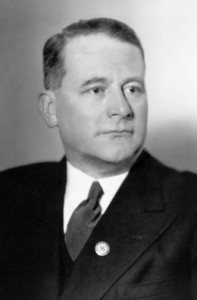
Open Schmitt's interactive page (graphs of influences, similar and opposing positions, and quotes)
Background
Carl Schmitt
Born: 11 July 1888 in Plettenberg, Prussia
Died: 7 April 1985 (aged 96) in Plettenberg,
North Rhine-Westphalia, West Germany
Alma mater: Univ. of Berlin, Univ. of Munich,
Univ. of Strasbourg (Dr.jur.,; Dr.habil.,)
Schools: Continental philosophy, Conservatism,
Nazism (1930s–1945), Decisionism, Realism
Main interests: Politics, Jurisprudence, Political
theology, Philosophy of religion
Influences: Hobbes, Burke, Juan Donoso Cortés,
Joseph de Maistre, Kierkegaard, Max Weber,
Machiavelli, Rousseau, Max Stirner, Augustine,
Georges Sorel, Vilfredo Pareto, Louis de Bonald
Influenced: Jaime Guzmán, W. Benjamin, Leo
Strauss, Arendt, Derrida, Antonio Negri, Jacob
Taubes, Žižek, Alain de Benoist, G. Agamben,
Chantal Mouffe, Habermas, Ernst Jünger, R.
Koselleck, Hermann Heller, F. P. Yockey
From Wikipedia
Carl Schmitt was a German jurist, political theorist, and prominent member of the Nazi Party.... A conservative theorist, he is noted as a critic of parliamentary democracy, liberalism, and cosmopolitanism, and his work has been a major influence on subsequent political theory, legal theory, continental philosophy, and political theology, but its value and significance are controversial, mainly due to his intellectual support for and active involvement with Nazism.
Introductory Comments
For large modern states, representative democracy has long seemed the sensible compromise: rule by the people, but at one remove. Citizens elect officials who, in theory, have the time, expertise, and judgment to wrestle with complicated questions, and who must face the voters again if they get them wrong. The people supply the legitimacy; their representatives supply the deliberation. It is democracy with a chaperone, making sure the people's will is properly dressed before it appears in public.
Carl Schmitt thought the chaperone had taken over the dance. He did not reject democracy as such. He was, in fact, rather taken with the image of a people acclaiming its leader. What he rejected was liberal parliamentarism, the faith that good government emerges from open debate among representatives. That faith, he argued, had curdled into backroom bargaining. Worse, its habit of endless discussion left the state helpless at the very moment it most needed to act. The true test of a government was the crisis no rule anticipates, and the true question was who would decide. A state needed a sovereign, not a debating society.
Ideas have consequences, though how directly can be argued. In 1932 Schmitt was advising the last Weimar governments, and some scholars read him as hoping emergency powers might keep the Nazis out. By May 1933 he had joined the party and was making legal arguments for the new regime.
Some of Schmitt's Key Positions
Every legal order presupposes a normal situation that the law itself cannot guarantee. In a genuine emergency, no statute can say in advance what must be done. Someone must decide, and that decision cannot be governed by the law it suspends. Hence: sovereign is he who decides on the exception. The exception plays the role in jurisprudence that the miracle plays in theology, for the concepts of the modern state are secularized theological concepts.
A constitution should therefore allow for "commissarial" dictatorship: temporary, bounded emergency rule that aims to restore the constitution, not replace it.
Liberal parliamentarism has outlived its justification. It claims legitimacy from open, rational debate, yet the real bargains are struck by party leaders in closed committees. Its faith in endless discussion also leads it to evade the decisions on which political survival depends.
Liberalism and democracy can conflict. Democracy means an identity between rulers and ruled, grounded in a shared political will. A strong leader claiming to embody that will, and receiving popular affirmation, might therefore be more democratic than a parliament divided by competing interests. Such a leader might also be more responsive since he need not be bogged down with committees and backroom deals.
Place in the History of Ideas
Schmitt's Place in History of Ideas
Perry Anderson: Schmitt began his career as the most original Catholic adversary of socialism and of liberalism. In polemics of electric intensi- ty, whose charge was increasingly aimed at the precarious parliamentarism of post-Versailles Germany, he treated their ideas as dilute theol- ogies, which were bound to prove weaker than the force of national myth. His own positive doctrine became a neo-Hobbesian theory of politics. Its critical edge was to protect the state of nature depicted in Leviathan, the war of all against all in which individual agents are pitted against each other, onto the plane of modern collective conflicts: thereby transforming civil society itself into a second state of nature. For Schmitt, the act of sovereign power then becomes not so much the institution of "mutual peace" as the decision fixing the nature... of any community, by dividing friend from foe - the opposition that defines the... political as such.
Buber: For Schmitt’s thesis carries a situation of private life, the classic duel situation, over into public life. This duel situation arises when two men experience a conflict existing between them as absolute, and therefore as capable of resolution only in the destruction of the one by the other. There is no reconciliation, no mediation.... Every classic duel is a masked "judgment of God."... That is what Schmitt... calls the specifically political. But the thesis rests on an error of method.
Random Thoughts on Schmitt
Some authors, like some houseguests, refuse to leave. Schmitt’s service as the Third Reich’s legal apologist should have consigned his work to a shelf marked "Handle With Tongs," and for a few decades after the war it largely did. Yet since the 1980s he has enjoyed a revival improbable enough to startle his old enemies. He is now read on the left as well as the right, by critics of liberalism who agree on almost nothing except a suspicion that Schmitt saw something. Few of them want his cure. What draws them is the diagnosis. Constitutions can meet emergencies they cannot contain. Parliamentary debate can be a costume worn by naked power. And elected assemblies can drift far from the people they claim to represent.
It is hard not to hear echoes. Citizens of modern democracies regularly complain that their legislatures are gridlocked, that money and organized interests speak louder than voters, and that their representatives would rather fight each other than solve anything. After 2001, Schmitt’s "state of exception" became a live phrase in arguments over emergency powers, surveillance, and detention. But here lies the trap. Schmitt’s diagnosis of a paralyzed parliament came packaged with a remedy: a sovereign who decides. Every frustration with gridlock is a quiet invitation to that remedy, and Weimar showed where it leads. The less thrilling answer is that democracies must repair their own machinery, with patience, compromise, and voters who pay attention.
Influences
Schmitt was influenced by: Augustine, Bonald, Burke, Cortes, Juan D., Hobbes, Kierkegaard, Machiavelli, Maistre, Pareto, Rousseau, Sorel, Stirner, Weber
Schmitt influenced: Agamben, Arendt, Benjamin, Benoist, A. de, Derrida, Guzman, J., Habermas, Junger, Ernst, Mouffe, C., Negri, Strauss, Taubes, Jacob, Zizek
Similar and opposing positions
Thinkers with similar positions:
- Evola (Liberal democracy represents an ignoble trend towards mediocrity.)
- Gentile (The state is the source of all authority and the object of all loyalty.)
- Hegel (Freedom springs not from within, but from our belonging to a state.)
- Hobbes (The sovereign is not bound by any higher laws: He makes the laws.)
- Sorel (Social myths are powerful tools to mobilize a society for action.)
Thinkers with opposing positions:
- Agamben (The law is always the best guarantor of human freedom & rights.)
- Benjamin (In govt. a "state of emergency" is inherently a state of violence.)
- Fromm (Authoritarianism is never justified. We must hold onto our freedom.)
- Godwin (Mankind is perfectible if freed from repressive social structures.)
- Grotius (International disagreements should be settled via law, not via war.)
- Herder (National identity is a good thing but not when it glories over others.)
- Humboldt, W. (Freedom should be restricted only to prevent harm to others.)
- Jaspers (Our freedom is threatened by modern science, economics and politics.)
- Jung (The replacement of God with the state leads to alienation & fanaticism.)
- Nozick (Rights are best secured by minimal state limited to narrow functions.)
- Stirner (The state should be replaced with a voluntary union of egotists.)
What others said about Schmitt
- Agamben: The most rigorous attempt to construct a theory of the state of emergency can be found in the work of Carl Schmitt.
- Lars Vinx: Schmitt was an acute.... analyst of the weaknesses of liberal constitutionalism and liberal cosmopolitanism. But there can be little doubt that his preferred cure turned out to be infinitely worse than the disease.
- Udi Greenberg: In the modern era, Schmitt explained, countries had to choose between two options: to let the domestic struggle between parties and groups paralyze policymaking..., or to transfer all power to a strong leader, who would disband the parliament, abolish opposition, and have the authority to impose economic and political policies.
- Hayek: The conduct of Carl Schmitt under the Hitler regime does not alter the fact that, of the modern German writings on the subject, his are still among the most learned and perceptive.
- Andrew Heywood: [In Schmitt's view,] politics reflects an immutable reality of human existence: the distinction between friend and enemy.
- Raphael Gross: [Schmitt's work] cannot be reduced to Roman Catholic theology given a political turn. Rather, Schmitt should be understood as carrying an atheistic political-theological tradition to an extreme.
- Strauss: [Schmitt believes that ] because man is by nature evil, he therefore needs dominion. But dominion can be established, that is, men can be unified only in a unity against other men. Every association of men is necessarily a separation from other men.
- Udi Greenberg: Schmitt thus acidly dismissed the parliament as an empty shell that was irrelevant to modern politics. Germany had to dispose of it altogether and reconstitute itself as an authoritarian dictatorship.
Schools: Conservatism, Continental Philosophy, Nationalism
Main interests: Government, International Law, Jurisprudence, Just War, Law, Political Philosophy, Political Theory, Politics, Power, Religion, War
Schmitt's answers to philosophical questions
Ethics
Values spring from confrontations. "Nobody can valuate without devaluating, revaluating, and serving one’s interests."
Law
Laws is not a matter of popularity: "The emptiness of mere majority calculus deprives legality of all persuasive power."
Laws need to be stable, not necessarily moral: "The essence and value of the law lies in its stability and durability."
Political Philosophy
Sovereignty emerged in order to deal with threats to the community. A sovereign is he who takes command in an emergency.
If a government is to respond effectively to internal and external emergencies, it must include a dictatorial element.
The threat of force is fundamental in very state - war against external enemies, destruction of perceived internal enemies.
"A world state which which embraces the entire globe and all of humanity cannot exist. The political world is a pluriverse."
So-called democracies are not based on rational discussion & open procedures, but on on party politics & backroom deals.
"War [represents] the possibility which underlies every political idea, namely, the distinction of friend and enemy."
Science
"One of Karl Marx's seminal sociological discoveries is that technology is the true revolutionary principle...."
"A science that observes the laws of causation, & so is value-free, threatens human freedom [&] religious... responsibility."
Society
"To the extent that anyone is still interested in humanitarian-moral progress, it appears as a byproduct of economic progress."