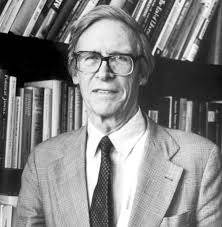
Rawls's theory of "justice as fairness" recom- mends equal basic liberties, equality of opportuni- ty, and facilitating the maximum benefit to the least advantaged members of society in any case where inequalities may occur. Rawls's argument for these principles of social justice uses a thought experiment called the "original position," in which people deliberately select what kind of society they would choose to live in if they did not know which social position they would personally occupy.
Introductory Comments
Rawls set out to rescue political philosophy from the suspicion that it is merely dressed-up preference - the powerful calling their interests "justice" and the rest calling their grievances "rights." His solution was the famous veil of ignorance: imagine rational people choosing the basic rules of society without knowing who they will turn out to be - rich or poor, gifted or ordinary, devout or skeptical, born in a pent- house or a tenement. Stripped of the biograph- ical accidents that normally tilt our judgments, such choosers would, Rawls argued, converge on principles no one could reasonably reject. The first and highest of these is that every citi- zen must enjoy the same full scheme of basic liberties - speech, conscience, due process, etc.
But justice, for Rawls, does not end with liberty; it must also shape how inequalities arise and operate. His second principle holds that social and economic inequalities are permissible only if they satisfy fair equality of opportunity and work to the greatest benefit of the least advan- taged. A surgeon may earn more than a jani- tor - but only if that difference, through in- creased incentives and productivity, actually lifts the floor beneath the janitor's feet. Fair equality of opportunity must also ensure that the janitor's children have as real a shot at be- coming surgeons as anyone else's. In short: Rawls doesn't begrudge the rich their yachts - as long as they're willing to tow some dinghies.
Some of Rawls's Key Positions
Since the social contract theories of Hobbes, Locke and Rousseau were first introduced in the 17th and 18th centuries, the social conscious- ness of most countries has become more en- lightened and expansive. Those members of society who were once dismissed as unimpor- tant, because of their poverty or weakness, are now seen by most of us as worthy of our concern and deserving of our help.
Given these changes in our social conscience, it is time that we imagine a more just social contract that (in theory) binds us together as a people. However, before we can do this, we first need to imagine a more just group of people gathered together in order to create a social contract - a group of people completely without bias or self-interest. This is only possi- ble if we imagine individuals who are - some- how - completely ignorant of their own identity.
What type of social contract would you want if you were ignorant of your gender, race, age, intelligence, skills, education and religion? The answer is likely to be a society that not only guarantees basic rights and freedoms for all citizens, but also one that minimizes social and economic inequalities in a way that gives the greatest benefit to the least advantaged. Since you might end up one these least advantaged, you'd likely think such a society offers you the best protection against poverty and injustice.
Place in the History of Ideas
Rawls's Place in History of Ideas
Daniel Dennett: The key innovation in Rawl's scenario, designed to ensure that undue selfishness among the participants in this exercise in reflection cancels itself out, is what he calls the "veil of ignorance." Everyone gets to vote on a favored design of society, but when you decide which society you would be happy to live in and give your allegiance to, you vote without knowing your particular role or niche in it will be. You may be a senator or a surgeon or a street sweeper or a soldier; you don't get to find out until after you have voted. Choosing from behind the veil of ignorance ensures that people will give due consideration to the likely effects, the costs and benefits, for all the citizenry, including those worse off.
Raymond Geuss: The idea that seems to be presupposed by the doctrine of the veil of ignorance - namely, that one can in some way get a better grasp or understanding of the power relations in society and how they work by covering them up, ignoring them, or simply wishing them away - seems very naïve.… To think that an appropriate point of departure for understanding the political world is our intuitions of what is "just," without reflecting on where those intuitions come from, how they are maintained, and what interests they might serve, seems to exclude from the beginning the very possibility that these intuitions might themselves be "ideological."
Random Thoughts on Rawls
As groundbreaking as was Rawls's new and im- proved social contract, critics came after him from all sides - with sharp knives. Robert No- zick, from the libertarian right, objected that redistributing justly acquired holdings to satisfy a preferred social pattern treats persons as means and tax-paying laborers as part-time serfs of the state. G.A. Cohen, from the egalitar- ian left, countered that Rawls permits too much inequality by accommodating self-interested incentives that a truly just society would tran-scend. And communitarians like Michael Sandel charged that Rawls's veiled choosers are philo-sophical ghosts, shorn of the memberships, traditions, and attachments that actually con- stitute real moral agents; you cannot reason your way to justice from nowhere in particular.
To the communitarians, Rawls insisted his theo-ry was political, not metaphysical - not a claim about the deep nature of the self. Against both defenders of freedom and critics of inequality, he emphasized his preference for property-owning democracy, argung that justice requires dispersing wealth structurally, not just redistri- buting it after the fact. Yet even granting all this, one stubborn question remains: did Rawls really banish personal bias from those ghostly, identityless signers of the new social contract - or did he smuggle in, under philosophical robes, the temperament of a risk-averse, mildly liberal professor from Cambridge, Massachusetts?
Galbraith (Govt. should play an assertive role in improving general welfare.)
Habermas (A liberal state rests on free expression & the ideal of public reason.)
Hart (There is no necessary connection between law and morals.)
Hart (Anyone who benefits from an institution is obliged to help sustain it.)
Locke (It's useful to see govt. as a social contract conceived in a state of nature.)
Mead (Communicative rationality is an essential and ongoing social process.)
Ruskin (Most importantly, govt. should promote economic and social justice.)
Saint-Simon (Society ought to strive to improve conditions of the poorest class.)
Thinkers with opposing positions:
Benjamin (Talk of natural rights is mere rhetoric - just righteous nonsense.)
Goldman (Anarchism is the liberation from oppression of govt. & religion.)
Maistre (Authority in politics does not derive from reason, but from religion.)
Nozick (Rights are best secured by minimal state limited to narrow functions.)
Rand (In the struggle between freedom and equality, freedom deserves to win.)
Rothbard (Govt. should protect our freedom - not improve the general welfare.)
Sumner (Survival of the fittest requires we abandon liberal social reforms.)
Weber (Democracy needs to be guided by an intellectual elite.)
What others said about Rawls
Nussbaum: Even in moving away from Rawls, we are fully engaged with him. Surely that is a sign of his work's depth and enduring significance.
William Kymlicka: … it is generally accepted that the recent rebirth of normative political philosophy began with the publication of John Rawls's "A Theory of Justice" in 1971.
Will Hutton: [Rawls calls for] an "infrastructure of justice" that ensures everyone has access to key primary goods - some reasonable level of income and material wellbeing, opportunity and basic rights and liberties - which allow them to consider they have been given a proper chance to achieve full membership of society.
A. Sen: Rawls’s analysis of fairness, justice, institutions and behavior has illuminated our understanding of justice very profoundly and has played... a hugely constructive part in the development of the theory of justice.
Raymond Geuss: [Rawls believes in a form of] magic: imagine you are "impartial" and you will be.
Will Hutton: Moreover, [Rawls believed] the rich must recognize that their incomes can only be allowed to reach the level consistent with ensuring that the position of the poor is the best it could possibly be….
Moshe Halbertal: The ultimate merit of Rawls’s work did not lie only in his own theory, but in the extraordinarily broad discussion that it generated. Rawls’s work provided a framework for a flurry of counter-theories, such as G.A. Cohen’s in "Rescuing Justice and Equality"… and Robert Nozick’s sophisticated libertarian response in "Anarchy, State, and Utopia"….
Tibor R. Machen: One main problem in Rawl’s defense of "justice as fairness" is that Rawls believes that no one can deserve his or her advantages or assets in life - it’s all a matter of luck.
Schools: Analytic Philosophy, Intuitionism, Liberalism, Secularism, Social Contract Theory, Social Liberalism, Utilitarianism, Virtue Ethics
Main interests: Democracy, Equality, Ethics, Freedom, Government, International Law, Jurisprudence, Just War, Justice, Law, Political Philosophy, Political Theory, Politics, Property, Public Administration, Punishment, Social Philosophy, Virtue, War, Wealth, Welfare State