Friedrich Hayek (1899 - 1992)
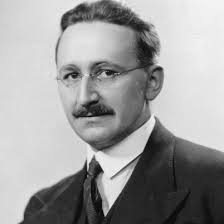
Open Hayek's interactive page (graphs of influences, similar and opposing positions, and quotes)
Background
Friedrich Hayek
Born: 8 May 1899 in Vienna, Cisleithania,
Austria-Hungary
Died: 23 March 1992 (aged 92) in Freiburg im
Breisgau, Baden-Württemberg, Germany
Main interests: Economics, Political science,
Law, Philosophy, Psychology, Phil. of science
Schools or traditions: Austrian School, Chicago
school of economics
Influences: Acton, Böhm-Bawerk, Burke, Eucken,
A. Ferguson, F. Fetter, Hume, Locke, E. Mach,
Mandeville, Carl Menger, Mill, Mises, Popper,
Sidney, Adam Smith, Spann, Tocqueville, Josiah
Tucker, Wicksell, Wieser, Wittgenstein
Influenced: Coase, Erhard, D. Friedman, M.
Friedman, H. Hazlitt, John Hicks, Laffer, Lerner,
Nozick, Ostrom, K. Popper, Rothbard, Selgin, V.
Smith, Sowell, G. Stigler, Timberlake, L. H.
White, W. E. Williams, Yayla, Yeager, H. Chang
From Wikipedia
Hayek was an Austrian economist, legal theorist and philosopher who is best known for his defense of classical liberalism. Hayek shared the 1974 Nobel Memorial Prize in Economic Sciences with Gunnar Myrdal for their work on money and economic fluctuations, and the interdependence of economic, social and institutional phenomena. His account of how changing prices communicate information that helps individuals coordinate their plans is widely regarded as an important achievement in economics, leading to his prize.
Introductory Comments
No one invented the English language. No committee drafted its grammar, and no ministry approved the word "selfie." Yet it works well enough to carry both Shakespeare and tax forms. Hayek made one of the 20th century's most counterintuitive and enduring arguments: that the same holds for markets. Financial markets were not designed by anyone. They emerged. The information required to coordinate an economy - shifting tastes, local shortages, new opportunities, practical know-how - exists in millions of scattered fragments, often unspoken and constantly changing. No single mind could possibly gather and process them all. Trying to do so would be like trying to capture the wind in a butterfly net.
The idea has an obvious ancestor in Adam Smith, and Hayek gladly claimed the lineage. Smith observed that we owe our dinner not to the butcher's benevolence but to his self-interest. That is a point about motives. Hayek's emphasis falls on knowledge. Even if everyone were a saint, how would anyone know what to produce, where, or how much? His answer was prices. When tin grows scarce, its price rises, and millions of users economize without ever learning why. Prices are less a haggling tool than a telegraph network, flashing each person just the signal they need. The contrast shouldn't be overdrawn, since Smith too thought the person on the spot judged better than any distant statesman. But where Smith saw self-interest harnessed, Hayek saw knowledge spread.
Some of Hayek's Key Positions
Economists who want government to steer the economy, Keynes foremost among them, misdiagnose unemployment. They blame slumps on a shortfall in total spending ("aggregate demand") and prescribe government spending to fill the gap.
But slumps are the hangover from booms fueled by easy credit. When a central bank holds interest rates below the level genuine savings would set, businesses launch long-term projects that people's real willingness to save cannot sustain. The downturn is the painful liquidation of these "malinvestments." Stimulus merely postpones the reckoning, compounds the distortions, and courts inflation. It cures monetary meddling with more monetary meddling.
Central planning is worse. The knowledge needed to run an economy is scattered among millions of people in local, fleeting, often unspoken fragments that no planning board can collect. Prices condense that knowledge into signals, letting people coordinate without anyone grasping the whole. The result is a spontaneous order, the product of human action but not of human design.
Planning also endangers freedom, since it must impose one scale of values on a society that holds many. The safeguard is the rule of law: general, known rules applied equally to all, rather than the open-ended discretion of officials.
Place in the History of Ideas
Hayek's Place in History of Ideas
Milton Friedman: ... no person had more of an influence on the intellectuals behind the Iron Curtain than Friedrich Hayek. His books were translated and published by the underground... editions, read widely, and undoubtedly influ- enced the climate of opinion that ultimately brought about the collapse of the Soviet Union.
Lawrence Summers: What's the single most important thing to learn from an economics course today? What I tried to leave my students with is the view that the invisible hand is more powerful than the [un]hidden hand. Things will happen in well-organized efforts without direction, controls, plans. That's the consensus among economists. That's the Hayek legacy.
Arthur M. Diamond: The human mind, Hayek says, is... limited in its ability to give a deductively sound ground to ethics. Here is where the tension develops, for he also wants to give a reasoned moral defense of the free market. He is an intellectual skeptic who wants to give political philosophy a secure intellectual foundation.
John Maynard Keynes: [Hayek's Prices and Production], as it stands, seems to me to be one of the most frightful muddles I have ever read.... It is an extraordinary example of how, starting with a mistake, a remorseless logician can end up in bedlam.
Random Thoughts on Hayek
For thousands of years, cooks in Mesoamerica soaked their corn in water laced with lime or wood ash before grinding it. Ask them why, and they might have said it loosened the hulls. What no one could have told you was that the soaking also unlocked a vitamin the body needs.
Hayek would have relished the story. In his later work he pushed spontaneous order (see Introductory Comments) well beyond markets. Successful societies, he argued, run on rules, from moral norms to legal customs, whose reasons their followers often cannot state. No philosopher designed these rules, and no prophet carried them down a mountain. They survived a long process of cultural evolution, spreading because the groups following them flourished. Hence his quarrel with what he called "constructivist rationalism": the dream that reason can strip society to its foundations and rebuild it to spec.
This sounds like conservatism, but Hayek bristled at the label and even wrote an essay called "Why I Am Not a Conservative." Conservatives, he explained, feared change; he welcomed it, provided it grew from below. Traditions deserve respect not because they are sacred but because they are survivors. Critics reply that survivors are not always saints, since slavery, too, lasted for millennia. Perhaps then the hard part, as ever, is knowing when - when to leave the recipe alone and when to send it back to the kitchen.
Influences
Hayek was influenced by: Acton, Lord, Burke, Ferguson, A., Goethe, Hume, Locke, Mach, Mandeville, Menger, Carl, Mill, Mises, Smith, Adam, Tocqueville, Wieser, F. von, Wittgenstein
Hayek influenced: Chang, Ha-Joon, Erhard, Ludwig, Friedman, Hicks, John, Nozick, Popper, Reagan, Rothbard, Sowell, T., Stigler, George, Timberlake, R.
Similar and opposing positions
Thinkers with similar positions:
- George, Henry (Tariffs keep prices high for consumers & fail to increase wages.)
- Hobbes (Government was created to protect people from one another.)
- Mises (The price mechanism is needed to efficiently exchange & use resources.)
- Montesquieu (Commerce tends to reduce prejudice and increase freedom.)
- Nozick (No laws should limit people's consensual acts in economic matters.)
- Ricardo (With industrial economies, international trade is always beneficial.)
- Smith, Adam (The common interest requires each seek economic self-interest)
- Spencer (Collectivist social reforms usually have unintended consequences.)
Thinkers with opposing positions:
- Green (The state should foster & protect the social & econonic environment.)
- Keynes (Govt. interference in an economy is at times needed as a stimulus.)
- Kropotkin (The best economy is a decentralized one based on mutual aid.)
- Marcuse (Capitalism can lead to a dehumanizing objectification of ourselves.)
- Marx (A centrally planned economy can be a just, humane & efficient economy.)
- Ortega (Modern capitalism has demoralized humanity & weakened morality.)
- Proudhon (Property is theft when it in effect steals the profits from laborers.)
- Shaw (Socialism can cure many of the abuses found in our modern economies.)
What others said about Hayek
- Foucault: [Hayek] was very clearly one of the inspirations of contemporary American liberalism, or of American anarcho-capitalism if you like....
- Galbraith: Over the years I’ve often presented myself to ardent conservatives as a student of von Hayek; it has added in an agreeable way to their normal confusion.
- Friedman: ... no person had more of an influence on the intellectuals behind the Iron Curtain than Friedrich Hayek. His books were translated and published by the underground and black market editions, read widely, and undoubtedly influenced the climate of opinion that ultimately brought about the collapse of the Soviet Union.
- Popper: I think that I have learned more from [Hayek] than from any other living thinker, except perhaps Alfred Tarski… but not even excepting Russell.
- Rand: As an example of our most pernicious enemy, I would name Hayek. That one is real poison.
- Friedman: I think [Hayek's] "Prices and Production" is a very flawed book. I think his ["Pure Theory of Capital"] is unreadable. On the other hand, "The Road to Serfdom" is one of the great books of our time.
- Keynes: [Hayek's "Prices and Production"], as it stands, seems to me to be one of the most frightful muddles I have ever read... and yet it remains a book of some interest, which is likely to leave its mark on the mind of the reader. It is an extraordinary example of how, starting with a mistake, a remorseless logician can end up in bedlam.
- J. Ranelagh: [Thatcher] reached into her briefcase and took out a book. It was Hayek's "The Constitution of Liberty." Interrupting our [talk], she held the book up for all of us to see. "This," she said sternly, "is what we believe"....
Schools: Classical Liberalism, Conservatism, Individualism, Libertarianism
Main interests: Commerce, Democracy, Economics, Government, Jurisprudence, Labor, Law, Political Theory, Property, Psychology, Science, Wealth, Welfare State
Hayek's answers to philosophical questions
Economics
The best economy is one based on laissez-faire capitalism, since the free market is robust, adaptable and self-regulating.
Economic ethics means being responsible to one's own conscience & willing to bear the consequences of one's own decision.
A free-market economy is much less dangerous than is socialism, since central economic planning leads to totalitarianism.
Ethics
The principle that the end justifies the means may be immoral in individualist ethics, but it's the supreme rule in economics.
History
"I do not think it is an exaggeration to say history is largely a history of... inflations engineered by governments...."
Political Philosophy
The main function of the state should be to maintain the rule of law, with as little interference into daily life as possible.
Government should never interfere with the economy: The economy works best when it freely regulates itself.
"'Emergencies' have always been the pretext on which the safeguards of individual liberty have been eroded."
Government redistribution of income or capital would "in all essential respects [lead to] the opposite of a free society"
A state in a free economy can guarantee people a "minimum of food, shelter and clothing, sufficient to preserve health."
Science
"The theories of the social sciences do not consist of 'laws' in the sense of empirical rules about the behavior of objects…."
Society
Enduring social institutions spring up spontaneously and are self-regulating. They are not products of pure reason.