Giovanni Pico (1463 - 1494)
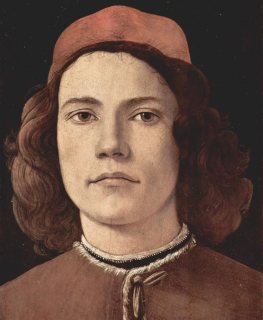
Open Pico's interactive page (graphs of influences, similar and opposing positions, and quotes)
Background
Giovanni Pico della Mirandola
Born: 24 February 1463 in Mirandola, Italy
Died: 17 November 1494 (aged 31) in Florence,
Italy
Era: Renaissance philosophy
Region: Western Philosophers
Alma mater: Bologna University
School: Renaissance philosophy
Main interests: Politics, history, religion, magic
Influences: Plato, Marsilio Ficino, Aristotle,
Pseudo-Dionysius, Neoplatonism, Nicholas of
Cusa, Kabbalah, Lorenzo de' Medici, Plotinus,
Augustine of Hippo, Averroes, Abu Maʿshar,
Saint Bonaventure, Iamblichus, Elia del Medigo,
Avicenna, Aquinas, Albertus, Proclus, Ptolemy,
Girolamo Savonarola
Influenced: John Colet, Desiderius Erasmus, Sir
Thomas More, Giordano Bruno, Michelangelo,
Gottfried Wilhelm Leibniz, Johannes Kepler
From Wikipedia
Pico was an Italian Renaissance nobleman and philosopher. He is famed for the events of 1486, when, at the age of 23, he proposed to defend 900 theses on religion, philosophy, natural philosophy, and magic against all comers, for which he wrote the Oration on the Dignity of Man, which has been called the "Manifesto of the Renaissance," and a key text of Renaissance humanism…. Pico is sometimes seen as a proto-Protestant, because his 900 theses anticipated many Protestant views.
Introductory Comments
What set Pico apart from his fellow humanists was his eagerness to find some grain of truth in every religion, philosophy, and mystical tradition. Where others picked a school and defended it, Pico refused to choose. He read the Platonists and the Aristotelians, the Church Fathers and the Talmudists, the Arab commentators and the ancient sages of Egypt and Persia - and in each he heard a fragment of the same melody. More than that, he longed to gather them all into one grand synthesis. This was his famous syncretism: the conviction that the great traditions do not so much contradict one another as translate one another, each dressing a single underlying truth in its own vocabulary and idiom. This all-embracing spirit is why his friends dubbed him "Princeps Concordiae," Prince of Concord - a sly pun, since Concordia was one of his family's holdings.
It may also explain why Pico could befriend humanists as different as Lorenzo de' Medici and Marsilio Ficino - and even those who despised humanism altogether. He was a dear friend of the violently anti-humanist Savonarola, the fiery preacher whose rise accompanied the expulsion of the Medici from Florence in 1494. That friendship may in fact have hastened Pico's mysterious death later that same year, at just 31. We know he died of arsenic poisoning; we do not know at whose hand. But it is safe to say that being a close friend of Savonarola's in 1494 did nothing to improve one's actuarial prospects.
Some of Pico's Key Positions
The Scholastics are right to revere Aristotle, but Ficino is right too: the ancient we can learn most from is Plato. As Plato might have put it, through determined effort we can climb the great chain of being until we reach a "final perfection in identity with absolute reality." Yet Aristotle, in his own vocabulary, said something remarkably similar.
That is the deeper point. The great teachers - Hermes Trismegistus, Zoroaster, Orpheus, Pythagoras, Moses, Paul, Muhammad, Avicenna, Averroes, Aquinas, Duns Scotus, and the rest - each glimpsed some part of the truth. Their traditions differ in language and emphasis, but every one holds at least a measure of wisdom, and so every one deserves consideration and respect.
The Jewish Kabbalists merit particular attention, for their writings probe the deepest secrets of the world. Such mysteries should not frighten us. Rightly pursued, magic - not sorcery, but the disciplined knowledge of nature's hidden powers - is the crowning achievement of both spiritual and intellectual education.
Astrology, however, deserves only contempt. Its deterministic premises collide head-on with human liberty and dignity. Our destiny is not written in the stars. We write it ourselves. Alone among creatures, man was created with no fixed nature at all, free to sink to the level of a beast or rise to the level of an angel, as he himself chose.
Place in the History of Ideas
Pico's Place in History of Ideas
Paul Oskar Kristeller: [In explaining the special dignity of man, Pico] went beyond Ficino in several ways. He did not discuss the question merely in passing or in the context of a large work dedicated to other subjects but displayed it prominently in the opening section of a short and elegant speech. Moreover, he lays the accent not so much on man's universality as on his freedom; instead of assigning to him a fixed though privileged place in the universal hierarchy, he puts him entirely apart from this hierarchy and claims that he is capable of occupying, according to his choice, any degree of life from the lowest to the highest.
Walter Pater: [Pico saw] a significance in every accidental combination of the events of life. This constant tendency to symbolism and im- agery gives Pico's work a figured style, by which it has some real resemblance to Plato's.... Above all, we have a constant sense in reading him, that his thoughts, however little their positive value may be, are connected with springs be- neath them of deep and passionate emotion; and when he explains the grades or steps by which the soul passes from the love of a physi- cal object to the love of unseen beauty, and unfolds the analogies between this process and other movements upward of human thought, there is a glow and vehemence in his words which remind one of the manner in which his own brief existence flamed itself away.
Random Thoughts on Pico
Pico's Oration on the Dignity of Man is often called the "Manifesto of the Renaissance," and its most memorable image captures why. When God at last got around to creating man, Pico says, He ran into a bookkeeping problem: every place in the Great Chain of Being had already been assigned, and no rung was left for the newcomer. So God set man outside the Chain altogether. Alone of all creatures, man and woman were left free to choose their own station - to will themselves upward toward the divine or to sink downward toward the beasts. Recast in the vocabulary of a much later age, this is existentialism avant la lettre: God gave every creature a fixed essence except the human being, whose existence precedes essence. Men and women must decide, through their own actions, who they truly are.
That said, Pico's own philosophical promiscuity (see Introductory Comments) kept his exaltation of human dignity from ever being simple. His religious zeal repeatedly reminded him of human frailty and the need for divine guidance. His enthusiasm for Kabbalah, Hermeticism, and magic sat uneasily with any purely rational or moral account of human worth. And, of course, his promiscuity in itself might not seem particularly dignified - at least not when one is caught at it. A syncretism that beds down with every thinker it meets, might in fact seem downright scandalous. Still, if everyone has a piece of the truth, one can hardly blame Pico for playing the field.
Influences
Pico was influenced by: Abu Maʿshar, Albertus Mag., Aquinas, Aristotle, Augustine, Averroes, Avicenna, Bonaventure, Ficino, Iamblichus, Medici, L. de, Medigo, E. del, Nicholas of C., Plato, Plotinus, Proclus, Pseudo-Denys, Ptolemy, Savonarola
Pico influenced: Bruno, Colet, John, Erasmus, Kepler, Leibniz, Michelangelo, More
Similar and opposing positions
Thinkers with similar positions:
- Emerson (The human self is always becoming, always partially in the future.)
- Ficino (All things in the great chain of being spring ultimately from God.)
- Ficino (The ancient philosopher we can learn most from is Plato, not Aristotle.)
- Jung (The differentiation of the self is the main task of human development.)
- Petrarch (We do God a disservice by belittling His gift to us of human life.)
- Plantinga (Our free will is compatible with an omnipotent & omniscient God.)
- Porphyry (Despite its pagan beliefs, we can learn much from classical antiquity.)
- Sartre (Our freedom is absolute & an authentic life requires that we embrace it.)
Thinkers with opposing positions:
- Campbell, J. (Myths often possess great philosophical & psychological insights.)
- Dostoyevsky (Humans are full of irrational cravings and contradictions.)
- Luther (Given God's sovereignty & our own sinfulness, there is no free will.)
- Montaigne (Though full of pretenions, man is often the stupidest of creatures.)
- Plotinus (Enlightenment requires only spirituality - not magic and ritual.)
- Pyrrho (Given our human limitations, we can never be sure of what is true.)
- Stirner (Humans are always motivated by self-interest and selfishness.)
- Suarez (In metaphysics the individual remains the fundamental reality.)
- Tillich (Humanism today has too much faith in man & all too little faith in God.)
What others said about Pico
- Walter Pater: [For Pico] the greatest dignity of humanity is the boundless power of self-transformation.
- Pope Innocent VIII: [Pico's "900 Theses" is] in part heretical, in part the flower of heresy; several are scandalous and offensive to pious ears; most do nothing but reproduce the errors of pagan philosophers.
- Anthony Kenny: Pico sees the human, at birth, as a totipotential being, containing the seeds of many forms of life. Depending on which seed you cultivate, you may become a vegetable, a brute, a rational spirit, or a son of God. You may withdraw into yourself and become one with God in solitary darkness. Pico's consistent aim... was to exalt the powers of human nature.
- Paul Oskar Kristeller: [Pico's] study of the kabbalah started a broad and powerful current of Christian kabbalism, which flourished throughout the sixteenth century and included many distinguished scholars and thinkers.
- Cassirer: [Pico] considered the main purpose of philosophical thought to be the reconciliation of Scholasticism and Platonism.
- John Herman Randall Jr.: Nowhere is this conception of the worth of human personality in itself so nobly expressed as in Pico's "Oration on the DIgnity of Man," which rivals the famous chorus from "Antigone."
- Copleston: [Pico said] God did not assign to man a fixed and peculiar place in the universe or laws which he was unable to contravene. "We made thee neither a heavenly being nor an earthly being, neither mortal nor immortal, in order that thou, as the free and sovereign artifi -cer of thyself, mightest mold and sculpture thyself in the form which thou shouldest prefer."
- Ficino: ... Pico left us on the same day that Charles VIII was entering Florence.... Without the light brought by the king..., Florence might perhaps have never seen a more somber day than that which extinguished Mirandola's light.
Schools: Christian Humanism, Christian Theology, Emanationism, Humanism, Mysticism, Neoplatonism, Perennial Philosophy, Platonism
Main interests: Astrology, History, History of Philosophy, Immortality, Magic, Politics, Religion, Spirituality
Pico's answers to philosophical questions
Ethics
Though happiness is not the aim of life, "man has been created by God not only to possess life, but to enjoy it."
Metaphysics
Everything in creation - every object, every human, every religion, every philosophy - is a symbol or expression of God.
Your will is completely free: "You can lower yourself to the level of the beast, but you can also be reborn as a divine creature."
Individual things and beings exist independent of the One, but at the same time are symbols or expressions of the One.
Mind
"Our mind is there to penetrate into the infinite universe, to be the intelligence that surveys all things."
Nature
Man's dignity resides in his absolute freedom. We can become whatever we choose - from the brutish to the divine.
"A ladder rises by many rungs from earth to the height of heaven and at its summit sits the Lord…."
Philosophy
All philosophical traditions contain at least some degree of truth and therefore deserve at least some consideration.
As the Jewish Kabbalah teaches, exploring the meaning of numbers can reveal deep, philosophical secrets.
"Philosophy has taught me to rely on my own convictions rather than on the judgments of others…."
Political Philosophy
Since all religious philosophies have at least some degree of truth, all religions deserve to be studied and respected.
Psychology
Human will has no constraints: "Because of the divine image planted in him, there are no limits to what man can accomplish."
"He who lives in harmony with himself lives in harmony with the world."
One should try to be a friend to one's self, "and the best form of friendship with one's self is oneness of purpose & harmony."
Religion and Theology
A godly man is "a pure contemplator, unmindful of the body, wholly withdrawn into the inner chambers of the mind."
"God… built this cosmic home we behold, the most sacred temple of His godhead, by the laws of His mysterious wisdom."
God gave man an absolutely free will. We may "possess what abode, what form, and what functions" we desire.
Though souls are immortal, hell is a myth: A mortal sin is deserving only of a mortal or temporal punishment.
We should look for truth in all religious texts. Even mythology has value as a type of poetic theology.
Society
"The strongest chains are of iron; the strongest bands are of love."