Williams, B. (1929 - 2003)
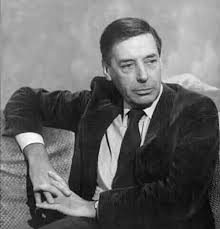
Open Williams, B.'s interactive page (graphs of influences, similar and opposing positions, and quotes)
Background
Bernard Williams
Born: 21 September 1929 in Westcliff-on-Sea,
Essex, England
Died: 10 June 2003 (aged 73) in Rome, Italy
Alma mater: Balliol College, Oxford
Notable ideas: Internal reasons for action, moral
luck
School: Analytic philosophy
Main interests: Moral philosophy, personal
identity, moral psychology, political equality
Influences: Friedrich Nietzsche, John Stuart Mill,
Bertrand Russell, Philippa Foot, R. M. Hare,
Isaiah Berlin, Stanley Cavell, Gilbert Ryle,
Plato, Aristotle, Immanuel Kant, David Hume,
Thomas Hobbes
Influenced: Martha Nussbaum, John Searle,
Ted Honderich, Colin McGinn
From Wikipedia
Williams became known for his efforts to reorient the study of moral philosophy to psychology, history, and in particular to the Greeks…. Williams did not produce any ethical theory or system; several commentators noted, unfairly in the view of his supporters, that he was largely a critic. A. W. Moore writes that Williams was unaffected by this criticism…. He equated ethical theories with "a tidiness, a systematicity, and an economy of ideas," writes Moore, that were not up to describing human lives and motives.
Introductory Comments
Williams thought modern moral philosophy had wandered badly off course. Where the ancient Greeks asked the spacious question - "how should one live?" - modern morality had shrunk ethics down to a cramped obsession with obli- gation, blame, and whether one's actions were truly "voluntary." This narrowing, Williams argued, was not progress but impoverishment. The Greeks understood that ethics was funda- mentally about character, virtue, and the shape of a whole human life. That question takes in love, friendship, family, work, ambition, and the texture of a whole life, not merely whether one has discharged one's duties before bedtime.
Williams was equally scathing about the great systematic theories that modern philosophy had erected in place of that richer tradition. Any theory that tries to squeeze all of moral life through a single principle will end up mangling it. Utilitarianism is perhaps the worst offender: it demands that individuals treat themselves as mere pipelines for producing the best overall outcome, severing them from the projects, rela- tionships, and commitments that make their lives their own. Kantianism is scarcely better - its demand for pure impartiality leads to the notorious conclusion that a husband rescuing his drowning wife should, in principle, justify his action by appeal to universal law rather than because she is his wife. As Williams drily re- marked, this is "one thought too many."
Some of Bernard Williams's Key Positions
Because humans are too tangled and too mot-ey a species to be easily summed up, so too the discipline of ethics does not lend itself to tidy systematization. More than that: the whole project of grounding morality in a single over- arching theory is not merely overambitious but a philosophical mistake - one that distorts rather than illuminates what ethics actually is.
To be more specific: moral philosophers should draw on the human sciences - psychology, biology, history, culture - to understand the full texture of moral life. This in turn means treating each ethical concept, like kindness or cruelty, as a "thick" concept that fuses fact and value in- separably. Ethics should neither reduce to cold calculation nor float free into pure abstraction, but grapple with both dimensions at once.
Furthermore, moral philosophers should resist the assumption - shared by utilitarians and Kantians alike - that ethics requires a single supreme principle or decision procedure. Utilitarianism alienates individuals from their own deepest commitments and projects, reduc- ing persons to vessels for producing good out- comes. Kantian morality, meanwhile, strips away the multilayered facts of particular situa- tions and flattens everything into abstract du- ties. Both traditions also evade a deeper truth: that moral luck plays a real and inescapable role in our ethical lives.
Place in the History of Ideas
Bernard Williams's Place in History of Ideas
Alan Code: ... one of the most notable features of [Williams's] philosophical outlook was an unwavering insistence on a series of points that [are] all-too-frequently neglected: that moral or ethical thought is part of human life; that in writing about it, philosophers are writing about something of genuine importance; that it is not easy to say anything worth saying about the subject; that what moral philosophers write is answerable to the realities of human history, psychology, and social affairs; and that mere cleverness is indeed not the relevant measure of value.
A. W. Moore: Although he was never a vigorous apologist for [the analytic] tradition, he always maintained the standards of clarity and rigor which it prizes, and his work is a model of all that is best in the tradition. It is brilliant, deep, and imaginative. It is also extraordinarily tight. There cannot be many critics of his work who have not thought of some objection to what he says, only to find, on looking for a relevant quotation to turn into a target, that Williams carefully presents his views in a way that precisely anticipates the objection.
Nussbaum: [Williams] denounced the trivial and evasive way in which moral philosophy was being practised in England under the aegis of those two dominant theories [utilitarianism and the moral absolutism of Kant].
Random Thoughts on Williams
Williams insisted that ethics could not be done in a laboratory of pure reason, sealed off from the messy facts of human existence. Moral phi- losophers needed to engage seriously with psy- chology, history, biology, and culture - the ac- tual forces that shape how people feel, choose, and live. This empirical seriousness had direct implications for moral language itself. Concepts like cruel, courageous, loyal, or treacherous are not merely descriptive labels with a value-judgment bolted on afterward - they are "thick" concepts that fuse fact and value in a single indissoluble perception. To call someone cruel is simultaneously to see something and to condemn it; the two cannot be prised apart without losing what the word actually does.
There is one other thing we must not forget: moral luck. Williams argued that the role of luck in our moral lives is far greater - and far more troubling - than philosophy likes to admit. Not just luck in outcomes, but luck in character: the family one is born into, the society that shapes one's dispositions, the accidents of cir- cumstance that make one person a hero and another a villain. We judge ourselves as cap- tains of our souls, yet often we are navigating seas whose currents were set long before we touched the helm. Moral luck is the reminder -humbling, poignant, and oddly liberating - that character is partly achievement, partly inherit- ance, and partly the strange gift of the dice.
Influences
Williams, B. was influenced by: Anscombe, Aristotle, Berlin, Cavell, Dodds, Eric, Foot, Hare, Hobbes, Hume, Kant, Mill, Nietzsche, Plato, Russell, Ryle, Watt, W. S.
Williams, B. influenced: Anderson, E., Cavell, Chappell, S.G., Geuss, Honderich, McGinn, Moore, A. W., Nussbaum, Searle, Sen, Amartya
Similar and opposing positions
Thinkers with similar positions:
- Berlin (No quantitative approach to values or ethical questions is possible.)
- Hare (Moral decisions should consider both principles and consequences.)
- Hume (Values are neither discovered nor deduced: They are human creations.)
- Lewis, C.I. (Value statements are not merely expressive. They have meaning.)
- MacIntyre (Philosophy should return to basic questions that concern all of us.)
- Nussbaum (Life is fragile. Human goodness can't protect us from all peril.)
- Santayana (All human values, including those of ethics, have a natural basis.)
- Socrates (We should carefully examine our key moral concepts and beliefs.)
- Stanton (The personal is political. Laws must consider the plight of women.)
Thinkers with opposing positions:
- Anscombe (Moral absolutes do exist. Some things are inherently good or evil.)
- Bataille (To be free means to be unrestrained by any chains of morality.)
- Bentham (Greatest happiness of greatest number is measure of right & wrong.)
- Cicero (Natural laws are universal due to their rationality and moral worth.)
- Green (Objective ethics can be based on the objective function of mankind.)
- Malebranche (Ethical principles are eternal and universal in application.)
- Stevenson (Moral statements do not express propositions but mere emotions.)
What others said about Williams, B.
- Nussbaum: [Williams believes philosophy must] come to terms with, and contain, the difficulty and complexity of human life.
- Sophie Grace Chappell: ... much of his work is essentially a sustained attempt to make sense of how moral theorizing can avoid alienating individuals from their deepest values, cares and life-projects.
- McGinn: Williams has been a distinctive presence on the intellectual scene for more than three decades. . . . His writings do not offer the dubious exhilaration of grand philosophical theory, in which messy reality is tamed and caged, but the thrill of seeing pretension punctured by a kind of high-voltage common sense (backed up by impressive erudition).
- Nussbaum: Being in Williams's presence is at times painful because of that intensity of aliveness, which challenges the friend to something or other, and yet it was, and is, not terribly clear to what. To authenticity, I now think….
- McGinn: [Williams was an] analytical philosopher with the soul of a general humanist.
- A. W. Moore: He simply refused to allow philosophical system-building to eclipse the subtlety and variety of human ethical experience.
- Nicholas Smyth: He rejected the codification of ethics into moral theories that views such as Kantianism and (above all) utilitarianism see as essential to philosophical thinking about ethics, arguing that our ethical life is too untidy to be captured by any systematic moral theory. He was also an important contributor to debates on moral psychology [and] personal identity….
- Ryle: [Williams] understands what you're going to say better than you understand it yourself, and sees all the possible objections to it, and all the possible answers to all the possible objections, before [you get to end your] sentence.
Schools: Analytic Philosophy, Pluralism, Utilitarianism, Virtue Ethics
Main interests: Ethics, Fact–value distinction, Personal Identity, Political Philosophy, Psychology, Virtue, Will
Williams, B.'s answers to philosophical questions
Education
Reflection is now passé: "Education is being driven towards an increasing concentration on the technical & the commercial."
Epistemology
"The desire for truthfulness drives a process of criticism which weakens the assurance that there is any… stateable truth."
Ethics
Philosophy can't supply the justifications moral theorists hope for; ethics is more a matter of honest reflection than proof.
Grand ethical theories like utilitarianism and Kantianism distort moral life rather than illuminate it.
Moral behavior is too complex, too multifaceted, to be reduced to one ultimate good or even to a set of explicit standards.
Modern ethics focuses too much on obligations, when they are just an offshoot of the broader question of how to live.
We should draw on the human sciences - psychology, biology, history, culture - to understand the full texture of moral life.
History
"Deconstructive" historians see liberal historians as at the mercy of current ideologies, yet never question their own histories.
Those who say "all historical accounts are ideological constructs… rely on some story which must itself claim historical truth."
Nature
Many deny that our reason places us above the rest of nature, yet paradoxically say we must be her benevolent stewards.
Philosophy
"The majority of philosophers are totally humorless. That's part of their trouble."
"Philosophy is altogether less pure now. It's been impurified by science and social science and history."
Psychology
I dislike evolutionary reductionists - people who "explain everything in terms of our early hominid ancestors or our genes."
"Tranquility is like quicksilver. The harder you grab for it, the less likely you will grasp it."
Science
To question science is to think one can better "deliver truth about science than science [can] deliver truth about the world."