Georges Bataille (1897 - 1962)
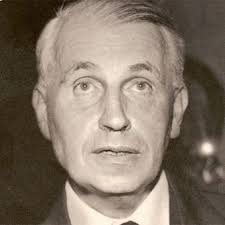
Open Bataille's interactive page (graphs of influences, similar and opposing positions, and quotes)
Background
Georges Bataille
Born: 10 September 1897 in Billom, France
Died: 9 July 1962 (aged 64) in Paris, France
Alma mater: École Nationale des Chartes
Schools: Continental philosophy, French
Nietzscheanism, Surrealism
Main interests: Eroticism, literary criticism,
literature, anthropology, economics, sociology,
history of art, poetry, mysticism, surrealism
Influences: Hegel, Marx, Nietzsche, Freud, Goya,
Alexandre Kojève, Émile Durkheim, Marquis de
Sade, Lev Shestov, Marcel Mauss, Blake, Kafka
Influenced: Foucault, Derrida, Lacan, Maurice
Blanchot, Jean Baudrillard, Michel Onfray, Guy
Debord, Giorgio Agamben, Nick Land, Michel
Leiris, Roland Bathes, Julia Kristeva, Alexander
Laurence, Grace Krilanovich, Michael Taussig,
Angela Carter, Philippe Sollers, Rosalind Krauss,
Yve-Alain Bois, Hal Foster, Jean-Luc Nancy
From Wikipedia
Bataille was a French philosopher and intellectual working in philosophy, literature, sociology, anthropology, and history of art. His writing, which included essays, novels, and poetry, explored such subjects as erotism, mysticism, surrealism, and transgression. His work would prove influential on subsequent schools of philosophy and social theo- ry, including poststructuralism.... Founder of several journals and literary groups, Bataille is the author of a large and diverse body of work: read- ings, poems, essays on innumerable subjects....
Introductory Comments
Bataille spent most of his working life as a librarian. Off the clock, and on the page, he brought together everything the catalog keeps in separate rooms: eroticism and theology, filth and transcendence, laughter and death. The result is a philosophy that reads like a librarian's revenge on the shelving system. Bataille's quarrel was with civilization's cult of usefulness, its habit of sacrificing every present moment to some future payoff. Against it he set transgression, the deliberate crossing of taboos. The point was not to abolish the rules but to feel, in the act of crossing them, what they exist to hold back. If Kant gave us an ethics of duty and Bentham an ethics of utility, Bataille offered up an ethics of sacred waste.
Why do erotic and religious ecstasy keep turning up together in his work? Because both suspend the ordinary rules that keep bodies and selves apart. For Bataille, each of us is a separate, "discontinuous" being, sealed off from everyone else. In sexual climax, as in the death of a sacrificial victim, that seal briefly breaks, and the self dissolves into what he called "communication." A religion that only purifies and moralizes, he thought, has forgotten this. Most traditions seek transcendence through discipline and self-denial. Bataille sought it through excess: erotic, yes, but also laughter, intoxication, and an unflinching gaze at suffering and death. Whether that makes him a mystic without God or a libertine with a theology is a question his readers still argue over.
Some of Bataille's Key Positions
Ordinary life values usefulness. Through reason we classify things, sacrifice the present to the future, and fence off disorder with taboos. This is the profane world, and it is never the whole story, because something always spills over its edges.
The spillover begins with matter. Beneath our tidy rankings from noble to base lies a "base matter" that no system can contain. Set a big toe beside the human longing for the heavens, or a slaughterhouse beside a temple, and the rankings crumble into formlessness (informe).
Energy spills over too. Every living system produces more than it can use. This surplus, the "accursed share," must be spent: gloriously on art and festival, or catastrophically on war.
Such spending without return opens onto the sacred. Eroticism, sacrifice, laughter, and the nearness of death all break the profane world's rules. Religion tames the sacred into doctrine. The sacred is better met in a mysticism without God in which the self loses its boundaries.
Evil, understood as transgression, is bound up with sovereignty, the refusal to make the present serve the future. Literature at its most serious is complicit with evil. It doesn't recommend wickedness; it gives voice to what the useful world shuts out. The result is not amorality but a more demanding "hypermorality."
Place in the History of Ideas
Bataille's Place in History of Ideas
Jeremy Biles: The author of highly disturbing pornographic novels and equally disturbing theoretical work, Bataille was once called by André Breton the “excrement philosopher.” But this scathing sobriquet points to precisely what makes Bataille so useful in understanding human sexuality in all its polymorphous perversity. In fact, Bataille’s writings on ritual sacrifice and mystical experience help provide a fuller understanding of the bizarre rituals of the crush freaks. Both the writings and life of Bataille evidence an obsession with religion. In his teens, Bataille converted to Catholicism and contemplated entering the priesthood before renouncing his faith in order to fashion himself as an erotic mystic of decadence.
Kathy Acker: Bataille is associated with the surrealists. Basically the idea is that democracy doesn't work. Communism doesn't work. All these fucking models aren't working. We've got to find some new models - a model of what society should look like. We don't know what humans are like. And the ground is not economics; it's not like people do everything they do for economic reasons. You've got to look at the imagination; you've got to look at sex. We have no way of describing these things using the language we have. So a group was formed around Bataille to try to figure out what it means to be human - what society should look like.
Random Thoughts on Bataille
It's tempting to write off Bataille’s fascination with blood, filth, and cruelty as the symptom of a disordered mind. Tempting, but anthropology keeps getting in the way. In many cultures, the road to the sacred has run through pain: initiation by scarification or ordeal, visions coaxed out by fasting or hallucinogens, and, in places such as Aztec Mexico, human sacrifice. In many initiation rites, suffering marks not cruelty but transformation, the death of one self and the birth of another. Bataille read Durkheim and Mauss closely. From them he took a lesson polite society would rather forget: the sacred is reached by crossing lines, not by staying safely behind them.
Christianity looks like the exception, and in many ways it is. No faith has worked harder to make the sacred mean the pure. Yet at its center stands an execution. Believers kneel before an instrument of torture, and the Easter liturgy goes so far as to hail Adam's sin as a "happy fault" (felix culpa) for having called forth so great a Redeemer. Does that vindicate Bataille? Not quite. Christians venerate the victim, not the executioners, and they hope the cross will end sacrifice, not repeat it. Yet the paradox remains: a faith that condemns cruelty also finds its supreme sacred drama in a scene of appalling cruelty. Bataille's fascination with the kinship of horror and holiness suddenly looks less alien. But does it say anything about morality? Does finding transcendence in suffering tell anyone anything about the morality of causing it?
Influences
Bataille was influenced by: Blake, Durkheim, Freud, Goya, Hegel, Kafka, Kojève, Marx, Mauss, Marcel, Nietzsche, Sade, Shestov, Lev
Bataille influenced: Agamben, Barthes, Baudrillard, Blanchot, M., Debord, Guy, Derrida, Foucault, Krauss, R., Kristeva, Lacan, Land, Nick, Leiris, Michel, Nancy, J., Onfray
Similar and opposing positions
Thinkers with similar positions:
- Althusser (Causality & actuality disap-pear in a world of limitless possibility.)
- Breton (Surrealism's access to the unconscious leads to a higher sensibility.)
- Derrida (Philosophical oppositions can be undermined by studying the texts.)
- Evola (Violence & erotic excess can be liberating & sacramental experiences.)
- Sade (To be free means to be unrestrained by any chains of morality.)
- Sorel (Social myths are powerful tools to mobilize a society for action.)
- Spinoza (The mental & the physical are two ways of describing same elements.)
Thinkers with opposing positions:
- Aristotle (Virtue is the middle ground (Golden Mean) between two extremes.)
- Epicurus (Contentment is gained thru moderation and living a measured life.)
- Foot (Moral judgments, though linked to human nature, can be true and rational.)
- Freud (The ego may help the id at times, but must always remain in control.)
- Gandhi (Nonviolence & forgiveness are greatly superior to violence & revenge.)
- Hutcheson (We should act in unselfish ways to increase happiness of others.)
- Murdoch (Literature can help us clarify and improve our moral perspective.)
- Nietzsche (At times excess springs more from joylessness than from joy.)
- Sartre (Literature has a moral purpose: the realization of a free humanity.)
What others said about Bataille
- Josh Jones: By embracing everything rejected, feared, or held in contempt, Bataille reclaimed everyday parts of human existence....
- Jake Chapman: He presents a massive challenge to the notion of human positivity.... He questions what ideas like civilization really amount to, and he keeps throwing in nagging questions about the nature of human evil.
- Kathy Acker: Bataille and his followers looked for models for people to have totally great existences.… Well, they looked at tribal models and how they dealt with sexual stuff and sacrifice and property - the joys that aren't based on economic accumulation and the workaday world, but based on giving it all up - not having that... controlling, imprisoning "I."
- Dawn Adès: [Obsessed with torture, pornography, horror, and bodily fluids, Bataille] wanted to bring art down to the base level of other physical phenomena.
- Nasrullah Mambrol: In De Sade, too, it is the conjunction and interplay of erotic, sacrificial and physically violent elements that fascinates Bataille.
- Dinos Chapman: The other Surrealists had the utopian aim of unmasking the unconscious as an egalitarian force. But Bataille saw it as a source of energy that was almost anti-human - as the sum total of absolute negativity.
- Nasrullah Mambrol: Bataille's work... defies summary, but a number of important themes predominate within it. These themes include an obsessive concern with the erotic, myth, sacrifice, the nature of excess, profanity, heterogeneity and social transgression.... Nietzsche is significant for Bataille as a thinker whose writings explore the nature of values....
- Kathy Acker: He wasn't a Freudian. He was much more interested in the tribal model where everything is on the surface and you deal with sexual stuff the same way you deal with economic stuff and social stuff.
Schools: Continental Philosophy, Mysticism
Main interests: Anthropology, Art and Aesthetics, Desire, Economics, Eroticism, Literary criticism, Literature, Poetry, Psychoanalysis, Sexuality, Social Theory
Bataille's answers to philosophical questions
Art and Aesthetics
"Art constitutes a minor free zone outside action, paying for its freedom by giving up the real world."
Epistemology
"The development of intelligence leads to a drying up of life which, in return, has narrowed intelligence."
"I believe that truth has only one face: that of a violent contradiction."
Ethics
"My kind of debauchery soils not only my body and my thoughts, but also [my conception of] the vast starry universe...."
To choose evil is to choose freedom - “freedom, emancipation from all restraint.”
Human life should be a "celebration in all meaning of the word: laughter, dancing, orgy, the rejection of subordination...."
"Incredible nervous state, trepidation beyond words: to be this much in love is to be sick (and I love to be sick)."
We should not gather up our mental resources. "Our only real pleasure is to squander our resources to no purpose...."
Metaphysics
Our simplistic dualisms of mind versus matter and idealism versus materialism are not only baseless: they imprison us.
Mind
"... I have placed in [inner experience] all value and authority. Henceforth I can have no other value, no other authority...."
Philosophy
"Philosophy… finds itself to be no longer anything but the heir to a fabulous mystical theology, but missing a God...."
Psychology
Disparate matters - from the frivolous to the scandalous to the profound - are often linked together in the unconscious.
"By inner experience I understand... mystical experience: the states of ecstasy, of rapture, at least of meditated emotion."
Religion and Theology
Though we should not trust religion, we can, through extreme experiences, begin to appreciate the sacred.
Sex and Gender
"Beauty is desired in order that it may be befouled; ... for the joy brought by the certainty of profaining it."
"Desire in eroticism is the desire that triumphs over the taboo. It presupposes man in conflict with himself."
"Eroticism is the brink of the abyss.... This is the stage of rupture, of letting go of things, of looking forward to death."
"I don't want your love unless you know I am repulsive, and love me even as you know it."
Society
"The taboo does not banish the transgression but... depends upon it, just as the transgression depends on... the taboo."