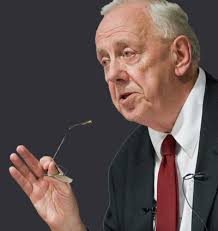
Main interests: Ethics, history of ethics, political
philosophy, religion, social sciences
Notable ideas: Revival of virtue ethics, internal
and external goods
Influences: Aristotle, Augustine, Aquinas, Kuhn,
Kierkegaard, Marx, Nietzsche, Hegel, R. G.
Collingwood, Imre Lakatos, J. H. Newman, Edith
Stein, Iris Murdoch, John Rawls, Elizabeth
Anscombe, Wittgenstein, Michael Polanyi,
Peter Geach, Herbert McCabe, Karl Barth
Influenced: Postliberal theology, Stanley
Hauerwas, Radical Orthodoxy, Rod Dreher
From Wikipedia
Unlike some analytic philosophers, who try to generate moral consensus on the basis of rationality, MacIntyre uses the historical develop- ment of ethics to circumvent the modern problem of "incommensurable" moral notions, whose merits cannot be compared in any common framework. Following Hegel and Collingwood, he offers a "philosophical history" (as opposed to analytical and phenomenological approaches) in which he concedes from the beginning that "there are no neutral standards available by appeal to"….
Introductory Comments
At the heart of MacIntyre's project lies a brac- ing diagnosis: the Enlightenment's grand ambi- tion to ground morality in pure, universal rea- son was a magnificent failure - a philosophical cathedral built on sand. Thinkers from Kant to the utilitarians sought a tradition-independent standpoint from which any rational person, anywhere, could derive binding moral truths. But strip away the inherited moral vocabular-ies, the shared narratives, the communities of practice, and what remains is not bedrock but rubble. This, MacIntyre argues, is why modern moral debate feels so shrill and interminable: we are brandishing the fragments of older tra- ditions while pretending we speak from no- where in particular. The view from nowhere, it turns out, sees nothing at all.
Yet MacIntyre did not see himself as an enemy of reason - but rather its rescuer. Within a living tradition, rational inquiry flourishes: arguments are advanced, errors corrected, insights deep- ened, and standards refined across generations. More striking still, traditions can genuinely en- gage one another. When a rival tradition en- counters problems it cannot solve on its own terms - what MacIntyre calls an "epistemologi- cal crisis" - another tradition may demonstrate its superiority by offering resources the first one lacks. What we cannot do is umpire the contest from some neutral skybox above the fray, because no such skybox exists.
Some of MacIntyre's Key Positions
Too often moral philosophers talk past one another. Each is confident of the rationality of her own position, but ethics is not ammenable to pure rationality. Each is confident in the language and values of her particular moral tradition, but other moral traditions "speak" a different language and hold different values.
So how are we to talk about moral issues in a way that, though not commensurable with all moral traditions, makes sense to others? Well, we can begin by clearly acknowledging that our ethical system is neither neutral nor universal, but rests on culture and tradition.
Then, instead of relying on reason alone, we can offer a "philosophical history" of sorts, where we frankly declare the moral tradition we adhere to and then explain our positions in that context. Genuine rational discussion and judgment between moral traditions is possible, just not from a neutral standpoint.
The tradition I adhere to is Aristotelian ethics with its teleological account of human actions, especially as this tradition was advanced by Aquinas. By focusing on the function or pur- pose of our actions, the Aristotelian-Thomistic tradition allows for compelling answers to a number of ethical questions. And the fact that these answers are given from within a particu- lar tradition does not, in itself, invalidate them.
Place in the History of Ideas
MacIntyre's Place in History of Ideas
Ted Clayton: The most consistent and most distinctive feature of MacIntyre’s work is his antipathy to the modern liberal capitalist world. He believes that modern philosophy and modern life are characterized by the absence of any coherent moral code, and that the vast majority of individuals living in this world lack a meaningful sense of purpose in their lives and also lack any genuine community. He draws on the ideal of the Greek polis and Aristotle’s philosophy to propose a different way of life in which people work together in genuinely political communities to acquire the virtues and fulfill their innately human purpose. This way of life is to be sustained in small communities which are to resist as best they can the destructive forces of liberal capitalism.
Christopher Stephen Lutz: MacIntyre’s philosophy is important to the fields of virtue ethics and communitarian politics, but MacIntyre has denied belonging to either school of thought. MacIntyre has identified himself as a Thomist since 1984, but some Thomists question his Thomism because he emphasizes Thomas Aquinas’s treatment of human agency but rejects the neo-Thomist project of a creating a Thomist moral epistemology based on the metaphysics of human nature. MacIntyre continues to point out the irrelevance of [applying] modern moral theories to business decision making….
Random Thoughts on MacIntyre
MacIntyre was drawn to the old Aristotelian-Thomistic virtue ethics because it avoids two dead ends of modern ethics: morality as mere rulebook and morality as mere preference. Against cold abstractions on one side and expressive individualism on the other, it offers a richer picture of ethical life - one rooted in character, community, and the disciplined culti- vation of virtues such as justice, courage, and honesty. For MacIntyre, morality is not chiefly about obeying rules or maximizing outcomes; it is about becoming a certain kind of person. At its heart lies the old but stubborn thought that ethics concerns human flourishing.
But what ishuman flourishing? Virtue ethics presupposes that human beings share an objec-tive nature and a genuine telos - a purpose written into what we are. Contemporary think-ers, raised on a steady diet of pluralism, often balk: Who gets to decide? Different cultures answer differently, individuals more differently still, and history offers no shortage of cases where "human nature" was conscripted to justify some rather inhuman arrangements. The worry is fair, and MacIntyre takes it seriously - but he suspects something deeper is at work too. Perhaps we have grown so enamored of our own irreducible individuality that the notion that we humans might share a nature feels almost like an insult - which may be precisely why we need to hear it.
Cavell (Philosophy should ponder the uncanny significance of the ordinary.)
Gadamer (We inevitably think and speak as part of cultural traditions.)
Habermas (Rationality has ethical implications. It's not merely instrumental.)
Nagel (We can't view reality devoid of assumptions, perspectives, and biases.)
Oakeshott (Rationality is inevitably linked to cultural traditions.)
Ortega (In order to understand a reality we must understand its history.)
Saussure (Linguistic signs only have meaning in relation to other signs.)
Strauss (A just and virtuous society needs a reliable set of moral beliefs.)
Thinkers with opposing positions:
Aristotle (Ethics should emphasize internal virtues, not external results.)
Borges (Man's search for meaning in a seemingly infinite universe is fruitless.)
Cousin (Reason enables us to pass beyond the relative and subjective.)
Epictetus (Nothing is good or bad independent of human desires & beliefs.)
Hitchens (The idea of a God is a totalitarian belief that impedes freedom.)
Lyotard (Post-modern society has no grand narratives - & doesn't need them.)
Marcuse (Capitalism can lead to a dehumanizing objectification of ourselves.)
Paine (The only religion that's at all defensible is pure and simple deism.)
What others said about MacIntyre
Ted Clayton: [MacIntyre] has made a personal intellectual journey from Marxism to Catholicism and from Aristotle to Aquinas….
Alan Thomas: He is one of the leading proponents of a virtue ethical approach in moral philosophy, part of a wider attempt to recover an Aristotelian conception of both morality and politics.
Mark C. Murphy: [MacIntyre] offered a theory in which a human quality counts as a virtue if it is indispensable for achieving goods internal to certain "practices" (e.g., chess, baseball, philosophy, and politics), for sustaining a person in a quest for the good life, or for sustaining communities in their common pursuit of the good.
Ted Clayton: If his ideas become widespread and are widely adopted, MacIntyre’s small communities, like St. Benedict’s monasteries, will preserve the practices, the virtues, and morality [that is now rarely seen in] the world.
Alan Thomas: Politically, MacIntyre is a utopian, seeking the development of small communities..., united by a common conception of the good life.
Mike Fuller: MacIntyre says that the failure of dialogue [in modern society] is connected to a failure of the Enlightenment thinkers to achieve their ambition of arriving at consensus in truth via the use of reason.
Daniel Bell: ... MacIntyre defended the Aristotelian ideal of the intimate, reciprocating local community bound by shared ends, where people simply assume and fulfill socially given roles. But this pre-modern... conception of an all-encompassing community that members unreflectively endorse [seems] ill-suited for complex... industrialized societies.
Steven Crowell: MacIntyre argues that existentialism is just disappointed rationalism and that its hyperbolic rhetoric stems from its failure to abandon various foundationalist assumptions.
Schools: Analytic Philosophy, Aristotelianism, Augustinianism, Christian Humanism, Common Sense Realism, Communitarianism, Personalism, Pluralism, Post-analytic Philosophy, Thomism, Traditionalism, Virtue Ethics
Main interests: Classics, Community, Ethics, Fact–value distinction, Family, Friendship, Habits, Health, History of Ideas, History of Philosophy, Human Will, Justice, Literature, Metaphilosophy, Personal Identity, Political Philosophy, Power, Religion, Virtue, War, Welfare State, Wisdom