Stanley Cavell (1926 - 2018)
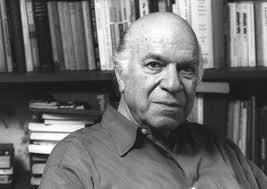
Open Cavell's interactive page (graphs of influences, similar and opposing positions, and quotes)
Background
Stanley Cavell
Born: Sept. 1, 1926 in Atlanta, Georgia
Died: June 19, 2018 (age 91) in Bosoton, Mass.
School: Postanalytic philosophy
Main interests: Skepticism, tragedy, aesthetics,
ethics, ordinary language philosophy, American
transcendentalism, film theory, opera, religion
Influences: Kierkegaard, Emerson, Thoreau,
Wittgenstein, J.L. Austin, Heidegger, Nietzsche,
Shakespeare, Freud, Robert Warshow, Roger
Sessions, Jean Renoir, André Bazin, Kuhn,
N. Frye, R. Albritton, N. Goodman, C. Esteban
Influenced: Charles Bernstein, Nikolas Kompridis,
James F. Conant, Cora Diamond, Toril Moi,
Jay Cantor, Michael Fried, Paul Guyer, Alice
Crary, Thomas Kuhn, Hilary Putnam, Terrence
Malick, Bernard Williams, Ross McElwee,
Nader El-Bizri, Cornel West, Robert H. Gardner,
Arnaud Desplechin, Martha Nussbaum
From Wikipedia
Cavell worked in the fields of ethics, aesthetics, and ordinary language philosophy. As an interpreter, he produced influential works on Wittgenstein, Austin, Emerson, Thoreau, and Heidegger…. His work was for a time frequently compared to that of Jacques Derrida, whom he met in 1970. Although their exchange was congenial, Cavell denied the full extent to which deconstruction could undermine the possibility of meaning, instead taking an explicitly ordinary language approach to language and skepticis.
Introductory Comments
Cavell shared Wittgenstein's conviction that philosophy can be therapeutic - that its proper office is less to construct grand theories than to dissolve the cramps into which our own lan- guage tends to lure us. But Cavell pushed this conviction further and in a more personal direction: Studying ordinary language was not simply a way to prevent the "bewitchment of intelligence by means of language" - not merely an academic hazard reserved for seminar rooms. Studying ordinary language was a way to explore the human condition. Properly practiced, this attention to language reaches into the questions that genuinely press upon us: what we owe one another, what we mean to one another, and whether we are living lives we can recognize as moral.
This same attention led Cavell to a scandalous conclusion: that "ordinary" culture deserves the seriousness we lavish on Kant's Critiques - possi- bly more, since people actually watch the mo- vies. Consider how Hollywood's comedy of re- marriage, "The Philadelphia Story," dramatizes the discovery that marriage is not a contract signed once but an ongoing conversation - a daily achievement of listening, acknowledging, forgiving, and understanding. The philosopher's reluctance to take such works seriously Cavell regarded as professional deafness. Movies, plays, poems, and novels deserve their seats at the philosophy table - at least sometimes.
Some of Cavell's Key Positions
Wittgenstein was right in thinking that philoso- phy can have therapeutic value - that it can cure us of conundrums due to the "bewitch- ment" of language. And the conundrums here need not be purely philosophical ones. That is, what is now called ordinary language philoso- phy (springing from the writings of Wittgen- stein and J. L. Austin) should address all important questions and concerns people have.
And ordinary language philosophy should be free to consider all forms of discourse and entertainment people typically enjoy. Consider, for example, what Hollywood films tell us about marriage and divorce: "The Philadelphia Story" and other comedies of remarriage are worthy of philosophical analysis, especially in regards to their implicit acknowledgment that marriage is a daily moral achievement
For too long philosophers have refused to ac- knowledge the importance of popular culture. It's time they welcome movies, plays, poems, novels and all other forms of literature and entertainment back into the philosophers' "Republic." After all, philosophy is a humanistic discipline and, as such, is linked to all other humanistic disciplines. Philosophy's unique task is not to transcend the ordinary, but to ac- knowledge and understand the ordinary - and, in doing so, to explore the self in its ongoing concerns and moral potential.
Place in the History of Ideas
Cavell's Place in History of Ideas
John-Baptiste Oduor: Cavell’s writing was characterized by a sensitivity to nuance, grounded in the belief that the interpretation of meaning - the chief task of philosophy on his reckoning - required attentiveness to our ordinary use of language. Our ordinary usages of language emerged, according to Cavell, from shared social practices, habits, and customs, or "forms of life," a phrase he took from the Austrian philosopher Ludwig Wittgenstein, his greatest influence. But Cavell’s understanding of meaning ran the risk of becoming its own kind of dogma.
Richard Moran: Cavell made contributions to classic philosophical problems such as the understanding of philosophical skepticism, and to the understanding of... philosophers such as Wittgenstein and J.L. Austin. But in bringing them into dialogue with figures like Beckett or Wordsworth, he also brought out the literary side of philosophical texts as well as what is philosophical in poetry, drama, and film. His writing is like nothing else in philosophy.
Marshall Cohen: Many, especially philosophers, who aspire to impersonality in their work are offended by the insistent foregrounding of self in Cavell’s writing. Some are also allergic to the craving for profundity he frequently exhibits. (Austin regarded this impulse as the mortal enemy of philosophy.)
Random Thoughts on Cavell
For Cavell, philosophy belongs among the hu- manities not because it should lower its ambi- tions, but because its highest ambition is hu- man self-understanding. Its task is not to levi- tate above common life like some metaphysical hot-air balloon, majestically untethered from the earth, but to return us - more awake - to the experiences, anxieties, aspirations, and moral demands that ordinary people can't help thinking about. Here Cavell’s kinship with Emer-son is unmistakable: life is a moral project of perpetual self-overcoming, a striving toward what he called the "unattained but attainable self." Philosophy, on this view, is not merely something one studies; it is something one practices, and at some personal risk.
Cavell was admired by some as one of the most original voices in 20th-century philosophy and dismissed by others as eccentric or frustratingly elusive - the sort of thinker who cited Fred Astaire and Thoreau in the same breath and ex- pected you to keep up. At bottom, the debate over him was this: Is philosophy a technical and rigorous discipline, or a type of self-examination using everyday language? Cavell's answer was unmistakable: it is both. An argument without rigor is not much of an argument, but a philos- ophy without human relevance is not much of a philosophy. It may remain technically clever, but it will have grown spiritually empty - more interested in the puzzle than in the puzzled.
Influences
Cavell was influenced by: Austin, J.L., Bazin, Andre, Emerson, Freud, Frye, Northrop, Goodman, Heidegger, Kierkegaard, Kuhn, Nietzsche, Renoir, Jean, Shakespeare, Thoreau, Wittgenstein
Cavell influenced: Bernstein, C., Cantor, Jay, Conant, James, Fried, Michael, Kompridis, N., Kuhn, Malick, T., Moi, Toril, Nussbaum, Putnam, West, Williams, B.
Similar and opposing positions
Thinkers with similar positions:
- Austin, J.L. (The validity of knowledge claims depends on their aim & context.)
- Bourdieu (Art is never free of the societal forces at work in its creation.)
- Emerson (The human self is always becoming, always partially in the future.)
- Gassendi (No one viewpoint captures all truth. Some skepticism is always good.)
- MacIntyre (Philosophy should return to basic questions that concern all of us.)
- Nietzsche (Philosophy should focus on lived experience, not abstractions.)
- Pyrrho (Given our human limitations, we can never be sure of what is true.)
- Shakespeare (Nothing is certain in life: We change as much as do our judgments)
- Socrates (We should question assumed truths to see if they are in fact true.)
- Wittgenstein (Language is an activity or form of life. It's a "game" we play.)
Thinkers with opposing positions:
- Bataille (Literature has no moral purpose. It's best when disrupting morals.)
- Brentano (Philosophy should use methods as rigorous and exact as science.)
- Derrida (It's fruitless to ground meaning on links betweeen text and the world.)
- Pascal (Skepticism is a product of the devil and we must fight against it.)
- Plato (Being a copy of a copy of a Form, art removes us even further from truth.)
- Schopenhauer (Art exists in a realm free of the forces at work on & within us.)
What others said about Cavell
- Patrick Mackie: [Cavell's] mental wandering was in service of a larger idea of intellectual responsibility than academic departments of philosophy have….
- Harrison Smith: [While at Harvard, Cavell] was often treated as something of an outsider, alternately scorned and celebrated by colleagues who noted that his books strayed far from the confines of traditional philosophy.
- Nussbaum: Stanley Cavell brought to philosophy a human depth and subtlety that it had all too often lacked. He also showed his more cautious peers that writing on Shakespeare and even Hollywood films could make a philosophical contribution, illuminating issues of love, shame and community.
- Marshall Cohen: Cavell rejects the view that skepticism is simply a theoretical claim. Rather, it is, he thinks, a cover for an attempt to convert the human condition, our metaphysical finitude, into an intellectual difficulty.
- Richard Moran: The quality of his writing was rigorous, but also personal. He addressed the reader quite directly and, at times, intimately.
- John-Baptiste Oduor: [Cavell's writing was] described by his critics as self-indulgent and by his defenders as profound. The reality was somewhere between these judgments, although often closer to the former than the latter.
- Eric Thurm: Although his prose was far more readable than that of the average academic, Cavell’s writing was decidedly over the top and overwrought in many ways, largely because everything for him read as simultaneously a matter of the utmost importance and something that could be endlessly debated, the subject of the same elliptical, vaguely mystic style.
- Rorty: Cavell is among professors of philosophy what Harold Bloom is among the professors of English: the least defended, the gutsiest, the most vulnerable. He sticks his neck out farther than any of the rest of us.
Schools: Ordinary Language Philosophy, Personalism, Pluralism, Post-analytic Philosophy, Pyrrhonism, Quietism, Skepticism
Main interests: Art and Aesthetics, Ethics, Film Theory, Language, Literature, Popular Culture, Religion, Tragedy
Cavell's answers to philosophical questions
Epistemology
Our connection to the world and to other minds is not primarily epistemic or cognitive, but ethical and existential.
Skepticism is not a problem to be solved but a permanent human condition, revealing our uneasy relationship with the world.
Ethics
Morality is not a matter of following rules, but rather an ongoing journey toward an unattained but attainable "next self."
Happiness is not about satisfying fixed desires, but about improving who we are and learning to live differently with others.
Language
Wittgenstein was right in claiming that philosophy can cure us of conundrums due to the "bewitchment" of language.
Mind
The self is not a sealed interior substance, but something formed through our talk and relations with other people.
Philosophy
Philosophy helps us "learn to think undistractedly about things that ordinary human beings cannot help thinking about."
Philosophy is autobiographical and confessional, inseparable from the voice and life of the philosopher who undertakes it.
Ordinary language philosophy attends to what we ordinarily say because our words show us who we are and what we mean.
Ordinary language philosophy is a humanistic pursuit that helps us understand all forms of human discourse.
The value of philosophy is not its transcendent profundity, but its unique focus on our ordinary concerns and moral potential.
Psychology
"[H]appiness requires not the ... satisfaction of our needs ... but the examination and transformation of those needs."
Religion and Theology
"The crucified human body is our best picture of the unacknowledged human soul."