Electric WebOpen the interactive pageAll thinkersAbout

George Santayana (1863 - 1952)

United States · 1900-1999 · Wikipedia

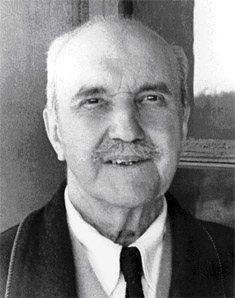
George Santayana

Open Santayana's interactive page (graphs of influences, similar and opposing positions, and quotes)

Background

George Santayana
  Born:  December 16, 1863 in Madrid, Spain
  Died:  September 26, 1952 (aged 88) in Rome
     Italy
  Alma mater:  Harvard University, King's  
     College, Cambridge
  Nationality:  Spanish-American
  Schools:  Pragmatism, Naturalism
  Notable ideas:  Lucretian materialism, Animal
     faith, Natural aristocracy, Realms of Being
  Influences:  Democritus, Plato, Aristotle,
     Lucretius, Spinoza, Schopenhauer, Emerson,
     Dawin, William James, Royce, Dewey
  Influenced:  Wallace Stevens, Russell,
    Whitehead, Voegelin, T.S. Eliot, Gertrude
    Stein, Van Wyck Brooks, Frederick J. E.
    Woodbridge, John Lachs, Erving Goffman,
    Irwin Edman, Morris Raphael Cohen, Timothy
    Sprigge, Irving Singer
 
From Wikipedia
 
Santayana was a Spanish philosopher, essayist, poet, and novelist. Born in Spain, he moved to the United States at the age of eight…. Although an atheist, Santayana valued the culture of the Spanish Catholic values, practices, and worldview, in which he was raised…. [Ane] although Santayana was not a pragmatist in the mold of William James, Charles Sanders Peirce, Josiah Royce, or John Dewey, The Life of Reason arguably is the first extended treatment of pragmatism written.
Introductory Comments
 
"Here is one more system of philosophy," Santayana announced at the start of Scepticism and Animal Faith. The joke says a good deal about the man. Santayana did build systems: five volumes of The Life of Reason, four of Realms of Being. But he never mistook them for the last word, and he refused to let philosophy shrink into a bloodless exercise in abstraction. For him it was one of the humanities - not a laboratory science of the mind but an art of understanding life as it is lived and felt. None of this made him sloppy. His rigor was exploratory rather than reductive, and he saw no reason to drain the grace and wit from his prose merely to prove his credentials.
 
Others had written philosophy with literary flair - Schopenhauer, Kierkegaard, Nietzsche - but each had an axe to grind, and some swung theirs with operatic gusto. Santayana had his dislikes too, German idealism chief among them, but his temperament was a naturalist’s. His model was Lucretius, the first of his Three Philosophical Poets. Naturalism, as Santayana meant it, holds that we are animals in a world of matter that owes us neither explanation nor consolation. Rather than remake the cosmos or press life into formulas, he asked what a brief existence in such a world might mean to creatures like us. In an age crowded with scientists, logicians, and metaphysicians, each eager to explain life from inside his own discipline, Santayana had the audacity to take it on its own terms - as a philosophical poet might.
Some of Santayana's Key Positions
 
Mind is an epiphenomenon of matter: a byproduct of the living organism that is caused but causes nothing in turn. All the world’s real work is done by matter, yet this hardly makes consciousness worthless. Consciousness is the seat of all value. Without it, nothing would matter to anyone, and nothing would make life worth living.
 
That matter exists and acts cannot be proved. It is accepted on "animal faith," the trust in a surrounding world that every action already presupposes. What consciousness grasps directly is something else: essences. These are the forms or qualities, such as a shade of red or the shape of a triangle, that appear in sensation and thought. Their realm is infinite, holding every possible form,. To contemplate essences for their own sake, rather than for what they bode for our hopes and fears, is the substance of the spiritual life.
 
Aesthetic value is immediate and intrinsic, yet it can never be wholly divorced from practical use and moral significance. Part of an object’s beauty is its expression: the meanings and associations it carries for us, fused so thoroughly with its form that they seem to belong to the thing itself.
 
When an experience accords with our nature, we are drawn to it; when the accord is complete, perception itself becomes pleasure. Beauty, in whatever form, is thus a pledge of possible harmony between our nature and the world.

Place in the History of Ideas

Santayana's Place in History of Ideas
 
Roger Kimball: Many people who know Santayana only from anthologies are surprised to discover how thoroughly naturalistic a thinker he was. It somehow seems strange for a poet of his sometimes trembling fervency. But right from the start Santayana’s primary philo- sophical inspirations were radical materialists like Lucretius and Spinoza (Spinoza, he said, “in several respects laid the foundation of my philosophy.”) Santayana’s naturalism assured his implacable hostility to supernaturalism: the patent variety - his native Roman Catholicism, for example - as well as the covert versions populating many schools of philosophy - German idealism, say, in both its original and transplanted-to-England-and-America forms.
  
Bertrand Russell: The only man I know of who did not feel any affection for [James] was Santayana, whose doctor's thesis William James had described as "the perfection of rottenness." There was between these two men a tempera- mental opposition which nothing could have overcome. Santayana also liked religion, but in a very different way [than did James]. He liked it aesthetically and historically, not as a help towards a moral life; as was natural, he greatly preferred Catholicism to Protestantism. He did not intellectually accept any of the Christian dogmas, but he was content that others should believe them, and himself appreciated what he regarded as the Christian myth.
 
 
Random Thoughts on Santayana
 
In his later years Santayana divided reality into four "realms": matter, essence, truth, and spirit. Spirit was simply consciousness - the lit-up quality of awareness itself, the difference between a creature that sees a sunset and one that merely reacts to light. He insisted it was wholly natural, as much a product of the organism as digestion or breathing. But he came to think that spirit’s highest calling was to contemplate essences for their own sake, free of the animal’s appetites and anxieties. To some readers this looked like backsliding. Having planted mind firmly in the body, Santayana seemed to cut it loose again, prizing exactly those moments when awareness stops guiding action, serving need, or pointing beyond itself.
 
So why the shift, if shift it was? Perhaps the older Santayana simply wished to honor the quiet marvel of consciousness - natural through and through, yet shimmering with something like the light of the divine. He had lost his religious faith young but never his affection for Catholic poetry and ritual. Perhaps pure awareness became his secular stand-in for the sacred: spirituality with the theology scrubbed off. Or perhaps the answer is more melancholy. He spent his last decade in Rome, in a clinic run by nuns, as unbelieving as ever, while a war raged outside the walls. Picture an aging philosopher savoring moments of consciousness in solitude, like pressed flowers from a garden he could no longer visit.

Influences

Santayana was influenced by: Aristotle, Darwin, Democritus, Dewey, Emerson, James, Lucretius, Peirce, Plato, Royce, Schopenhauer, Spinoza

Santayana influenced: Brooks, V.W., Cohen, M.R., Edman, Irwin, Eliot, T.S., Goffman, E., Lachs, John, Russell, Singer, Irving, Sprigge, Stein, G., Stevens, W., Voegelin, Whitehead, Woodbridge

Similar and opposing positions

Thinkers with similar positions:

Thinkers with opposing positions:

What others said about Santayana

Schools: Atheism, Epicureanism, Epiphenomenalism, Naturalism, Pragmatism, Skepticism

Main interests: Art and Aesthetics, Autobiography, Beauty, Desire, Habits, History, History of Ideas, Human Will, Literature, Logic, Metaphysics, Music, Nature, Poetry, Psychology, Religion, Sublime Nature, Universals, Virtue, War, Will, Wisdom
Santayana's answers to philosophical questions

Art and Aesthetics

What is art? How does it differ from other human endeavors? How is it similar?
"An artist is a dreamer consenting to dream of the actual world."
What function does art play in our individual lives? In what sense does it enrich our lives?
Nothing colors "human happiness more pervasively than art does, nor [conveys] more deeply the mind's internal habit."
What is beauty? Is it completely subjective? If not, how can it be objectively assessed?
Beauty is the harmony between our nature and our experience. When this correspondence is perfect, perception is pleasure.
What role does emotion play in creating and appreciating art? Does art transform our emotions?
"... art registers passions without stimulating them.... This appears unmistakably in erotic and religious art."
Is the value and meaning of a work of art a completely subjective matter?
While artistic valuation is largely a matter of taste, tastes vary in their authority due to their varying degree of refinement.
What separates the fine arts from the crafts and applied arts? Is this distinction significant?
In judging any form of art, we can never completely divorce aesthetic value from practical use and moral significance.
Is there a connection between morality and art? Can a work of art be immoral?
"I can see no distinction... between moral & esthetic values: beauty being a good, is a moral good." It's part of a good life.
How can art satisfy psychological needs? What needs or emotions here are most important?
Art stimulates our imagination, which in turn gives us "pleasures more airy and luminous than those of sense...."
What is the proper role or task of the art critic? Or does the art critic have no useful role?
"Psychological penetration & reconstructed biography may be excellent sport," but they're largely irrelevant in criticism.

Education

What methods, arrangements or emphases in education should be avoided or replaced?
"A child educated only at school is an uneducated child."
What are the relative merits of book learning and hands-on experience? Which is most needed?
"The great difficulty in education is to get experience out of ideas."

Epistemology

To what extent can we rely on logic or reason? To what extent should we rely on logic or reason?
"Reason is like a dog that explores the road [with us]; but he cannot choose a direction or supply a motive for the journey...."
Is truth something discovered or something constructed? Or does this depend on the topic?
"Mind was not created for the sake of discovering absolute truth. The absolute truth... scorns to be known."
Is complete skepticism a viable or justifiable position? If not, what about limited skepticism?
"Skepticism is the chastity of the intellect, and it is shameful to surrender it too soon or to the first comer...."

Ethics

If moral truths actually exist, how can we find them? Through reason? Faith? Intuition? How?
"The... intuitions on which ethics rests are not debatable, for they are not opinions we hazard but preferences we feel...."
Is happiness the most important purpose or aim in life? If not, what is more important?
"Happiness is the only sanction of life; where happiness fails, existence remains a mad and lamentable experiment."
Is the meaning we find in life something discovered or created? Or is there no meaning here?
"That life is worth living is the most necessary of assumptions and, were it not assumed, the most impossible of conclusions."
What is love? An ideal? An emotion? An independent force in nature?
"In love the heart surrenders itself entirely to the one being that has known how to touch it. "
What is friendship? How does it differ from love? How is it related, if at all, to ethics?
"Those were the two prerequisites, in my conception, to perfect friendship: capacity to worship and capacity to laugh."
What is the moral significance, if any, of death? Should our mortality affect how we live?
"Let a man once overcome his selfish terror at his own finitude, and his finitude is, in one sense, overcome."
What is the moral significance of freedom? To what extent does morality require freedom?
"A man is morally free when...he judges the world, and judges other men, with uncompromising sincerity."
Is there any logical, biological, or factual basis upon which values are determined or ordered?
"... value lies in meaning, not in substance; in the ideal which things approach, not the energy which they embody."

History

In what sense and to what extent, if at all, is the course of history one of progress?
"Those who speak most of progress measure it by quantity and not by quality."
Are historical studies a science, an art, an exercise in story-telling, or a hybrid of some sort?
"History is a pack of lies about events that never happened told by people who weren’t there."
How does learning history help us as members of a society or enrich us as individuals?
"Those who cannot remember the past are condemned to repeat it."

Language

What is the role of language in our thought? To what extent does thinking rely on language?
"What is not covered [by words or some other] symbol can never be recovered; the dark flood of existence carries it [away]."
Can language or the misuse of language at times pose a danger to an individual or to a group?
"... those who play with words [to create] new and wonderful universes... cannot humanise the one in which they live...."
What is the role of metaphor in language and in thought? How do metaphors have meaning?
"All human discourse is metaphorical, in that our perceptions and thoughts are adventitious signs for their objects...."
To what extent can language capture or equal or at least point to reality?
"In that paper money of our own stamping..., we are olbiged to reckon all the movements and values of the world."

Metaphysics

What is the fundamental nature or substance of things? Mind? Matter? Process? Spirit? God?
"[Everything] ideal has a natural basis and everything natural an ideal development."
Do "forms" or universals exist? If so, do they exist independent of material things?
Though we justly assume a realm of matter, pure consciousness reveals only an infinite number of forms or essences.
Does time flow? If so, in what sense? If not, why do we think it does?
"The essence of nowness runs like a fire along the fuse of time."
Does free will really exist? If so, how is it consistent with universal causality?
"When we can act... as our nature demands, we are morally free. When things... impede us, we are morally constrained."
If mind and matter are in fact two distinct realms of being, how, if at all, can they interact?
Mind is an epiphenomenon of matter (nervous systems and brains). Mind is a byproduct and has no causal powers.

Mind

What is mind? Is it a substance or a process? Does it have parts? Does it serve a function?
"By their mind, its scope, quality, and temper, we estimate men, for by the mind only do we exist as men...."
Is mind a mere by-product or epiphenomenon? Or does it have causal powers of its own?
Consciousness is a by-product of the brain and has no power in and of itself. Causality belongs to the realm of matter.

Nature

Is there a spiritual or vitalistic element in nature, or is nature a purely physical process?
Nature's power over us: "Everything in nature is lyrical in its ideal essence, tragic in its fate, and comic in its existence."
What place do humans have in nature? What, if anything, sets them above other animals?
"Man used to be called a rational animal, but his rationality is... eventual..., whereas his animality is actual & profound."
Does nature have any moral significance? Does nature offer us any moral lessons?
"Nature has no horror of the things that horrify us: ... emptiness, monotony..., waste, pain, slaughter & utter destruction."
Do we have a psychic or emotional need for being in nature? If so, how can we satisfy this need?
Visiting untamed nature allows you "at once to play and to worship, to take yourself simply, humbly, for what you are."

Philosophy

Is philosophy a logical discipline, a humanistic pursuit, an intuitive leap, or a hybrid of sorts?
"Professional philosophers are usually only apologists... absorbed in defending some vested illusion or some eloquent idea."
What is the value of studying philosophy? How can philosophy enrich your life? Or can it?
"Philosophy seems to me to be its own reward, and its justification lies in the delight and dignity of the art itself."

Political Philosophy

When, if ever, is revolution justified? What are the inherent dangers of revolution?
The success of revolutions "is generally proportionate to their power.... to [reabsorb] what they rebelled against."

Psychology

To what extent does reason determine our actions? To what extent do impulse and desire rule?
Reason is just another inherited passion. And, like other passions, it's too prone to regarding its aims as alone important.
What is the will? What role does will play in human psychology? What are its constraints?
"Sense is like a lively child always... saying, Look, look.... Will is like an orator, indignantly demanding something different."
Which is more important in understanding human behavior: nature or nurture?
"The reason why it is easy to mistake the demands of one's nature is that human instincts are very complex and confused...."
Is happiness actually possible? If so, how is it achieved? If not, what is our alternative?
"To be interested in the changing seasons is a happier state of mind than to be hopelessly in love with spring."

Religion and Theology

What exactly is religion? How is it distinguished from other institutions and belief systems?
"Religion is poetry become the guide of life, poetry substituted for science [and pursued as] the highest reality."
What explains the origin of religion: revelation, reason, fear, awe, story-telling, fellowship?
"That fear first created the gods is perhaps as true as anything so brief could be on so great a subject.”
What is spirituality? Does it require belief in God? Does it entail a certain approach to life?
"The spirit... is only the faculty - the disenchanting and re-enchanting faculty - of seeing this world in its simple truth."
What role does faith play in religion? Is it more important than reason?
"Faith in the supernatural is a desperate wager made by man at the lowest ebb of his fortunes."
Did God create the universe and/or design nature? If so, is God still at work in the world?
"The life of spirit, being natural, is contingent.... It was not a duty for matter to produce life, nor... life to produce spirit."
Do souls or spirits exist after death? If so, in what manner and for what sort of creatures?
Nature dangles "this exciting and unsatisfactory bauble of life before us for a moment" and then takes it away forever.
What is the role of miracles in religion? How much credence, if any, should we give miracles?
"Miracles are propitious accidents, the natural causes of which are too complicated to be readily understood."
Is atheism simply the lack of belief or is there something positive and uplifting in atheism?
"My atheism, like that of Spinoza, is true piety towards the universe & denies only gods fashioned by men in their own image."
How should we approach the study of holy texts? What role does interpretation play here?
"[R]eligions, where they do not... contradict science, express destiny in moral dimensions, in obviously mythical... images."

Science

Is science compatible with religion? If they conflict, which one should we believe?
Religion springs from imagination. "When it explains events or assigns causes, it is an imaginative substitute for science."

Sex and Gender

What are the essential social and/or psychological differences between men and women?
"To be a male means to have chosen the more arduous, though perhaps the less painful adventure,... less deeply rooted...."
How should differences between husband and wife be resolved? What makes a marriage work?
"It takes patience to appreciate domestic bliss; volatile spirits prefer unhappiness."

Society

If human beings are social animals, what needs are met by society - and what are not?
"Society is like the air, necessary to breathe but insufficient to live on."
Do societies progress in any meaningful way? If so, how should we measure this progress?
"Those who speak most of progress measure it by quantity and not by quality...."
What are the main benefits of living in a society? What are the main dangers?
"Social intercourse is essentially play...; the relish of it comes of liking our part and feeling we are doing it nicely...."