R. M. Hare (1919 - 2002)
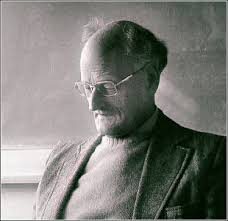
Open Hare's interactive page (graphs of influences, similar and opposing positions, and quotes)
Background
Richard Mervyn Hare
Born: 21 March 1919 in Backwell, Somerset,
England
Died: 29 January 2002 (aged 82) in Ewelme,
Oxfordshire, England
Alma mater: Balliol College, Oxford
Era: 20th-century philosophy
Region: Western Philosophy
Schools: Analytic, Utilitarianism
Main interests: Ethics, language
Notable ideas: Universal prescriptivism, two-
level utilitarianism
Influences: Immanuel Kant, A. J. Ayer, J. L.
Austin, Ludwig Wittgenstein, Gilbert Ryle, Henry
Sidgwick, Charles L. Stevenson, Jeremy
Bentham
Influenced: Peter Singer, Bernard Williams,
Brian McGuinness, John E. Hare
From Wikipedia
Hare is best known for his development of pre- scriptivism as a meta-ethical theory... and for his defence of preference utilitarianism based on his prescriptivism…. Hare held that ethical rules should not be based on a principle of utility, though he took into account utilitarian considera- tions. His hybrid approach to meta-ethics distin- guishes him from classical utilitarians like Jeremy Bentham…. Although Hare used many concepts from Kant, especially the idea of universalisability, he was still a consequentialist….
Introductory Comments
R. M. Hare wrote in the shadow of a crisis. Logi- cal positivism had threatened to make ethics merely emotive - moral statements reduced to little more than sophisticated grunting. Hare wanted to rescue moral philosophy from this fate by showing that ethical statements have genuine logical structure and can be reasoned about rigorously. But he also saw problems with the two choices before him: Kant's univer-sal duty-ethics, magnificent as it was, floated somewhat free of human welfare and actual consequences - it could, at its worst, forbid lying to a murderer about where your friend was hiding. And raw utilitarianism, for all its admirable concern for human happiness, seemed to license monstrous acts at times.
Hare's solution was combine these two ethical traditions. He did this by asking a deceptively simple question: what are we actually doing when we make a moral statement? His answer - universal prescriptivism - held that moral judg- ments are prescriptions (commands for action) that must be universalizable (applicable to everyone in similar circumstances). Here came the magic trick: if you genuinely universalize your moral prescriptions, you must imagina-tively inhabit every affected person's position and weigh their preferences impartially. And impartial preference-weighing, Hare argued, just is utilitarianism. Voilà! Kant's ghost has just handed you Bentham's calculator.
Some of Hare's Key Positions
Despite what some philosophers seem to think, morality is not merely a matter of cultural indoctrination, religious bias, and emotional reaction. There is such a thing as moral judg- ment based on rational reasons. To see how this is possible, we must start from the fact that moral statements are inherently prescriptive. That is, they tell us what to do. And as such, moral statements must also be subject to logical analysis: Before there is a prescriptive conclu- sion, there must first be a moral premise as to what is good and bad, followed by a prescribed action consistent with this premise.
Insofar as these prescriptive premises are by nature universals, moral analysis here might be seen as similar to Kant's categorical imperative. However, contra Kant's position, these moral universals must be based on or at least linked to matters of utility - desired results. Universal prescriptivism, then, means that moral statements like "lyng is wrong" require further refinement based on the consequences of lying.
This is to say, universal prescriptivism is a hybrid of sorts. It acknowledges, with Kant, the importance of the principle of universality: what applies to you must also apply to me and everyone else. But it also accepts, with Bentham and Mill, the principle of utility: that the goodness or rightness of an action must be linked to the consequences of that action.
Place in the History of Ideas
Hare's Place in History of Ideas
Jane O'Grady: Hare accepted the emotivist premise that moral judgments do not, in the same way as ordinary statements do, state matters of fact that are either true or false, but denied that therefore they must be forms of exclamation. Rather, he argued, they are forms of command. However, unlike normal com- mands, which simply reflect one's preferences, they are "universalisable" - they commit one, in saying an action ought or ought not to be done (or in calling it good or bad) to similarly prescribing (or commending) a similar action to anyone else in similar circumstances.
Jonathan Baron: [Hare argued] that moral thinking, correctly done, would lead to utilitar- ianism. By arguing that such thinking could be evaluated by criteria of rationality, he departed from other popular philosophical views while at the same time trying to preserve what was valuable about each one. Surprisingly, the view he felt was closest to his own was that of Immanuel Kant. This was despite the fact that Hare thought that Kant's categorical imperative was vaguely stated and that Kant's examples were misleading and distorted by Kant's moral intuitions, which came from his religious upbringing…. However, Hare believed that the categorical imperative would lead to utilitarian conclusions when interpreted more broadly, without the baggage of Kant's examples and with some of the ambiguities resolved.
Random Thoughts on Hare
Many critics refused to cross Hare's bridge from Kant to Mill (see Introductory Comments). Kantians protested that Kants's universalism was about respecting persons as ends in them- selves, not running cosmic preference polls. Utilitarians, meanwhile, wondered why they needed all this Kantian scaffolding when they could just get on with maximizing welfare, thank you very much. Bernard Williams argued that Hare's framework, like utilitariansm gener-ally, steamrolls personal integrity and the com- mitments that make a life genuinely one's own.
Perhaps the most devastating critique came from G. E. M. Anscombe, who argued that Hare - along with the entire modern ethics es- tablishment - was rearranging deck chairs on a philosophically sinking ship. Concepts like "mor-al obligation" and "ought," she contended, are ghosts of a divine law framework that secular philosophy quietly abandoned while keeping the vocabulary, like an atheist who still says "bless you" after a sneeze. What ethics needs is not cleverer logic-chopping about moral lan- guage but a return to Aristotelian virtue - ask- ing not "what rules should I follow?" but "what kind of person should I become?" Anscombe's challenge cuts deep because it suggests Hare's entire project, however ingenious, is built on a conceptual foundation that no longer exists. Or to use the opening metaphor: What good is a bridge from Kant to Mill without abutments?
Influences
Hare was influenced by: Austin, J.L., Ayer, Bentham, Kant, Ryle, Sidgwick, Stevenson, C.L., Wittgenstein
Hare influenced: Hare, John E., McGuinness, B., Singer, Peter, Williams, B.
Similar and opposing positions
Thinkers with similar positions:
- Ayer (Moral statements express attitudes or feelings, not empirical facts.)
- Berlin (No quantitative approach to values or ethical questions is possible.)
- Bradley (Maximizing pleasures should not be the end moral agents aim for.)
- Foot (Moral judgments, though linked to human nature, can be true and rational.)
- Hume (Ethics are not empirical. One cannot derive an "ought" from an "is.")
- Singer, Peter (We should consider interests of all who are affected by our acts.)
- Spinoza (Moral absolutes do not exist. Nothing is inherently good or evil.)
Thinkers with opposing positions:
- Abelard (Subjective intention or good will determines moral value of actions.)
- Anscombe (Moral absolutes do exist. Some things are inherently good or evil.)
- Bataille (To be free means to be unrestrained by any chains of morality.)
- Bentham (Greatest happiness of greatest number determines right & wrong.)
- Green (Objective ethics can be based on the objective function of mankind.)
- Kant (Moral worth is not based on results, but on adherence to principles.)
- Mill (Moral worth derives solely from the consequences of one's actions.)
- Moore (Though in part intuitive, moral judgments can be objectively true.)
- Stevenson (Moral statements do not express propositions but mere emotions.)
What others said about Hare
- Jane O'Grady: The stubborn determination that had sustained Hare as a POW informed his idiosyncratic mores... and his refusal to wear socks.…
- Singer, Peter: [Hare was in large part responsible for] restoring reason to moral argument, distinguishing intuitive and critical levels of moral thinking, and pioneering the development of practical or applied ethics.
- Anthony Price: It was his ambition to have united elements from Aristotle, Kant, and Mill in a logically cogent way that solved the fundamental problems of ethics (though leaving unfinished business), and he usually believed himself to have achieved this…. His disappointment was not to have persuaded others... and to have left no disciples….
- Jane O'Grady: [Philippa] Foot accused Hare of being too concerned with the logical structure of moral language to capture what is important in morality: human well-being.
- Singer, Peter: … he was never afraid to ask the most controversial questions, such as What is Wrong with Slavery? and his answers were always enlightening.
- Jonathan Baron: Considered by Singer to be the founder of applied ethics, Hare regarded moral philosophy not as an exercise in academic analysis but as a set of tools to be used in the real world.
- Jane O'Grady: [Hare argued that,] in morally choosing, one is forced to take account of other people's preferences, and to bind oneself to one's own prescriptions. Hare's account seemed cleverly to reconcile the contradictory but essential elements in morality - that it necessarily combines both choice and compulsion, emotion and reason, the... personal and... the universal.
- Anthony Price: At the heart of Hare’s ethical theory... lies a vision of human beings as unable to live up to a way of thinking towards which they are nonetheless ineluctably drawn.
Schools: Analytic Philosophy, Consequentialism, Ethical Hedonism, Ordinary Language Philosophy, Secularism, Utilitarianism
Main interests: Ethics, Fact–value distinction, Language
Hare's answers to philosophical questions
Ethics
"… our ultimate moral principles can become so completely accepted by us, that we treat them... as matters of fact. "
Universal prescriptivism is a hybrid: It acknowledges both the principle of universality and the importance of consequences.
"… if we cannot universalize the principle, it cannot become an 'ought.'"
Preference Utilitarianism means that in making moral decisions one must give equal weight to everyone's preferences.
Language
Moral language does more than communicate information or express emotion: It sets up rules and give commands.