Gilbert Ryle (1900 - 1976)
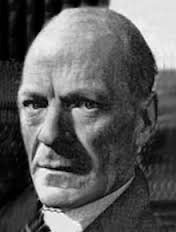
Open Ryle's interactive page (graphs of influences, similar and opposing positions, and quotes)
Background
Gilbert Ryle
Born: 19 August 1900 in Brighton, England
Died: October 6, 1976 (aged 75) in Whitby,
England
Alma mater: The Queen's College, Oxford
Schools: Analytic, ordinary language
philosophy
Main interests: Language, philosophy of mind,
behaviourism, meaning, cognition
Notable ideas: Category mistake, Ryle's Regress,
ghost in the machine, knowing-how vs.
knowing-that, topic neutrality
Influences: Descartes, Schopenhauer, Husserl,
Wittgenstein, G. E. Moore
Influenced: J. L. Austin, A. J. Ayer, John Searle,
R. M. Hare, Wilfrid Sellars, Dennett, Richard
Webster, Ullin Place, Clifford Geertz, Gerald
Cohen, P. F. Strawson, Michael Dummett, J. J. C.
Smart, John Passmore, Bernard Williams
From Wikipedia
Ryle was a British philosopher, principally known for his critique of Cartesian dualism, for which he coined the phrase "ghost in the machine." He was a representative of the generation of British ordinary language philosophers who shared Ludwig Wittgenstein's approach to philosophical problems. Some of Ryle's ideas in philosophy of mind have been called behaviorist. In his best-known book, The Concept of Mind, he writes that the "general trend of this book will undoubtedly, and harmlessly, be stigmatized as 'behaviorist'."
Introductory Comments
Some philosophical problems get solved, and many more are simply abandoned. Ryle proposed a third fate: show that the problem was never there in the first place. His target was the mind-body problem as Descartes had left it. On that picture, each of us is two things yoked together. One is a body, public and running like clockwork. The other is a mind, private, immaterial, and somehow in charge. For three centuries philosophers labored to explain how the one could pull the levers of the other. In The Concept of Mind (1949), Ryle named the picture, "with deliberate abusiveness," the dogma of the Ghost in the Machine.
The error, Ryle argued, was a category mistake: filing a concept under the wrong logical type. He illustrated it with a foreigner watching his first cricket match. The visitor learns what the bowlers, batsmen, fielders, and umpires each do, then asks who supplies the famous team spirit. He has mistaken the way the players play for one more player on the field. Dualists, on Ryle’s account, make the same blunder about the mind. To call someone shrewd, careful, or witty is not to report events in a hidden inner theater. It is to describe how that person acts. But does this really dissolve the mind-body problem? Critics asked whether a toothache, or a sum worked silently in the head, is really nothing more than a tendency to behave. Ryle himself spent much of his later career puzzling over what thinking is. The ghost, it seems, proved easier to mock than to exorcise.
Some of Ryle's Key Positions
Many philosophical puzzles come from category mistakes: treating a concept of one logical type as if it belonged to another. A visitor is shown Oxford's colleges, libraries, and laboratories, then asks, "But where is the University?" He assumes it is one more building, when it is really the way the buildings are organized. The fault lies not in ordinary speech, which people use competently, but in philosophers who misread its logic.
The chief example is the Cartesian "dogma of the Ghost in the Machine." It pictures the mind as a second, hidden thing: a private, non-physical theater running alongside the body. But "mind" names no thing at all, ghostly or otherwise. Calling someone clever or vain reports no invisible inner happenings. It describes how that person acts, and would act in various circumstances. Like "brittle" or "soluble," mental terms describe dispositions, not hidden objects. Materialism makes the same mistake in reverse, treating mind and matter as rival entries on one list of things that exist.
Intelligence shows itself above all in knowing how, not merely knowing that. Riding a bicycle or telling a joke well requires no prior consulting of rules. If it did, applying those rules would require further rules, without end. Philosophy's work is therefore largely corrective. It finds "systematically misleading expressions," whose grammar disguises their logic. It also maps the "logical geography" of our concepts, to show where the knots were tied.
Place in the History of Ideas
Ryle's Place in History of Ideas
Scott M. Christensen: The term philosophy of mind came into currency in the English-speak- ing world in the 1950's, largely as a description of the debates initiated by Gilbert Ryle's pioneering book The Concept of Mind, published in 1949. Ryle's book was a polemic against the Cartesian idea that mental states are states of an immaterial substance. This polemic, and the ensuing discussion, turned on the question of the reducibility of mental events to behavioral dispositions. Ryle's central argument was that we had misconceived the "logic" of such words as "belief," "sensation," "conscious," etc.
Bryan Magee: [Ryle insisted that] we are not two entities [mind and body] mysteriously laced together. We have made what he calls a category mistake (a term to which he gave wide currency in philosophy): we treat the concept of mind as if it designated one sort of thing when in fact it designates a quite different sort of thing. We think of mind as a separately exist- ing entity that does things and has experiences, when all the time it is merely an umbrella term for certain among our various modes of behavior - performance, disposition, experience and so on - all of which should correctly be attributed to a single person. This category mistake breeds a whole population of other mistakes in our assumptions about ourselves, and in our various ways of thinking and talking about ourselves.
Random Thoughts on Ryle
Ryle’s dismissal of the Ghost in the Machine tidied up a great deal, but critics soon wondered whether something precious had been swept out along with the ghost. Stub your toe, and more happens than a sudden readiness to hop about and swear. It hurts. Ryle never denied this; he wrote at length about sensations. What he denied was that they are private objects inspected by an inner eye. Still, many readers came away suspecting that the hurt had been demoted, as if feeling were a footnote to doing. Call it the Behaviors-R-Us problem. A generation later, Nagel gave the suspicion its slogan: there is something it is like to be a conscious creature. Catalog everything a person does at sunset - gasping, lingering, saying "Wow" - and the golden glow itself somehow goes missing.
Which raises a stranger question: why is there any glow at all? Evolution, the argument runs, is a thrifty engineer that rarely pays for mere decoration. (Even the peacock’s tail earns its keep in the mating game.) So felt experience must do real work. But what work? Ryle would have called the question badly posed, since it presupposes the very inner theater he set out to dismantle. Yet the question may hide a deeper snag. To understand what consciousness is for, consciousness must examine itself - which is a little like an eye trying to see itself without a mirror. Even Ryle noticed something similar. The self that tries to catch itself in the act, he observed, is like the shadow of one's own head: it never waits to be jumped on.
Influences
Ryle was influenced by: Bolzano, Descartes, Husserl, Moore, Schopenhauer, Wittgenstein
Ryle influenced: Austin, J.L., Ayer, Cohen, Gerald, Dennett, Dummett, Geertz, C., Hare, Passmore, J., Place, Ullin, Searle, Sellars, Smart, J.J.C., Strawson, Webster, R., Williams, B.
Similar and opposing positions
Thinkers with similar positions:
- Carnap (Many philosophical questions abuse language and are meaningless.)
- Coleridge (No radical metaphysical split exists between realms of mind & matter)
- Democritus (Everything is composed entirely of various imperishable atoms.)
- Hobbes (All things, including humans and their minds, are entirely material.)
- Skinner (Behavior is a matter of stimuli & responses, not psyche or inner states.)
- Strawson (Mind and body are united in the primitive concept of personhood.)
- Wittgenstein (Language is an activity or form of life. It's a "game" we play.)
- Wittgenstein (Much confusion springs from the enchantment of language.)
Thinkers with opposing positions:
- Chalmers (Like time & space, consciousness may be a basic property of reality.)
- Descartes (A radical metaphysical split exists between realms of mind & matter)
- Montaigne (Animals have inner lives as rich and as animated as our own.)
- Nagel (Being a thinker is to have a subjective perspective on the world.)
- Piaget (Behavior springs more from internal conceptions than external stimuli)
- Pinker (The structure of a language does not affect its speakers' worldview.)
- Russell (Language is ultimately dependent upon a layer of atomic facts.)
- Sellars (Science can & should attribute subjective inner experience to people.)
What others said about Ryle
- Julia Tanney: First, he was seen to have put the final nail in the coffin of Cartesian dualism.
- Alex Scott: According to Ryle, mental processes are merely intelligent acts. There are no mental processes distinct from intelligent acts. The operations of the mind are not merely represented by intelligent acts; they are those... acts.
- Ayer: ... Ryle is committed to the view that all our talk about our mental states and processes can be reformulated in such a way as to eliminate any reference to an inner life. What he would put in its place would be a set of dispositional statements about people's overt behavior. If this view could be sustained, it would be a boon to philosophers.
- Fodor: Thought about the world is prior to thought about how to change the world. Accordingly, knowing-that is prior to knowing-how. Descartes was right and Ryle was wrong.
- Julia Tanney: ... as dualism’s replacement, [Ryle argued for] the doctrine known as philosophical (and sometimes analytical) behaviourism.
- Stuart Hampshire: This [The Concept of Mind] is probably one of the two or three most important and original works of general philosophy which have been published in English in the last twenty years.
- Anthony Kenny: I found its [The Concept of Mind's] style exhilaratingly different from that of the scholastic textbooks which were prescribed in the courses of my Pontifical University; yet I came gradually to realize that the philosophical content of the book bore some surprising resemblances to the doctrines of Aristotle and Aquinas....
- Bryan Magee: Ryle's book [The Concept of Mind] is a paradigm example of how a linguistic analyst goes about clearing up [philosophical problems].
Schools: Analytic Philosophy, Behaviorism, Common Sense Realism, Linguistic Philosophy philosophy, Ordinary Language Philosophy, Physicalism, Quietism
Main interests: Free/Unfree Will, Language, Mind
Ryle's answers to philosophical questions
Ethics
Even love has its limits: "[People] are irremediably blind and deaf to the workings of one another's mind."
Language
"Certainly there are some things which I can find out about you only, or best, through being told of them by you. "
Wittgenstein is right: Instead of asking what a word means, ask how it is used in the particular "language game" at issue.
Needless puzzles can arise from giving too much credence to certain categories and/or distinctions used in everday discourse.
Metaphysics
The problem of free will is a "tangle of spurious problems." It's a myth to think of minds as entities outside the causal system.
Mind/body dualism involves category mistakes that falsely assume mental processes can be isolated from physical processes.
Mind
Mind is not distinct from the body: "Man need not be degraded to a machine by being denied to be a ghost in a machine."
"In searching for the self, one cannot simultaneously be the hunter and the hunted."
"Overt intelligent performances are not clues to the workings of minds; they are those workings."
We are misled: "'Consciousness' was imported to play in the mental world the role played by light in the mechanical world."
Philosophy
"Philosophy is the replacement of category-habits by category-disciplines."
Society
"Only through the medium of the public physical world can the mind of one person make a difference to the mind of another."