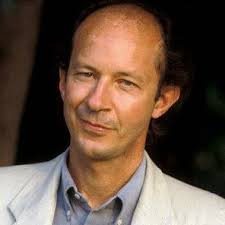
Agamben is an Italian philosopher best known for his work investigating the concepts of the state of exception, form-of-life (borrowed from... Wittgen- stein) and homo sacer. The concept of biopolitics (carried forth from the work of... Foucault) in- forms many of his writing…. In a realized state of exception, one who has been accused of commit- ting a crime,... loses the ability to use his/her voice and represent themselves. The individual can not only be deprived of their citizenship, but also of any form of agency over their own life.
Introductory Comments
Agamben argues that sovereignty is best de- fined not by who makes the laws but by who gets to suspend them, due to so-called "emer-gencies." The sovereign is precisely the one who stands both inside and outside the legal order simultaneously - empowered by law to declare law void. This produces a genuine paradox at law's foundation: the legal system authorizes its own suspension, meaning the exception is not law's opposite but its hidden twin. Law, in other words, contains within itself a trapdoor - and sovereigns have always known where it is.
Drawing on the Roman Republic, medieval emergency powers, and especially the theories of Carl Schmitt, Agamben notes that govern- ments have long claimed the right to suspend ordinary laws when danger threatens the state. But what was once supposed to be rare and brief has become tragically fashionable - a kind of permanent political "break glass in case of emergency." Wars on terror, border crises, pandemics, domestic unrest, and endless "national security" alerts have allowed excep-tional powers to become ordinary tools of governance. From Hitler's Enabling Act to the post-9/11 security apparatus to Trump's second term as U. S. President, the exception has migrated from the margins of law to its center, normalized through repetition until citizens scarcely notice the bars of the cage being quietly installed around them.
Some of Agamben's Key Positions
As problematic as Carl Schmitt's political philos-ophy is, elements of it deserve to be taken seri- ously - particularly his claim that "sovereign is he who decides on the exception." For Schmitt, when emergencies threaten the state, the sove- reign suspends established laws and procedures to address the threat; and since such threats inevitably arise, this power to declare a State of Exception is the very essence of sovereignty. And thus the paradox at the foundation of law itself: the law authorizes its own suspension.
The danger is not merely that sovereigns abuse this power for selfish ends - though Hitler and others certainly did. It is that the State of Ex- ception creates a zone where human beings are stripped of legal status and reduced to "bare life," exposed to sovereign violence without recourse. George W. Bush's Guantánamo de- tainees are a paradigm case: neither criminals nor prisoners of war, they were legally deemed stateless, and have never had their day in court.
More troubling still, the State of Exception has become the dominant paradigm of govern- ment - not only in totalitarian regimes but in contemporary liberal democracies, which now govern through normalized emergency to de-prive citizens of their rights. And thus: the line between constitutional government and authoritarianism may be far thinner than modern societies would like to believe.
Place in the History of Ideas
Agamben's Place in History of Ideas
Adam Kotsko: Agamben argued that all the ma- jor Western nations have increasingly declined to govern by means of normal constitutional processes and have come to rely on emergency powers, even in response to seemingly worka- day problems like economic downturns. To quote Agamben’s idol Walter Benjamin - a German Jewish intellectual who witnessed the rise of Hitler and ultimately died by suicide to escape deportation to a concentration camp - the "state of exception has become the norm."
Catherine Mills: Agamben argues that the contemporary age is marked by the destruction or loss of experience, in which the banality of everyday life cannot be experienced per se but only undergone, a condition which is in part brought about by the rise of modern science and the split between the subject of experience and of knowledge that it entails. Against this destruction of experience..., Agamben argues that the recuperation of experience entails a radical rethinking of experience as a question of language rather than of consciousness, since it is only in language that the subject has its site and origin. Infancy, then, conceptualizes an experience of being without language, not in a temporal or developmental sense of preceding the acquisition of language in childhood, but rather, as a condition of experience that pre- cedes and continues to reside in any appropriation of language.
Random Thoughts on Agamben
Reading Agamben in 2027 feels less like philos-ophy than like reading the morning news. Trump's second term has offered a near-text-book illustration of the State of Exception: emergency declarations deployed as routine policy instruments, executive orders treated as substitutes for legislation, federal agencies reorganized or sidelined by decree, and deten- tion practices that produce human beings legally stateless and defenseless. Agamben understood that democracies rarely collapse in a single dramatic moment; more often, they slowly trade liberty for security, signing the receipt one frightened concession at a time.
What should change is simple to say and hard to build: emergency powers should be narrowly defined, time-limited, independently review-able, and automatically expiring unless renewed under strict public scrutiny. Courts should re- tain meaningful oversight, legislatures should not be sidelined, and no person should be placed beyond ordinary legal protection, even in crisis. But none of this is sufficient if citizens remain comfortable and incurious, since democ- racies, it turns out, can be dismantled quite ef- ficiently by a few bad people who bothered to read the instruction manual, while the majority didn't read it at all. Or didn't care. The rule of law is not a gift from the powerful to the gov-erned - it is the People themselves speaking through Constitution. But only if we listen.
Agamben influenced: Clemens, J., Di Nicola, V., Gregory, Derek, Kopic, LaCapra, D.
Similar and opposing positions
Thinkers with similar positions:
Aristotle (Humans are political animals & need the polis to live a good life.)
Aristotle (All living things have an inherent potentiality they try to realize.)
Bakunin (Law & the state are at times obstacles to freedom & human rights.)
Benjamin (The state of emergency is no longer the exception, but the rule.)
Foucault (Modern biopolitics can have a positive role in optimizing life.)
Godwin (Mankind is perfectible if freed from repressive social structures.)
Heidegger (Language creates a huge abyss between humanity & animality.)
Locke (Adherence to the law is always the best guarantor of human rights.)
Wittgenstein (Language both makes manifest & shapes "forms of life.")
Thinkers with opposing positions:
Evola (Liberal democracy represents an ignoble trend towards mediocrity.)
Gentile (The state is the source of all authority and the object of all loyalty.)
Hobbes (To maintain peace & order the sovereign must have absolute power.)
Levinas (Ethics involves taking responsibility for the absolute Other.)
Montesquieu (Government excesses can be avoided thru' checks & balances.)
Schmitt (A strong leader must at times be above the law for the general good.)
Schmitt (In "exceptional" situations the ruler must be above the law.)
What others said about Agamben
Mathew Abbott: [Agamben] draws a grim picture of the violent and dominating tendencies inherent in the Western tradition….
Catherine Mills: ... Agamben takes up the concept of biopower proposed by Michel Foucault to provide a radical reinterpretation of the modern political condition as one of legal abandonment and nihilism.
Adam Kotsko: This argument about the [the misuse of] emergency powers... single-handedly launched Agamben to international academic fame. He became an unavoidable point of reference for academic analysis of the war on terrorism… and scholars took the idea and applied it to other sites of state violence, like prisons, borders, and refugee camps.
Mathew Abbott: Agamben argues this distinction [between natural and political life set] up the polis as a properly political space, because it excluded natural life from its sphere of concerns, confining it to the... home.
Catherine Mills: As Agamben [himself indicated,] the key question that unites his disparate explorations is that of what it means for language to exist….
Amy O'Donoghue: The theory of sovereign power offered by [Agamben] is based on the state of exception and the production of a bare, human life caught in the sovereign ban, which [strips human beings of their of legal status].
Benjamin Bratton: Famous for critiques of "biopolitics" that have helped to shape the Humanities' perspectives on biology, society, science, and politics, Agamben spent the pandemic publishing over a dozen editorials denouncing [governmental restrictions and prohibitions] in ways that closely parallel right-wing (and left-wing) conspiracy theories.
Adam Kotsko: Most puzzling to me was Agamben’s failure to see the obvious difference between the Nazi regime, which aimed to exterminate life, and the pandemic measures that were aimed at saving it.
Schools: Continental Philosophy
Main interests: Alienation, Art and Aesthetics, Desire, Ethics, Freedom, History, Human Will, Jurisprudence, Language, Law, Literature, Metaphysics, Personal Identity, Philology, Political Philosophy, Politics, Power, Religion, Semiotics, Social Philosophy, Theology, War, Will