Henri Saint-Simon (1760 - 1825)
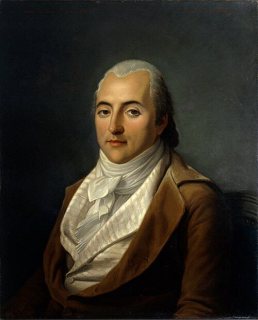
Open Saint-Simon's interactive page (graphs of influences, similar and opposing positions, and quotes)
Background
Henri de Saint-Simon
Born: 17 October 1760 in Paris, France
Died: 19 May 1825 (aged 64) in Paris, France
Schools: Utopian socialism, Saint-Simonianism
Main interests: Political philosophy, politics,
religion, economics, ethics, sociology
Notable ideas: The industrial class/idling class
distinction
Influences: Francis Bacon, Descartes, Locke,
Isaac Newton, Adam Smith, Jesus, Augustin
Thierry, Joseph de Maistre, Charles Dunoyer,
Jean-Baptiste Say, Nicolas-Edme Rétif,
Benjamin Franklin, Jean le Rond d'Alembert
Influenced: Auguste Comte, Prosper Enfantin,
John Stuart Mill, Pierre-Joseph Proudhon, Marx,
Pierre Leroux, Michel Chevalier, Émile Péreire,
Isaac Péreire, Thorstein Veblen, Thomas
Carlyle, Friedrich Engels, Napoleon III, Philippe
Buchez, Louis Blanc, Heinrich Heine
From Wikipedia
Saint-Simon was a French political, economic and socialist theorist and businessman whose thought had a substantial influence on politics, economics, sociology and the philosophy of science…. Saint-Simon created a political and economic ideology known as Saint-Simonianism that claimed that the needs of... the working class needed to be recog- nized and fulfilled to have an effective society and an efficient economy…. Saint-Simon believed the primary threat to the needs of the industrial class was what he defined as the idling class.
Introductory Comments
Some men are born to trouble; Henri de Saint-Simon went looking for it. Born in 1760 into an aristocratic family long on lineage and short on money, he got himself locked up three times before he was 35. At 13, so the story goes, he refused his first Communion and his father had him hauled off to prison. At 21 he was a captain of artillery at Yorktown, then was captured at sea by the British and spent a year as a prisoner of war in Jamaica. At 33 he was arrested during the Terror, an aristocrat in a season when that was quite enough.But at least he came out of that last prison rich. The Revolution was selling off the confiscated lands of the Church and the émigrés; Saint-Simon was buying them, paying in paper notes that lost value by the week. It was a splendid trick, but did not last. In 1823, broke and ignored, he shot himself in the head, survived minus an eye, and went back to work.
The work circled one conviction: the age of priests, nobles, and lawyers was finished, and society should be run by those who knew how things actually worked. Plato wanted philosophers on the throne; Saint-Simon wanted scientists and engineers on the committee. Then, weeks before his death in 1825, came his religious take on the economy: New Christianity declared that Christianity has one true principle - that men should treat one another as brothers. With that princple in mind, science and technology will give birth to an entirely new and improved civilization.
Some of Saint-Simon's Key Positions
Society divides into two classes: those who produce and those who do not. The producing class takes in manual workers and farmers, but also scientists, engineers, managers, merchants, and bankers. Anyone whose effort keeps the new industries running belongs to it. Against them stand the idlers: courtiers, rentiers, and hangers-on who consume what others make. The economy will flourish only when the producers' needs come first.
Since the producers create the wealth, they should direct its use and share in its benefits. The remedy, though, is not intervention by the old political state, whose meddling only hampers production. What is needed is a reorganization of society around industry itself.
Businesses should be rebuilt as hierarchies of merit, with each position filled according to proven capacity rather than birth. Merit must be measured by objective standards, not privilege or patronage. So arranged, the debris of feudalism will give way to the discipline of industrial life.
Government, too, must pass into competent hands: officials trained in science and industry rather than lawyers and metaphysicians spinning abstractions. Politics then becomes a matter of administering production instead of commanding men. Such a regime, joined to a society, would be a blessing to mankind - and would make further upheavals like the Revolution unnecessary.
Place in the History of Ideas
Saint-Simon's Place in History of Ideas
Peter Beilharz: Saint-Simon was the founder of corporatism, or at least of technocracy. It is in Saint-Simon that we find the identification of the categories life, or society, with industry. Saint-Simon helps to generate a theme which subsequently pervades all socialist traditions, for he raises the issue of status or legitimacy of citizenship with reference to productivity. Saint-Simon's hoped-for world is not only one where those who do not work shall not eat; it is also a place where they absolutely shall not rule. As Paul Ricoeur points out, Saint-Simon leaves a legacy which affects all socialisms, for he introduces into social theory the theme of idleness and parasitism as social problems consequent on the evasion of the central social responsibility ascribed to citizens: the duty to be productive.
Martin U. Martel: ... Comte de Saint-Simon, French social philosopher and reformer... - without writing a single enduring work - had a crucial role in the early nineteenth-century developments of industrial socialism, positivism, sociology, political economics, and the philoso- phy of history. In his final years he inspired a Christian socialist movement with a secular gospel of human brotherhood.... Much of his subsequent influence is due to students and disciples, who systematized, popularized, and also partly reshaped his ideas, and especially to Auguste Comte....
Random Thoughts on Saint-Simon
A fertile mind scatters seeds widely, and Saint-Simon's landed in some very strange gardens. The most direct seeding was in Auguste Comte, who served as his secretary and collaborator from 1817 until the two fell out bitterly in 1824 over who had written what. Comte carried off the master's central idea - that society can be studied and organized scientifically, by those equipped to understand it - and built positivism and the new science of sociology on top of it. He also spent the rest of his life insisting he owed Saint-Simon nothing whatever.
Saint-Simon seeded minds of very different sorts. Carlyle translated Nouveau christianisme into English and adopted its contempt for the idle rich. John Stuart Mill, corresponding with those same disciples, credited them with loosening the grip of laissez-faire dogma on his young mind. Marx and Engels filed Saint-Simon under "utopian socialist" while quietly pocketing his best insight, that politics is at bottom about production. Veblen's leisure class, idle and conspicuously consuming, is Saint-Simon's villian in a new suit. And the disciples themselves eventually put down their scriptures, took up surveying instruments, and went off to found banks and dig the Suez Canal. And as to Saint-Simon, the penniless count who proposed to reorganize civilization? He died in 1825 convinced that no one had listened. He was wrong. He had been heard perfectly well, just not by anyone inclined to do as he asked.
Influences
Saint-Simon was influenced by: Alembert, Bacon, Francis, Descartes, Dunoyer, C., Franklin, Jesus, Locke, Maistre, Newton, Retif, N., Say, Jean-B., Smith, Adam, Thierry, A.
Saint-Simon influenced: Blanc, Louis, Carlyle, Chevalier, M., Comte, Enfantin, P., Engels, Heine, Leroux, P., Marx, Mill, Napoleon III, Proudhon, Veblen
Similar and opposing positions
Thinkers with similar positions:
- Comte (All valid knowledge is scientific: Knowledge requires verification.)
- Condorcet (A scientfic study of society can lead to social progress for all.)
- Dewey (Democracy applies not just to politics, but also to industry & society.)
- Habermas (We must not give up on Enlightenment ideals of reason & science.)
- Jefferson (The ideal government should be made up of an intellectual elite.)
- King (Utopianism is at times justified, even in our sinful and imperfect world.)
- Kropotkin (The best economy is a decentralized one based on mutual aid.)
- Proudhon (Property is theft when it in effect steals the profits from laborers.)
- Smith, Adam (Govt. must be very careful when interfering with the economy.)
Thinkers with opposing positions:
- Berlin (Though we study nature from without, we study culture from within.)
- Dilthey (Natural sciences observe and explain. Human sciences understand.)
- Engels (All recorded history hitherto has been a history of class struggle.)
- Malthus (Population growth will always limit the amount of social progress.)
- Marcel (Science & technology threaten to destroy the mystery of being.)
- Niebuhr (Utopianism is always out of place in our sinful and imperfect world.)
- Nozick (Rights are best secured by minimal state limited to narrow functions.)
What others said about Saint-Simon
- Alex Callinicos: [Saint-Simon] divided contemporary French society into... those who worked, and the rich parasites who lived off their labor.
- James H. Billington: Saint-Simon was the prophet of meritocracy, seeking to reorder society in the image of the new chessboard he had designed for revolutionary France, ... in which the king was replaced by a figure called Talent.
- Berlin: [Saint-Simon attacked the cherished liberal ideas of the eighteenth century] because nothing could be achieved by democracy; no great plan can be achieved except by intelligent men who understand the time in which they live, who have power concentrated in their hands and who do things as experts, because only experts can get things done.
- Joseph Rykwert: Of the "utopian socialists," to use Marx's label, Saint-Simon was the most accurate forecaster of the politics and economics of industry. Rational, worldwide territorial planning is implied in Saint-Simon's system....
- Ronald Sanders: He sanctioned both private property and its privileges as long as they were used to promote the welfare of the masses.
- Robert B. Carlisle: [Saint-Simon] was for a time supported by his former valet, whose function had been - so the [story goes] - to rouse the count each day with the words, "Get up, my lord, you have great things to do today!"
- Peter Beilharz: [For Saint-Simon] society would become a technocratic utopia untroubled by the routine vicissitudes of everyday life as encountered by the "unproductive" masses. Bourgeoisie and proletariat would be locked into perpetual embrace, while parasites rich and poor alike would wither and government along with them.
- Albert Fried: Comte de Saint-Simon, who died in poverty surrounded by a group of young disciples who looked upon him as the prophet of a new religion, must be considered something of an eccentric…
Schools: Liberalism, Socialism, Utilitarianism, Utopian Socialism
Main interests: Commerce, Economics, Equality, Ethics, Happiness, Labor, Political Activism, Political Philosophy, Politics, Religion, Social Theory
Saint-Simon's answers to philosophical questions
Economics
The new industrial economy is more and more replacing old, unfair practices with merit-based & scientific management.
If industrial society were properly hierarchical & merit-based, the productivity of each worker would be justly compensated.
Philosophy
"The philosopher places himself at the summit of thought; from there he views what the world has been and... must become."
Political Philosophy
"The whole of society ought to strive towards the amelioration of the moral & physical existence of the poorest class...."
"[E]quality consists in each drawing benefits from society in exact proportion... to the beneficent use he makes of his abilities."
Religion and Theology
Christianity needs to return to the teachings of Jesus and emphasize a love for the poor and least fortunate among us.
Science
A new science of society is needed that will lead to the economic and intellectual independence of man.
Society
We need a totally new system: "replacing the celestial with the terrestrial, the vague by the positive, & the poetic by the real."
"The whole of society rests upon industry. Industry is the sole guarantee of its existence, the single source of all its wealth...."