Eckhart (1260 - 1328)
Open Eckhart's interactive page (graphs of influences, similar and opposing positions, and quotes)
Background
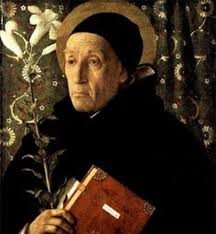
Meister Eckhart (Eckhart von Hochheim)
Born: Around 1260 near Gotha, Holy Roman
Empire (now Germany)
Died: 1327 or 1328 probably in Avignon, France
Era: Medieval philosophy
Region: Western philosophy
Schools: Christian mysticism, Metaphysical
intellectualism
Influences: Bible, Pseudo-Dionysius, Proclus,
Augustine, Thomas Aquinas, Johannes Scottus
Eriugena, Bonaventure
Influenced: John Tauler, Henry Suso, Nicholas of
Cusa, Eckhart Tolle, Gustav Landauer,
Heidegger, Julius Evola, Biagio Marin, Erich
Fromm, Pope John Paul II, Franz Pfeiffer,
Schopenhauer, Rulman Merswin, Franz von
Baader, Heinrich Seuse Denifle
From Wikipedia
Eckhart was a German Catholic theologian, philos- opher and mystic…. Eckhart came into promi- nence during the Avignon Papacy at a time of in- creased tensions between monastic orders, dioce- san clegy, the Franciscan Order, and Eckhart's Dominican Order.... Since the 19th century, he has received renewed attention. He has acquired a status as a great mystic within contemporary popular spirituality, as well as considerable interest from scholars situating him within the medieval scholastic and philosophical tradition.
Introductory Comments
In a nutshell: Around age 18 Eckhart joins a Dominican monastery at Erfurt, Germany. Soon after, he's off to Cologne to study, and then to Paris to get his degree, while at the same time he begins to lecture, preach, and write. At Paris, students and congregants are so inspired by Eckhart that he's made Dominican chair of theology. Then, returning to Erfurt, he's given the position of Provincial Superior for Saxony, making him responsible for 47 convents. But with honors and responsibilities comes a closer scrutiny of Eckhart's mystical theology. Charges of heresy follow. Pope John XXII holds an investigation. It's findings confirm the charges, though only after Eckhart has died of natural causes.
However, from Eckhart's own perspective, all of the above pales into insignificance when compared to the story he would tell of his life, which would go something like this: Even as a child, I perceived glimmers of the divine in the world about me. As a student, I sought knowledge in order to peal away the layers of misconception that veiled my soul's vision of its own divine origin. Little by little, through much thought and prayer, I came to see God's presence in everything and everyone. And when my books were assailed by others, my suffering did what suffering, rightly borne, is supposed to do: it burned off the remnants of ego still festering within me. So it was that late in life I knew a complete and glorious oneness with God.
Some of Eckhart's Key Positions
Just as Neoplatonic metaphysics rests on the belief that all things emanate from the One, a truly Christian metaphysics holds that all things spring from God's love. That same fertile love eternally gives birth to the Son, who died for us, and to the Word, which lives within us.
Christian spirituality therefore begins with recognizing God's love and presence within each of us. This recognition reveals that every soul is blessed with a dignity, a purity, and a simple goodness.
Sensing God's presence within also offers each of us a marvelous means of attaining oneness with God: "The eye with which I see God is the same eye with which God sees me."
To reach this oneness, one must first acknowledge one's own nothingness as a mere creature. God alone is pure being; whatever being a creature possesses springs from God. We should thus remain detached from worldly things, knowing they are nothing in themselves - yet we must also sense God's presence within everything.
This is not to say the soul is identical to God, only that God dwells within each of us, and that His presence shows itself in the soul's light and indeed its very being. But the soul remains creature, not Creator. Union with God is not the erasure of the soul, but its participation in the divine life.
Place in the History of Ideas
Eckhart's Place in History of Ideas
Kenneth Rexroth: Eckhart met the problems of contingency and omnipotence, creator-and-creature-from-nothing by making God the only reality and the presence or imprint of God upon nothing, the source of reality in the creature. Reality in other words was a hierarchically structured participation of the creature in the creator. From the point of view of the creature this process could be reversed. If creatureliness is real, God becomes the Divine Nothing. God is not, as in scholasticism, the final subject of all predicates. He is being as unpredicable. The existence of the creature, in so far as it exists, is the existence of God, and the creature’s experience of God is therefore in the final analysis equally unpredicable. Neither can even be described; both can only be indicated.
William Inge: The Godhead, according to Eck- hart, is the universal and eternal Unity compre- hending and transcending all diversity.... [In his] Latin fragments we find: "God rests in Himself, and makes all things rest in Him." The three Persons of the Trinity, however, are not mere modes or accidents, but represent a real distinc- tion within the Godhead. God is unchangeable, and at the same time an "everlasting process." The creatures are "absolutely nothing"; but at the same time "God without them would not be God," for God is love, and must objectify Himself; He is goodness, and must impart Himself.
Random Thoughts on Eckhart
Even readers with no mystical bone in their body might enjoy this thought experiment. Suppose Eckhart is onto something: that God alone possesses being in the full sense, and every creature - two-legged, four-legged, no-legged - has no being of its own, only being on loan from a love so overflowing it can't help but take external form. Now push further: imagine your own selfhood is likewise on loan, one more expression of that same love. Push the thought experiment further still, toward the paradox Eckhart's critics found alarming and Eckhart himself denied meaning: if you and the world are both expressions of God's love, does God finally have anyone left to love but himself? Does the Creator-creature distinction survive this divine circularity? Is the entire world merely God's daydream? It's easy to see why such questions nagged at his inquisitors, and fair to wonder whether Eckhart's language sometimes outran his theology.
Somehow all this brings to mind Stephen Hawking's notion of a zero-energy universe, where the positive energy of matter is exactly canceled by the negative energy of gravity, so the universe's total energy nets out to zero even as it teems with galaxies and stars. The universe springs from Nothing and, tallied up, remains Nothing. So too in Eckhart's theology: we spring from Nothing (God's love is not a thing) and we remain Nothing (our independent existence is not a reality). But what a rich and splendid form of Nothing it is.
Influences
Eckhart was influenced by: Albertus Mag., Aquinas, Augustine, Averroes, Bonaventure, Eriugena, Jesus, Proclus, Pseudo-Denys
Eckhart influenced: Baader, Denifle, Evola, Fromm, Heidegger, Jaspers, John Paul II, Landauer, Marin, Biagio, Merswin, Nicholas of C., Pfeiffer, Franz, Schopenhauer, Suso, Henry, Tauler, John, Tolle, Eckhart
Similar and opposing positions
Thinkers with similar positions:
- Al-Ghazali (All acts in this world spring directly from God, not laws of nature.)
- Anselm (God, not man, is the source of all meaning and purpose in life.)
- Bruno (God is not transcendent. Everything in Nature is part of God.)
- Eriugena (God has created the world out of his own being.)
- James (Mystical experiences can reveal truths beyond the realm of reason.)
- Philo (We can gain a mystic unity with God through intellectual intuition.)
- Pseudo-Denys (To truly know the moral good we must know the eternal Good.)
- Swedenborg (There are links among the physical, spiritual, and divine worlds.)
Thinkers with opposing positions:
- Barth (God's perfection makes Him infinitely different from us.)
- Calvin (The only way to obtain knowledge of God is to study scripture.)
- Dawkins (We, not God, are responsible for giving life meaning and purpose.)
- Feuerbach (God is for us the outward projection of a human's inward nature.)
- Jung (The differentiation of the self is the main task of human development.)
- Kierkegaard (Philosophy must embrace subjectivity as an essential resource.)
- Luther (Man's sinfulness is infinitely distinct from God's perfection.)
- Nietzsche (Christianity has a "slave morality" placing weakness over strength.)
What others said about Eckhart
- Copleston: [Eckhart thought that God] is the plenitude of being, the One, beyond plurality and distinction. God himself has told us, "I am who I am."
- Gadamer: Heidegger was completely fascinated by [Eckhart], evidently because [his] dissolution of the concept of substance in regards to God pointed in the direction of a temporal and verbal sense of being....
- Schopenhauer: If we turn from the forms, produced by external circumstances, and go to the root of things, we shall find that [Buddha] and Meister Eckhart teach the same thing; only that the former dared to express his ideas plainly and positively, whereas Eckhart is obliged to clothe them in the garment of the Christian myth....
- Pope John Paul II: One could think that in separating himself from creatures the mystic leaves his brother humanity behind.... Eckhart affirms that on the contrary the mystic is marvelously present to them... in God.
- Kenneth Rexroth: [Eckhart said the] soul first trains itself by systematic unknowing until at last it confronts the only reality..., God manifest in itself.
- Heidegger: Thus God is for [Eckhart] his "not"; that is to say, he is the most universal being, the purest indeterminate possibility of everything possible, the pure nothing....
- Jung: The world-embracing spirit of Meister Eckhart knew... the primordial mystical experience of India as well as of the Gnostics, and was itself the finest flower on the tree of the "Free Spirit" that flourished at the beginning of the eleventh century.... [However,] only in the 19th century did he find a public at all capable of appreciating the grandeur of his mind.
- Andrew Davidson: [Eckhart believed that] anything that a man might say about God is incorrect, even calling Him by the name of God. God is "superessential nothingness" and "transcendent Being" [...] beyond all... understanding.
Schools: Christian Mysticism, Christian Theology, Divine Illumination, Emanationism, Intellectualism, Mysticism, Neoplatonism, Platonism
Main interests: Ethics, Faith, Happiness, Religion, Salvation, Spirituality, Theology, Universals, Wisdom
Eckhart's answers to philosophical questions
Economics
Do not be greedy for things: "To be full of things is to be empty of God; to be empty of things is to be full of God."
Epistemology
"Truth is something so noble that if God could turn aside from it, I could keep the truth and let God go."
Ethics
"A quiet mind is one... which, free from ties & from all self-seeking, is wholly merged into the will of God & dead to its own."
"[L]ife lives out of its own ground and springs from its own source, and so it lives without asking why it is itself living."
By sensing God's presence within each of us, we at the same time acknowledge the moral bonds uniting all mankind.
Friendship is not for mutual benefit: "I should love my friend on account of his own... virtues and… all that he is in himself."
"The most important hour is always the present. The most significant person is precisely the one sitting across from you now."
Metaphysics
"There is only the present instant... a Now which [is forever] new…, as it was 1000 years ago & as it will be 1000 years hence."
Mind
We as individuals are nothing in and of ourselves, but exist only as a manifestation of God's love.
Nature
Humanity is God's way of knowing himself: "God cannot know himself without me."
Psychology
Don't dwell on that person called self. Instead, love God. And, yes, love the world too, since God is everyone and everywhere.
"You will have peace to the extent that you have God…. You may measure your progress with God by measuring your peace."
Happiness is being at peace with God: "If the only prayer you ever say in your entire life is thank you, it will be enough."
Religion and Theology
"[The soul is] never at rest until it comes to the original idea, in which all things are one. And there it comes to rest in God. "
God's love and presence is within each of us: "The eye through which I see God is the same eye through which God sees me."
"The less theorizing you do about God, the more receptive you are to His inpouring."
God is beyond all possible description. Being the inexhaustible source of everything, God is nothing in and of himself.
God's overabundant love is the source of everything, including us, and the Word felt within us, the world about us.
God's overabundant love is not only the source of all things, God himself resides in each of us and throughout nature.
"To seek God by rituals is to get the ritual and lose God in the process."
Society
"Practice equality in human society. Learn to love, esteem, consider all people like yourself."