Philo (c. 20 BC - c. 50 CE)
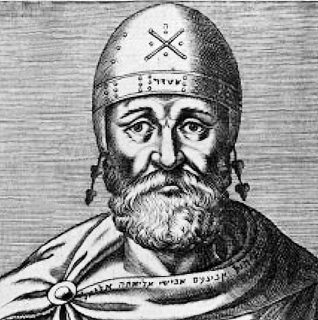
Open Philo's interactive page (graphs of influences, similar and opposing positions, and quotes)
Background
Philo
Born: c. 20 BC in Alexandria, Egypt
Died: c. 50 CE (age c. 70)
School: Middle Platonism
Main interests: Religion, theology, politics,
metaphysics, ethics
Influences: Pythagoras, Plato, Aristotle,
Antiochus of Ascalon, Epictetus
Influenced: Clement of Alexandria, Athenagoras,
Theophilus of Antioch, Justin Martyr, Tertullian,
Origen, and perhaps Paul the Apostle
From Wikipedia
Philo was a Hellenistic Jewish philosopher who lived in Alexandria, in the Roman province of Egypt. Philo's deployment of allegory to harmo-nize Jewish scripture... with Greek philosophy was the first documented of its kind, and thereby often misunderstood. Many critics of Philo assumed his allegorical perspective would lend credibility to the notion of legend over historicity. Philo often advocated a literal understanding of the Torah and the historicity of such described events, while at other times favoring allegorical readings.
Introductory Comments
Since we know little about Philo's life, we must look to his philosophy for hints about the sort of person he was. First, we can say with some confidence that he was not an either-or sort of guy. Pulled in two very different and even antithetical directions - toward Judaism on one side, Greek philosophy on the other - he felt no need to choose. Instead, he set out to fuse the two. And whenever the Bible seemed to contradict Greek philosophy, or plain common sense, Philo simply declared that the passage must be read allegorically. This did not diminish Scripture in the least. Quite the reverse: for Philo, the allegorical reading is precisely what unlocks its deepest philosophical truths.
If we stopped here, Philo would look like a liberal-minded, easygoing, almost modern fellow. But his synthesis also reveals a man who could be downright zealous in matters Platonic. Like Plato, he regarded the intelligible realm as superior to the material one and believed that the visible world points beyond itself to a higher divine reality. Scripture remained his ultimate authority, but Plato helped him understand what Scripture truly meant. So Philo was at once relaxed in his tolerance of apparent contradiction and fervent in his devotion to Plato - and then more fervent still, pushing past Plato toward a God no philosopher could capture. In short, a laid-back zealot, a man who had not so much transcended contradictions as embodied them.
Some of Philo's Key Positions
The Jewish and Greek traditions are not rivals but partners: read rightly, each can enrich the other. Bring Plato and Moses to the same table, add a pinch of Stoicism to cool the passions, and the result is a philosophy more profound than either tradition could reach alone.
The synthesis begins with a premise of faith: the Hebrew Bible is the word of God, and Moses and the prophets were God's chosen instruments of revelation. Yet the truths they delivered turn out to echo those of the Greeks. The Stoic ideal of the wise man, the play of opposites prized by Heraclitus, the Logos as the rational principle that orders and animates the world - all of these, Philo argued, lie waiting in Scripture.
The catch is that one must read the right passages allegorically. Verses that at first seem morally troubling or philosophically muddled lose their sting once their hidden sense comes into view. The biblical characters stand for qualities of the soul - Adam for the mind, Eve for the senses - and the stories dramatize the moral life, as when Noah's composure amid the flood models the calm of the virtuous person. Read this way, the wisdom of the Bible blossoms before the eyes.
Faith and reason are, then, not adversaries but traveling companions. Religion points toward God, the ultimate end of the journey, while philosophy helps illuminate the path.
Place in the History of Ideas
Philo's Place in History of Ideas
Kirby Page: Many of the Christian writers grew up in communities where the teaching of the Stoics was all-pervasive in cultured circles. Through this philosophy they became familiar with the concept that "reason pervades all things like a fiery essence...." Philo, chief exponent of the Alexandrian school of Judaism, who lived during the period 30 B.C.-50 A.D., was another channel through which Greek ideas flowed into the early [Christian] church. Philo attempted to combine Hebrew religion and Greek philosophy. He gave great impetus to the tendency to allegorize the Old Testament and to derive from it highly speculative ideas which became universal among Christian theologians. Philo's interpretation of the Greek term "Logos" profoundly affected Christian thought.
Lawrence Schiffman: [Philo's allegorical] method allowed him to radically recast the biblical narratives in Hellenistic garb.... Also significant is his view of the soul. According to Philo, the soul has descended into the world of matter, and it is up to each individual, by stripping himself of earthly passions, to bring about the his soul’s ascent to God. This process is helped by the striving for intellectual appreciation of God, but it is clear from Philo’s descriptions that the final stage is that of a mystical experience of union with the Divine. Indeed, for him, prophecy is an act of ecstasy, in which man receives the effulgence of divine light.
Random Thoughts on Philo
For Philo, the Logos is the rational, divine principle linking a transcendent God to the world that God created - an intermediary that makes an otherwise incomprehensible God accessible to man. It is neither uncreated, like God, nor created, like everything else; it occupies a strange middle ground, flowing from God to the world as a kind of divine emanation. Philo also treated the Logos as the channel through which God acts on the world: an impersonal principle that somehow brings the human and the divine into contact.
Philo did not invent this idea from scratch. He was drawing on a broader current of Hellenistic Jewish thought, in which a mediating figure bridged the gap between God and creation. That same current surfaces independently in the Gospel of John, written decades after Philo's death. John's Logos, though, takes a leap Philo's never does: "The Word became flesh," John writes - a claim that turns an abstract cosmic principle into a man. The Logos became Jesus Christ, the Son of God, the mediator between heaven and earth.
And here, it seems, is a beautiful example of the irony with which ideas so often develop. Philo, devoted to both Judaism and Greek philosophy, set out to fuse them into one grand synthesis. Instead, what he actually accomplished was to contribute to what would become a key concept for a new religion in which he had no interest whatsoever. Go figure.
Influences
Philo was influenced by: Antiochus, Aristotle, Epictetus, Plato, Pythagoras
Philo influenced: Athenagoras, Clement of A., Justin Martyr, Origen, Paul of Tarsus, Tertullian, Theophilus
Similar and opposing positions
Thinkers with similar positions:
- Al-Kindi (Serenity can be achieved thru self-discipline, temperance & stoicism.)
- Barth (God is infinitely incomprehensible. We can't reason our way to God.)
- Dostoyevsky (Without religion, we will drown in our own irrational impulses.)
- Iamblichus (The universe isn't just matter in motion. It has a spiritual aspect.)
- Jefferson (There should be a wall of separation between Church and State.)
- Luther (Soul and body are distinct substances & soul is superior to body.)
- Philo (The purely contemplative part of the Soul is its higher & eternal part.)
- Pythagoras (Ultimate truth is revealed to the intellect but not to the senses.)
Thinkers with opposing positions:
- Bataille (Violence & erotic excess can be liberating & sacramental experiences.)
- Collingwood (Metaphysics is just heuristic principles helping us grasp reality.)
- Democritus (Everything is the result of natural laws related to matter & motion)
- Feuerbach (God is for us the outward projection of a human's inward nature.)
- Franklin (The only religion that's at all defensible is pure and simple deism.)
- Holbach (The universe is simply matter in motion. It has no spiritual dimension.)
- Paine (Nature or creation is the Bible of the Deist. We need no other Bible.)
- Sade (Heed nothing but your desires; let them alone be your laws.)
What others said about Philo
- Edward Whelan: He is perhaps the most important representative of Hellenistic Judaism whose works had a decisive influence on later Christian thinkers.
- Marian Hillar: When Hebrew mythical thought met Greek philosophical thought in the first century B.C.E. it was only natural that someone would try to develop… philosophical justification for Judaism in terms of Greek philosophy.
- Henry Fairfield Osborn: Philo of Alexandria introduced in the first century what has been described as the "Hellenizing of the Old Testament," or the allegorical method of exegesis. By this, as Erdmann observes, the Bible narrative was found to contain a deeper, and particularly an allegorical interpretation, in addition to its literal interpretation….
- George W. J. Stock: So all pervasive indeed was this moral philosophy of the Stoics that it was read by the Jews of Alexandria into Moses under the veil of allegory and was declared to be the inner meaning of the Hebrew Scriptures.
- John Cunningham: In his political theory Philo often said that the best form of government is democracy, but for him democracy was far from mob rule….
- Hans Jonas: While to the Hellenes from Plato to Plotinus man's way to God led through moral self-perfection, for Philo it leads through self-despair in the realization of one's nothingness.
- Marian Hillar: He may have influenced Paul, his contemporary, and perhaps the authors of the Gospel of John and the Epistle to the Hebrews. In the process, he laid the foundations for the development of Christianity in the West and in the East, as we know it today. Philo’s primary importance is in [laying] the philosophical and theological foundations of Christianity.
- Carlos Lévy: Though he felt great admiration for Plato, his [conception of] transcendence was not exactly Platonic, but rather of a God both absolutely unknowable yet very close to mankind.
Schools: Jewish Theology, Mysticism, Perennial Philosophy, Platonism, Stoicism
Main interests: Ethics, Ideology, Metaphysics, Politics, Religion, Spirituality, Theology, Universals
Philo's answers to philosophical questions
Art and Aesthetics
"As parents in private life teach wisdom to their children, so do [poets] in public life to their cities."
Economics
"Money, it has been said, is the cause of good things to a good man, of evil things to a bad man."
Education
"Learning is by nature curiosity... prying into everything, reluctant to leave anything, material or immaterial, unexplained."
Ethics
The king's "wealth is soulless…, but the wealth of virtue lies in the sovereign part of the soul, and the purest part of existence."
"[T]he limit of happiness is the presence of God, which completely fills the whole soul with his whole incorporeal… light."
"Nature… has born and reared all men alike, and created them genuine brothers, not in mere name, but in very reality…."
"The intelligent man should see to it that his friends are immortal, his enemies mortal."
Soul enters the body. "And when it will, it will transact its divorce in court and depart, leaving our home desolate of life."
"[T]he fool has many wants, ever thirsting for what is not there, longing to gratify his greedy and insatiable desire…."
Law
Justice transcends all human laws."There is no sweeter delight than that the soul should be charged thru & thru with justice."
"The good man [sets] at naught the injunctions [of] lawless rulers [and] obeys no orders and works no will but its own."
Metaphysics
God or Logos is everywhere, but matter is a type of nothingness, since its results are fallacy, discord, damage and decay.
Plato's Ideas are in fact the Creator's thoughts, which are in turn the contents of Logos - the Mind that embraces all things.
"Time is a thing posterior to the world…. [It is a] consequence of the world…. [Its nature is seen in] the motion of the heaven."
Freedom depends on ethics: While the bad man is a slave to his selfish passions, the good man "stands defiant & triumphant."
Mind
The soul enters the body we know not how. "[And] so subtle is its nature that it furnishes no handle to the body."
"… I seem to have mind, reason, sense, yet I find none of them my own…. Can we [even] tell [the soul's] essential nature?"
"The soul knows us, though unknown by us, and imposes commands we are obliged to obey as servants [to a] mistress."
"Where are the various states produced by the life stages of an illusory self? Where is the newborn babe, the child, the boy…."
"How... is it natural that the mind [being] contained in… a brain..., should have room for all the vastness of sky and Universe?"
Nature
It stands to reason that God, the Creator of nature, will also be the Provider & Protector for all creatures living in nature.
Humans are a mix of nous (mind), psyche (soul), soma (body) - which is of course also the Hellenistic view of mind-soul-body.
Philosophy
Pythagoras was right: numbers are significant. For example, the numbers six, seven and ten have profound religious meaning.
"[T]here is no use in the study of natural philosophy unless it is likely to confer upon a man the acquisition of virtue…."
Political Philosophy
"[C]ities, countries & nations have enjoyed great happiness when a single individual has taken heed of the Good & Beautiful."
"When opportunity offers, it is a good thing to attack our enemies and put down their power." If no opportunity, "be quiet."
"A far greater glory is it to... die for freedom, the love of which stands in very truth implanted in the soul like nothing else…."
The Roman emporer should not interfere with our religious practices, especially in regards to the holy Temple in Jerusalem.
"Wisdom… never closes her school of thought but always opens her doors to those who [seek] the sweet water of discourse."
Psychology
The passions "must be... brought into obedience to the governance of reason, [so that all] will be peace and good order…."
Strong passions lead to ruin. "But the man of worth has few wants, standing midway between mortality and immortality."
"The holy Moses… discarded passion in general and… denounced especially desire as a battery of destruction to the soul…."
"The [road] which leads to self-control is uphill, toilsome no doubt but profitable exceedingly. [For it] leads heavenwards."
Religion and Theology
"For then is the time for the creature to encounter the Creator, when it has recognized its own nothingness."
"No assertions can be made of God’s essence." Yet, by considering His creation, nothing is more certain than God's existence.
God is transcendent, but we can say little else about Him, since He he shares none of our physical traits or emotional qualities.
Matter is a type of nothingness that leads to damage and decay. Logos, however, is God's envoy - and advocate for humanity.
"But God, the ruler of the universe, [regulates and directs] everything in a saving manner by the helm of his wisdom…."
God is incorporeal and transcendent. "So when he willed to create this visible world, he first formed the intelligible world."
"Whence came the soul, whither will it go, how long will it be our mate? Can we tell its essential nature?"
God does not need to intervene in the world through special miracles, since He already encompasses the entire cosmos.
"Blessed are they [who resist the flesh and] leap upward from... earth-bound things into the ether and the revolving heavens."
Though some passages of the Bible may at first seem morally disturbing, if one reads it allegorically, all makes profound sense.