Nicolas de Condorcet (1743 - 1794)
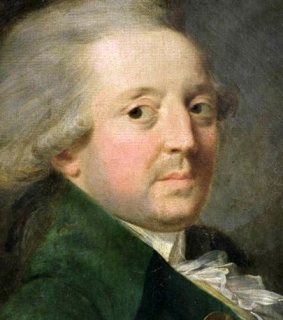
Open Condorcet's interactive page (graphs of influences, similar and opposing positions, and quotes)
Background
Marquis de Condorcet
Born: 17 September 1743 in Ribemont, Picardy,
France
Died: 28 March 1794 (aged 50) in Bourg-la-
Reine, France
Alma mater: College of Navarre
School: Enlightenment
Main interests: Mathematics, politics, political
science, social science, social activism,
women's rights, education, atheism
Influences: Jean le Rond d'Alembert, Voltaire,
Turgot, Benjamin Franklin, Leonhard Euler,
Pierre Bayle, Rousseau
Influenced: André Chénier, Thomas Clarkson,
Jean-Marie Roland, Jacques Pierre Brissot,
Pierre Jean George Cabanis, Comte, Jefferson,
Paine, Madison, Thomas Malthus, Amelie
Suard, Sophie de Condorcet, Freud, Marx,
Nietzsche, Darwin
From Wikipedia
Condorcet was a French philosopher, political economist, politician, and mathematician. His ideas, including support for free markets, public education, constitutional government, and equal rights for women and people of all races, have been said to embody the ideals of the Age of Enlightenment, of which he has been called the "last witness," and Enlightenment rationalism. A critic of the constitution proposed... in 1793, the Convention Nationale… voted to have Condorcet arrested. He died in prison….
Introductory Comments
Condorcet was the Enlightenment compressed into a single life: mathematician, philosophe, reformer, a man convinced that reason could be turned on human affairs as successfully as it had been turned on the planets. The Revolution that destroyed him was carried out in the name of everything he believed. Liberté, égalité, fraternité were the words; under Robespierre and the Committee of Public Safety, what actually reigned was terror.
Elected to the Legislative Assembly in 1791 and then to the Convention, Condorcet pressed for the abolition of slavery, for free and universal public education, and for the enfranchisement of women. In 1793 he drafted a constitution for the new republic; the Jacobins threw it out, wrote their own, and Condorcet made the mistake of publishing his objections. The arrest warrant followed within days. He spent the next eight months hidden in a Paris boardinghouse - and there wrote the Sketch for a Historical Picture of the Progress of the Human Mind, surely the most confident account of humanity's future ever composed by a man waiting to be caught. In March 1794 he slipped out of the city dressed as a laborer, was recognized within days, and was arrested at a village inn. Two mornings later he was found dead in his cell. Poison he was rumored to carry, sheer exhaustion, another man's hand - no one knows. A year later the same Convention that had hunted him voted to print 3000 copies of the Sketch at state expense and distribute them across France.
Some of Condorcet's Key Positions
Two tasks define the age: to narrow the inequalities of wealth, status, and education that divide people, and to secure basic rights for everyone - enslaved Africans, women, Protestants, Jews. But narrowing is not leveling. The solution is not to confiscate property, but to keep inequality from hardening into dependence. This can be achieved through education, credit, and insurance against life's accidents.
This also requires a change of government. A constitutional monarchy improves on an absolute one but falls short of a republic, which odges power with the people whose rights are at stake.
The least defensible inequality divides men from women. Rights belong to any creature capable of reason and moral ideas; women are such creatures; women therefore have the same rights, including the vote. The usual objections - that women are ruled by feeling, that they lack fitness for public affairs - describe the education women receive, not the nature they were born with.
Progress is needed on other fronts as well: economic, legal, cultural, racial. Slavery must be abolished, inherited privilege dismantled, education extended, and opportunities more widely shared. Indeed, there is no fixed limit to human improvement. As knowledge advances and institutions improve, humankind can become freer, more prosperous, more equal, more enlightened.
Place in the History of Ideas
Condorcet's Place in History of Ideas
Alexandre Koyre: Condorcet occupies a special place in the history of French thought. He is the last of the "philosophes," and the only one who took an active part in the Revolution. He did not conceive a completely original system, but he did create a synthesis of all the theories of his predecessors. We can find in his writings the ideas of Voltaire, of Rousseau, of Turgot, of Helvetius, of Condillac, moulded bit by bit into a harmonious whole whose final expression is the "Esquisse," a sort of philosophic résumé of the XVIII th century.
Harry Burrows Acton: Wholly a man of the En- lightenment, an advocate of economic freedom, religious toleration, legal and educational re- form, and the abolition of slavery, Condorcet sought to extend the empire of reason to social affairs. Rather than elucidate human behaviour, as had been done thus far, by recourse to either the moral or physical sciences, he sought to explain it by a merger of the two sciences that eventually became transmuted into the discipline of sociology.
Guillaume Ansart: From a political perspective, Condorcet insists, there are no fundamental differences between the sexes. Sexual and gender differences are either the product of education and socialization - and therefore subject to change - or they are simply irrelevant to a discussion of natural rights.
Random Thoughts on Condorcet
Every thinker of the Enlightenment trusted reason. Condorcet's peculiarity lay in which tool he thought did reason's heaviest lifting: not eloquence, not even logic, but mathematics. And not geometry admired from a respectful distance - probability, put to work on the messiest questions available. How likely is a jury to reach a true verdict, and does adding jurors help? What does a crowd of fallible voters actually decide when it decides together? He gave the program a name, mathématique sociale, and he had a model firmly in mind. Mathematics had let Newton read the laws of nature; mathematics would let someone read the laws of society, at which point government might finally rest on something sturdier than habit.
The joke - and it is to Condorcet's credit that he is the one who found it - is that the first thing his mathematics produced was not a blueprint but a warning. Studying majority voting, he discovered that a group of perfectly rational people can collectively prefer A to B, B to C, and C to A. (Picture three friends choosing dinner: two of them prefer Thai to pizza, two prefer pizza to sushi, and two prefer sushi to Thai.) Put to the numbers, the will of the people can turn out to have no coherent shape at all. What he did not dwell on is the second risk. Societies run on values, passions, and historical accidents that slip through the mesh of any model. And even where the models hold, why assume anyone will use them to perfect society? Autocrats like numbers too.
Influences
Condorcet was influenced by: Alembert, Bayle, Euler, L., Franklin, Rousseau, Turgot, Voltaire
Condorcet influenced: Brissot, J.P., Cabanis, P.J.G., Chenier, Andre, Clarkson, T., Comte, Darwin, Freud, Jefferson, Madison, Malthus, Marx, Nietzsche, Paine, Roland, J.-M., Saint-Simon, Sophie de C., Suard, Amelie
Similar and opposing positions
Thinkers with similar positions:
- Habermas (We must not give up on Enlightenment ideals of reason & science.)
- Jefferson (Certain rights are natural or inherent by virtue of our humanity.)
- Piaget (To function well, democracy requires an engaged & educated citizenry.)
- Russell (Math provides an abstract structure to our understanding of the world.)
- Saint-Simon (A scientfic study of society can lead to social progress for all.)
- Voltaire (The Catholic Church has often been guilty of oppression & corruption.)
- Wollstonecraft (As rational beings, women must have same rights as men.)
Thinkers with opposing positions:
- Adams (Government based on a unicameral assembly is too democratic.)
- Adorno (Civilization does not inevitably lead to progress in morality and justice.)
- Arendt (Only rights granted by the state matter, not "inalienable human rights.")
- Bentham (Talk of natural rights is mere rhetoric - just "nonsense upon stilts.")
- Levi-Strauss (The "savage" mind had the same structures as the "civilized" mind.)
- Maistre (A strong government requires loyality to a strong monarch and church.)
- Malthus (Population growth will always limit the amount of social progress.)
- Niebuhr (Utopianism is always out of place in our sinful and imperfect world.)
- Rousseau (Progress in the sciences and arts has led to decay and immorality.)
What others said about Condorcet
- Will Durant: [Writing in prison, Condorcet] asked no other key to Utopia than universal education.
- John Morley: Of the illustrious thinkers and writers who for two generations had been actively scattering the seed of revolution in France, only Condorcet survived to behold the first bitter in-gathering of the harvest.
- Scott Gordon: [Condorcet believed] the mathematics of probability enables scientists to develop laws of behaviour.... [He] was ahead of his time in this, but utopian to a fault in his unlimited optimism for what the social sciences would achieve once they had developed the proper mathematical foundations and the capacity to make use of large amounts of... data.
- Mary Pickering: Revealing a tension in his thought between democratic liberalism and intellectual elitism, he implied that those who controlled the educational system and shaped public opinion possessed the real power....
- K. M. Baker: ... for almost twenty years Condorcet was the principal spokesman of organized science not only in France but... throughout Europe.
- Guillaume Ansart: Women, it has been said, are guided by their feelings rather than by their reason or conscience. But such differences, Condorcet asserts, are caused by purely social factors....
- Cassirer: [Condorcet] declares that all knowledge of human society can have but one purpose, namely, to guarantee to men the free exercise of their fundamental rights in perfect equality and in their fullest measure. This purpose, according to Condorcet, has been brought nearer to realization in the free states of America….
- Russell: [Condorcet] believes that, through the spread of the principles of the French Revolution, all the major social ills will soon disappear. Perhaps he was fortunate in not living beyond 1794.
Schools: Enlightenment, Feminism, Skepticism
Main interests: Economics, Education, Happiness, Mathematics, Political Activism, Political Theory, Politics, Progress, Racism, Social Criticism, Utopia
Condorcet's answers to philosophical questions
Education
Without an education, we can't improve our condition in life: "Under the freest constitution ignorant people are still slaves."
Education enriches both the individual and society at large: "A society that values knowledge is a society that progresses."
Epistemology
We must first admit what we do not know: "The truth belongs to those who seek it, not to those who claim to own it."
History
History is inherently progressive. As education and the social sciences improve, so will the social problems we suffer from.
"The time will . . . come when the sun will shine only on free men who know no other master but their reason."
Law
"The penalty of death is the only one that makes an injustice absolutely irreparable." Therefore, we should not establish it.
Nature
Humans, unlike animals, are rational beings and therefore have no limits: "The perfectability of humanity is indefinite."
Political Philosophy
People have a right to free speech, and progress requires it: "Freedom of thought is the foundation of a civilized society."
Psychology
"… focus on the fact that your life could be much worse and be grateful it isn't."
Religion and Theology
Nature vs. religion: "There does not exist any religious system... which is not founded on an ignorance of the laws of nature."
Science
Social sciences have the powerful tools not only for understanding human behavior, but also for perfecting human society.
Though the physical sciences and the social sciences differ in subject matter, they share the same tools and methods.
As an analytical tool, mathematics is not only essential in the physical sciences, it's also very useful in the social sciences.
"In a few directions, our eyes are struck with a dazzling light; but thick darkness still covers an immense horison."
The sciences, especially the social sciences, represent the best hope for making society more humane, just, and equitable.
Sex and Gender
Though women are physically weaker than men & give birth, all other differences between the sexes are due to education.
Since women possess the same moral and rational nature as men, they must be guaranteed the same rights as men.
Since education is essential for the emancipation of an individual, women deserve & require the same education as men.
Society
"Compassion and empathy are the cornerstones of a just society."
"I believe humankind is infinitely perfectible, and that it should thus devote itself to achieving peace, liberty & equality...."