Thorstein Veblen (1857 - 1929)
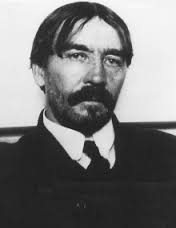
Open Veblen's interactive page (graphs of influences, similar and opposing positions, and quotes)
Background
Thorstein Veblen
Born: July 30, 1857 in Cato, Wisconsin
Died: August 3, 1929 (aged 72) in Sand Hill Road,
Menlo Park, California
Influences: Herbert Spencer, William Graham
Sumner, Marx, Kant, Lester F. Ward, William
James, William McDougall, Georges Vacher de
Lapouge, Edward Bellamy, John Dewey, Gustav
von Schmoller, John Bates Clark, Henri de Saint-
Simon, Charles Fourier, Charles Darwin
Influenced: Wesley Clair Mitchell, Clarence
Edwin Ayres, John Kenneth Galbraith, C. Wright
Mills, Robert A. Brady, Lewis Mumford, Harold
Adams Innis, Edith Penrose, John M. Clark,
Geoffrey Hodgson, Jonathan Nitzan, Shimshon
Bichler, Erik S. Reinert, Steve Keen, Ugo Pagano,
Melville J. Herskovits, H. J. Davenport, Joseph
Dorfman, Walter Stewart, Robert Hoxie, Felix
Frankfurter, Max Lerner, David Riesman
From Wikipedia
Veblen was an American economist and sociolo- gist who, during his lifetime, emerged as a well-known critic of capitalism. In his best-known book, The Theory of the Leisure Class (1899), Veblen coined the concepts of conspicuous consumption and conspicuous leisure. Veblen laid the founda- tion for the perspective of institutional economics. Contemporary economists still theorize Veblen's distinction between "institutions" and "technol- ogy," known as the Veblenian dichotomy. [Veblen] greatly influenced [other] economists….
Introductory Comments
Veblen looked at America the way an anthropologist looks at a remote tribe: closely, patiently, and with a faintly raised eyebrow. He grew up in Norwegian immigrant farm communities in Wisconsin and Minnesota, which prized thrift, hard work, and plain living. That gave him a position neither fully inside American culture nor fully outside it. From there, the habits of the rich looked less like the natural order of things and more like strange rituals. His accounts of "conspicuous consumption" (spending meant to be seen) and "pecuniary emulation" (the scramble to match the spending of those above) read like field notes on a people who burn their surplus to impress the neighbors. Some today think the legend of Veblen the alienated stranger is overdrawn, but the vantage point is hard to miss on the page.
Veblen’s diagnosis exposed the wasteful posturing of the Gilded Age rich, but it left little room for their achievements. The tycoons he skewered also built railroads and steel mills. The idle rich he mocked endowed libraries, universities, orchestras, and museums. Veblen had an answer ready. The railroads, he would say, were built by engineers and laborers, not by the financiers who owned them. A library with the donor’s name over the door is simply conspicuous consumption carved in stone. Whether that reply is penetrating or merely relentless is still argued. Either way, few writers did more to scrape the gilt off the Gilded Age.
Some of Veblen's Key Positions
Human institutions are at bottom settled habits of thought, and they shape ordinary lives profoundly, often for the worse. They evolve slowly and without design, lagging behind the conditions that produced them. Yet they are not fixed, and understanding them is the first step toward changing them.
Economic institutions matter most, since they are entangled with nearly every other part of a culture. Economics should therefore study how economic habits evolve.
Human nature pulls two ways. One is the instinct of workmanship, a bent toward useful labor. The other is the urge to seize and display. Economic life splits along the same line. Industry makes goods; business makes money, often by restricting output and so undermining industry itself.
Money is more than a livelihood: it is the chief measure of status. People rank one another by invidious comparison of wealth. Wealth earns esteem only when seen, so it must be advertised. At first this is done through conspicuous leisure, a visible exemption from useful work. Later it is done through conspicuous consumption.
Such display wastes time and goods and serves no shared purpose. An economy freed from it would be more productive and less harmful. Reaching that end will require technocratic leadership.
Place in the History of Ideas
Veblen's Place in History of Ideas
Robert Heilbroner: And so in modern life Veblen saw the heritage of the past. The leisure class had changed its occupation, it had refined its methods, but its aim was still the same - the predatory seizure of goods without work. It did not, of course, any longer seek for booty or women; that barbaric it was no more. But it sought for money, and the accumulation of money and its lavish or subtle display became the modern-day counterpart of scalps hanging on one’s tepee.... In the eyes of society, the members of the leisure class were still the more warlike and more fearsome members of society and, accordingly, the underlying common folk sought to ape their betters. Everyone, workman and middle-class citizen as well as capitalist, sought through the conspicuous expenditure of money - indeed through its conspicuous waste - to demonstrate his predatory prowess.
C. Wright Mills: Veblen... was a masterless, recalcitrant man, and if we must group him somewhere in the American scene, it is with those most recalcitrant Americans, the Wobblies [members of the Industrial Workers of the World]. On the edges of the higher learning, Veblen tried to live like a Wobbly. It was a strange place for such an attempt. The Wobblies were not learned, but they were, like Veblen, masterless men, and the only non-middle class movement of revolt in twentieth-century America.
Random Thoughts on Veblen
There is a respectable case for a social science that keeps its hands clean. Truth, on this view, demands the same sterile laboratory conditions whether one is studying sodium or society. Let the researcher’s moral opinions in, and they contaminate the findings like a sneeze over a petri dish. By that standard, Veblen looked suspect. His portraits of the leisure class bristle with words like "predatory" "barbarian," and "waste." Many readers concluded that he was less a scientist than a reformer who had borrowed a lab coat. “Waste," he assured his readers, was a technical term that carried no reproach. It meant only spending that fails to serve human life or well-being as a whole. That definition, of course, smuggles in exactly the moral judgment it claims to leave out.
Perhaps the smuggling was unavoidable. Unlike mold in a petri dish, people suffer, hope, and die partly according to how their society is arranged. A study of poverty that remains studiously indifferent to hunger is not obviously neutral, since its silence tends to favor things as they are. Yet the defenders of value-free science have a reply, and a good one: a researcher who knows in advance what he wants to find usually finds it. Veblen’s contemporary Max Weber argued that the scholar’s job is to clarify facts and the consequences of choices, then leave the choosing to citizens. The best answer may be a division of labor inside a single head: the scientist who knows the stats and the citizen who knows the stakes.
Influences
Veblen was influenced by: Bellamy, E., Clark, John B., Darwin, Dewey, Fourier, James, Kant, Lapouge, G.V., Marx, McDougall, W., Saint-Simon, Schmoller, G., Spencer, Sumner, Ward, Lester F.
Veblen influenced: Ayres, C.E., Brady, Robert, Frankfurter, F., Galbraith, Innis, Harold, Lerner, Max, Mills, C. Wright, Mitchell, W.C., Mumford, L., Penrose, Edith, Riesman, D.
Similar and opposing positions
Thinkers with similar positions:
- Dewey (The social environment does much to shape the minds of people.)
- Durkheim (Society shapes individuals more than individuals shape society.)
- Fromm (We need a socialist humanism that fights both injustice & alienation.)
- Horkheimer (Cultural, not just economic, forces drive history & shape society.)
- Lukács (Our obsession with commodities have made social relations “thinglike.”)
- More (We must vigilantly guard against our craving for money and wealth.)
- Saint-Simon (A scientfic study of society can lead to social progress for all.)
- Shaw (Socialism can cure many of the abuses found in our modern economies.)
- Zizek (We have absorbed our ideologies so completely we no longer see them.)
Thinkers with opposing positions:
- Condorcet (Civilization inevitably leads to progress in morality & justice.)
- Dostoyevsky (The cure to social ills is not socialism, but a true Christianity.)
- Hayek (Socialism requires central planning which in turns leads to oppression.)
- Machiavelli (The study of society should be empirical. We need facts, not ideals.)
- Rothbard (All services provided by govt. should be given to the private sector.)
- Spencer (Govt. should not interfere in the economic survival of the fittest.)
- Sumner (Survival of the fittest requires we abandon liberal social reforms.)
What others said about Veblen
- Jeff M. Sauve: Veblen’s body of work remains seminal reading in understanding the modern consumer society and criticisms of capitalism.
- R. Heilbroner: For a while he watched eagerly for a sign of a new world to come: an age of engineers and technicians, and he hoped that the Russian Revolution might usher in such an era. But he was disappointed in what he saw....
- Wesley Clair Mitchell: There was the disturbing influence of Thorstein Veblen - that visitor from another world who dissected the current common-places which the student had unconsciously acquired, as if the most familiar of his daily thoughts were the curious products wrought in him by outside forces.
- Lewis Mumford: In the Instinct of Workmanship Veblen has indeed wondered whether the typewriter, the telephone, and the automobile "have not wasted more effort and substance than they have saved."
- David R. Henderson: Thorstein Veblen was odd man out in late-nineteenthand early-twentieth-century American economics.
- Cynthia Eagle Russett: Veblen was something of an intellectual butterfly, and he often lacked the patience to elaborate his ideas into a coherent system. But he teemed with fragmentary insights.
- Robert Heilbroner: [Veblen aruged that the modern leisure class is predatory and that its conspicuous consumption is barbaric.] Does this sound farfetched? We are not accustomed to thinking of ourselves as barbarians, and we writhe under the comparison or scoff at it. But for all its strangeness, there is a core of truth in Veblen’s observations.
- Wesley Clair Mitchell: No other such emancipator of the mind from the subtle tyranny of circumstance has been known in social science, and no other such enlarger of the realm of inquiry.
Main interests: Commerce, Economics, Evolution, Habits, Industrialism, Labor, Property, Social Criticism, Social Theory, Wealth
Veblen's answers to philosophical questions
Art and Aesthetics
"Beauty is commonly a gratification of our sense of costliness masquerading under the name of beauty."
"The requirement of conspicuous wastefulness [plays a part in] shaping and sustaining our sense of what is beautiful."
Economics
"[T]he business man is moved by ideals of serviceability and an aspiration to make the way of life easier for his fellows."
We need not be the victims of our economic institutions & practices since we can reshape them along more equitable lines.
Though propety rights should not be abolished, the excesses of the wealthy should be examined and publicly ridiculed.
Whatever the occupation, achieving mastery of a task satisfies an instinct for workmanship and is a source of pride.
Society
Much of our behavior is aimed at achieving social status through conscpicuous consumption and conscpicuous leisure.