Francis Hutcheson (1694 - 1746)
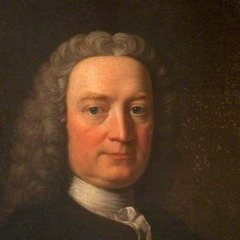
Open Hutcheson's interactive page (graphs of influences, similar and opposing positions, and quotes)
Background
Francis Hutcheson
Born: 8 August 1694 in Saintfield, County Down,
Ulster, Ireland
Died: 8 August 1746 (aged 52) in Dublin, Ireland
Alma mater: University of Glasgow
Era: 18th-century philosophy
Region: Western Philosophy
Main interests: ethics, aesthetics, metaphysics,
logic, epistemology, psychology, economics
Schools: Empiricism, Scottish Enlightenment
Institutions: University of Glasgow
Influences: Shaftesbury, Cicero, Grotius, John
Locke, Nicolas Malebranche, Richard
Cumberland
Influenced: Joseph Butler, Jeremy Bentham,
David Hume, Adam Smith, Francis Alison, John
Witherspoon, John Adams, Thomas Reid
From Wikipedia
Hutcheson was an Irish philosopher born in Ulster to a family of Scottish Presbyterians who became known as one of the founding fathers of the Scottish Enlightenment. He was Professor of Moral Philosophy at Glasgow University and is remembered as author of A System of Moral Philosophy. Hutcheson was an important influence on the works of several significant Enlightenment thinkers, including David Hume and Adam Smith.
Introductory Comments
Hutcheson held the chair of Moral Philosophy at Glasgow from 1730 until his death, and he did something there that raised many an eyebrow: he lectured in English rather than Latin, He spoke without notes, moving about the room as he went. The effect was less a recitation than an address - and it left him with a reputation as something of a preacher. For admirers, the fervor was the point. Hutcheson's students left his lectures believing that moral philosophy had a bearing on how they should actually live, which is more than many undergraduates take away from an introductory course today. Adam Smith sat in that room as a teenager and, four decades later, was still calling him the never-to-be-forgotten Dr. Hutcheson.
For critics, the fervor was the problem. If virtue is, as Hutcheson passionately proclaimed, perceived by an inner sense - a moral sentiment or intuition - then what exactly is left for the philosopher to demonstrate? Rationalists like John Balguy and, a generation later, Richard Price pressed precisely this objection: moral distinctions belong to the understanding, not to feeling, and a philosophy resting on sentiment has skipped the hard part. The charge was not laziness but something closer to category error. The irony is that Glasgow's own Presbytery found him insufficiently preacherly. In 1738 it hauled him up for teaching that we can know good from evil without first knowing God - hardly the doctrine of a man mistaking the lectern for the pulpit.
Some of Hutcheson's Key Positions
Philosophy is not merely an intellectual discipline, nor even the search for fundamental truths. It is a way of life, and studying it should make us better people and better neighbors.
That moral philosophy runs deeper than intellect alone should not surprise us. Humans are moral creatures by nature, equipped with a moral sense alongside our other internal senses - for beauty, for honor, for the happiness and misery of others. These are natural capacities of the mind.
In most moral matters we do not reason our way to right and wrong. The moral sense approves and disapproves immediately, as the eye takes in color, and it does so disinterestedly, commending a stranger's kindness even when we stand to gain nothing by it. Philosophies built on self-love, like those of Hobbes and Mandeville, can't explain this.
What the moral sense approves is not the useful act but the kind affection behind it. Virtue is benevolence. The man who feeds the poor to be admired has done a useful thing, not a virtuous one. Still, benevolence aims at the good of others, so its worth can be weighed by what it produces: that action is best which procures the greatest happiness for the greatest numbers.
But the moral sense can occasionally misfire. This is where reason does its proper work, discovering what went wrong and how to fix it.
Place in the History of Ideas
Hutcheson's Place in History of Ideas
Phyllis Vandenberg: Francis Hutcheson was an eighteenth-century Scottish philosopher whose meticulous writings and activities influenced life in Scotland, Great Britain, Europe, and even the newly formed North American colonies. For historians and political scientists, the emphasis has been on his theories of liberalism and polit- ical rights; for philosophers and psychologists, Hutcheson's importance comes from his theo- ries of human nature, which include an account of an innate care and concern for others and of the internal senses (including the moral sense). The latter were pivotal to the Scottish Enlight- enment's empirical aesthetics, and all of Hutch- eson's theories were important to moral senti- mentalism. One cannot properly study the works of Adam Smith..., or David Hume's moral and political theories, without first understand- ing Hutcheson's contributions and influence.
D. D. Raphael: [Hutcheson and Hume] had criticized the view of rationalist philosophers, such as Samuel Clarke and William Wollaston, that the judgment and the motive of moral action are functions of reason, an understand- ing of necessary truth analogous to mathemati- cal thinking. Hutcheson and Hume, in contrast, took the view that moral judgment is affective, rests on feeling, and that the motive for acting upon that judgment must likewise be affective, since reason alone does not have the power to stir bodily behavior.
Random Thoughts on Hutcheson
Like many philosophers before him, Hutcheson saw a profound connection between beauty and virtue. But unlike many of his predecessors, he gave that connection a distinctly empirical twist. All knowledge begins with experience, he argued, but experience is not confined to the familiar five senses. We also possess, thanks to God, internal senses - among them a sense of beauty, harmony, honor, and, above all, a moral sense.
Today, however, many would explain our moral instincts without pointing to God as their source. Enter evolutionary psychology: the study of how natural selection shaped the human mind. Or, as Dawkins might put it, how selfish genes produce surprisingly unselfish people. Creatures who feel the pull of fairness, sympathy, and guilt often fare better in cooperative groups, and thriving in such groups is one way to avoid being voted off the island before passing along one's genes - or at least before being left to one's own meager devices. Hutcheson would almost certainly have rejected this account, as he rejected Hobbes and Mandeville for their treating generous actions as disguised forms of self-interest. But the resemblance is misleading. Hobbes and Mandeville made a claim about motives: look closely at the kind and generous man and you will find dark calculation underneath. Evolutionary psychology makes a claim about origins, and origins are not motives. Selfish genes, as Dawkins was careful to point out, can produce surprisingly nice creatures.
Influences
Hutcheson was influenced by: Cicero, Cumberland, Grotius, Locke, Malebranche, Pufendorf, Shaftesbury
Hutcheson influenced: Adams, John, Alison, Francis, Bentham, Butler, Joseph, Hume, Reid, Smith, Adam, Witherspoon
Similar and opposing positions
Thinkers with similar positions:
- Butler, Joseph (Human motives are less selfish and simple than cynics claim.)
- Gassendi (There is nothing in the mind which has not first been in the senses.)
- Locke (Our will is determined by our general character and habit of mind.)
- Malebranche (Mind & body are not causally linked. All causuality is due to God.)
- Reid (Common sense proves existence of an external world & an abiding self.)
- Santayana (We are endowed with a special sense by which we perceive beauty.)
- Shaftesbury (Benevolent feelings form an irreducible part of our nature.)
- Socrates (Evil deeds spring from ignorance. No one does wrong knowingly.)
Thinkers with opposing positions:
- Bentham (Our ultimate motive is always to experience pleasure and avoid pain.)
- Chomsky (Certain ideas must be innate, since no empirical origin is possible.)
- Hobbes (Since the will is causally determined, it is not free in its choices.)
- Holbach (Religion is an impediment to the moral advancement of humanity.)
- Hooker (In the state of nature nothing constrains the perilous conflict of wills.)
- Mandeville (Virtue is actually detrimental to progress within the state.)
- Shakespeare (Nothing is certain in life: We change as much as do our judgments)
- Williams, B. (Values are internal. They exist in ourselves - not "in the world.")
What others said about Hutcheson
- Scott Gordon: Francis Hutcheson..., if anyone can be so singled out, was the first outstanding figure of the Scottish Enlightenment.
- Phyllis Vandenberg: For Hutcheson, there is a natural instinct and desire for the good of others. Without this natural desire, Hutcheson claimed, no one would care whether an action benefits or harms one person or many.
- Amy M. Schmitter: Because of the intrinsically well-ordered benevolence of our nature, our feelings of approval and condemnation, and their correlative moral affections are inherently pleasurable and painful. But Hutcheson insists that the pleasure and pain are effects of the approbation or condemnation, not their causes.
- Scott Gordon: It was Francis Hutcheson who coined the motto "the greatest happiness of the greatest number," the phrase that Jeremy Bentham and his disciples used as the utilitarian credo.
- Phyllis Vandenberg: The actual "state of nature," for Hutcheson, includes the benevolence he claimed as instinctual to humankind.
- Roger Scruton: [Hutcheson] anticipated Hume’s view that reason can deliver to us no more than the relations among ideas. Hence it provides no insight into the ends of our conduct, however useful it might be in calculating the means....
- Copleston: There are so many different elements in Hutcheson's ethical theory that it [is not] possible to harmonize them all. But one of the chief features of his reflections on morals... is the assimilation of morals to aesthetics. And when we bear in mind the fact that [he speaks] of the aesthetic and moral "senses," it may seem that intuitionism [is what's emphasized].
- William Turner: By endeavoring to found a system of ethics on the observation of human nature as it actually is, Hutcheson imparted to the British philosophy of morals a distinctively empirical spirit.
Schools: Classical Economics, Common Sense Realism, Empiricism, Intuitionism, Natural Law Theory, Scottish Common Sense, Scottish Enlightenment, Utilitarianism
Main interests: Art and Aesthetics, Epistemology, Ethics, Free/Unfree Will, Logic, Metaphysics, Psychology
Hutcheson's answers to philosophical questions
Art and Aesthetics
Our sense of beauty is linked to our sense of harmony & proportion. In turn, all aesthetic senses are linked to our perceptions.
Both our moral sense and our aesthetic sense are God-given. They are therefore naturally compatible with one another.
Epistemology
Though we can be assured that our ideas refer to an external world, we don't know what things are in and of themselves.
Though ideas exist only in our minds, we can safely rely on the content of consciousness and our own natural instincts.
Though we are born with an innate moral sense, we have no innate ideas per se. Knowledge comes only from experience.
"Reasoning or intellect seems to raise no new species of ideas, but to discover or discern the relations of those received."
General skepticism is not justified. Our everyday perceptions, natural instincts & innate moral sense are very reliable guides.
Ethics
Moral truths exist within ourselves: "The foundation of morality lies in our innate sense of right and wrong."
Morality is largely an intuitive matter: Our moral sense tells us immediately what is moral, though it is at times mistaken.
God gave us a moral sense, not so that each of us alone may benefit, but that we may prove a benefit to one another.
Benevolence is joyful: "Happiness and virtue are inseparable; one cannot exist without the other."
Virtue and knowledge have no necessary connection: "Many are really virtuous who cannot explain what virtue is…."
"That action is best, which procures the greatest happiness for the greatest numbers…."
Since God intended us to be a benefit to one another, we must correct our actions whenever they do harm to others.
Love is both an emotion & a virtue: "The essence of morality is the love & benevolence we have for our fellow human beings."
Law
Justice is more fundamental than law: "Justice and fairness are the pillars upon which a just and flourishing society is built."
Metaphysics
Since our will is determined by our habit of mind and general character, free will means only to act as our will requires.
Mind
As the idea of existence accompanies all our thoughts, so does the idea of self. After all, it is the self that thinks.
Political Philosophy
Our rights as citizens should never be trampled on: "Unalienable rights are essential limitations to all governments."
People have the unalienable right to resist their government when it becomes oppressive.
Psychology
"The more we practice virtue, the more it becomes a natural part of our character."
Religion and Theology
"True morality is not based on religious dogma, but on reason and universal human values."
Society
"Whence this secret Chain between each Person & Mankind? How is my Interest connected with the most distant Parts of it?"
"The happiness of an individual is closely tied to the well-being of the community."