Paul Feyerabend (1924 - 1994)
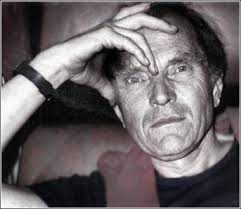
Open Feyerabend's interactive page (graphs of influences, similar and opposing positions, and quotes)
Background
Paul Feyerabend
Born: January 13, 1924 in Vienna, Austria
Died: February 11, 1994 (aged 70) in Genolier,
Vaud, Switzerland
School: Epistemological anarchism
Main interests: Philosophy of science, Critiquing
Falsificationism, Epistemology, Politics
Influences: John Stuart Mill, Gotthold Ephraim
Lessing, Karl Popper, Elizabeth Anscombe,
Wittgenstein, Kierkegaard, Gaston Bachelard,
Felix Ehrenhaft, Thomas Kuhn, Alexandre Koyré,
Herbert Feigl, Viktor Kraft, Philipp Frank, David
Bohm
Influenced: Imre Lakatos, Paul Churchland,
Deirdre McCloskey, Nancy Murphy, Ian
Hacking, Michel Foucault, Thomas Kuhn, Laura
Nader, Terence McKenna, J. Lyotard, Bas van
Fraassen, Ronald Giere, John Dupré, Cliff
Hooker, Alan Chalmers, D.L. Phillips
From Wikipedia
In his books Against Method and Science in a Free Society Feyerabend defended the idea that there are no methodological rules which are always used by scientists. He objected to any single prescriptive scientific method on the grounds that any such method would limit the activities of scientists, and hence restrict scientific progress. In his view, science would benefit most from a "dose" of theoretical anarchism. He also thought that theoretical anarchism was desirable because it was more humanitarian than [any one method].
Introductory Comments
Feyerabend's central claim is disarmingly sim- ple: there is no fixed, universal method that characterizes good science, and every attempt to locate one has quietly collapsed under the weight of actual scientific history. Inductivism can't explain why bold conjectures succeed; falsificationism can't survive Galileo, who ig- nored refuting data; and Lakatos's research pro- grammes, for all their sophistication, end up baptizing whatever scientists happen to do as "progressive." Worse, because observation is theory-laden and rival frameworks can be in- commensurable, there is no neutral algorithm hovering above the fray to adjudicate between theories. Method, in short, is a story philoso- phers tell after the fact; science itself is messier, bolder, and considerably more interesting.
But Feyerabend's case wasn't merely epistemo- logical - it was deeply political, and here his biography matters. Having come of age in Nazi-occupied Austria, he was allergic to any institu- tion claiming unique access to truth, and he saw the philosophical enforcement of a single scientific method as a gentler cousin of that same authoritarian impulse. Privileging modern Western science as the rational tradition, he argued, marginalizes indigenous knowledge systems, traditional medicine, and ways of life that have their own hard-won integrity. In the kitchen of discovery, there is no such thing, for Feyerabend, as having too many cooks.
Some of Feyerabend's Key Positions
For many years philosophers thought that science, being a rigorous discipline, must be using a distinct and fixed methodology. But this assumption is just plain wrong. When we study exactly how science - successful science - is done, we see there is no single prescriptive scientific method. Consider, for example, the Copernican revolution: Galileo did not believe in heliocentrism because of new empirical data, but because it made more sense. That is, it more simply and more elegantly explained the trajectories of planets.
Those who insist that science must consistently apply the same set of criteria have not studied the surprsingly wide and flexible array of criter- ia that scientists actually use. And those who argue that a theory must be falsifiable if it is to qualify as science have not realized that scien- tists at times comes up with "ad hoc" hypothe- ses that dismiss earlier notions of falsification.
When we closely examine how scientific research is actually done, we see that it is often "anarchism in disguise," because it often does not follow any clear set of rules or protocals. But methodological anarchism is not only a more accurate description of how science is done, it also represents a more more humanitar- ian approach to scientific questions in that it does not impose rigid rules on those who try to answer these questions.
Place in the History of Ideas
Feyerabend's Place in History of Ideas
Jack Ritchie: Kuhn’s (and Feyerabend’s) account of the historical development of science threatens inductivist and hypothetico-deductivist methodologies in a straightforward and dramatic way. When we look at what past scientists do, their work does not seem to fit the methods described by either inductivists or hypothetico-deductivists.
John Horgan: Feyerabend's Dadaesque rhetoric concealed a deadly serious point: the human compulsion to find absolute truths, however noble, too often culminates in tyranny. Feyerabend attacked science not because he truly believed that it had no more claim to truth than did astrology. Quite the contrary. Feyerabend attacked science because he recognized - and he was horrified by - its power, its potential to stamp out the diversity of human thought and culture. He objected to scientific certainty for moral and political, rather than for epistemological, reasons.
Massimo Pigliucci: Paul Feyerabend was one of the most influential philosophers of science of the twentieth century - unfortunately, I might add. While he was not a postmodernist (he reportedly did believe in an objective reality), his writings have given plenty of ammunition to post-modernists and even the few creationists who know who he was.
Random Thoughts on Feyerabend
Feyerabend's critics did not take his "theoreti- cal anarchism" lying down, launching three major counter-attacks. First, many argued that Feyerabend collapsed the vital distinction be- tween the logic of science and the psychology of scientists; just because a genius like Galileo used propaganda doesn't mean the telescope's data was mere opinion. Second, philosophers like Alan Chalmers pointed out that Feyerabend's "anything goes" philosophy is self-destructive: if no methodological principle is binding, then that principle itself isn't binding either. Finally, critics warned of the "slippery slope to the swamp," fearing that without a yardstick for truth, we lose the ability to distinguish life-saving medicine from profitable snake oil.
Can Feyerabend's "anything goes" philosophy survive such attaacks? Yes, if we read Feyera- bend charitably rather than literally - and he did, after all, describe "anything goes" as a joke aimed at methodologists who demand one rule for all of science. The defensible thesis is not nihilism but disciplined pluralism: scientific in- quiry has no single algorithm, progress benefits from a diversity of competing approaches, and epistemic humility is warranted toward tradit- ions we haven't bothered to understand. So re- framed, Feyerabend's anarchism looks less like a bomb thrown into the seminar room and more like a strongly worded memo from a gadfly with tenure who delights in needling his peers.
Influences
Feyerabend was influenced by: Anscombe, Bachelard, Bohm, David, Ehrenhaft, F., Feigl, Herbert, Frank, Philipp, Kierkegaard, Koyre, Kuhn, Lessing, Mill, Popper, Wittgenstein
Feyerabend influenced: Chalmers, Churchland, P., Dupre, John, Foucault, Fraassen, B., Giere, Ronald, Hacking, Ian, Lakatos, Lyotard, McCloskey, D., McKenna, T., Murphy, Nancy, Nader, Laura
Similar and opposing positions
Thinkers with similar positions:
- Berlin (There is no single criterion of meaningfulness. No absolute certainty.)
- Einstein (Learning the history of scientific concepts frees our own thinking.)
- James (Logic is not an adequate measure of what can or cannot be.)
- Kuhn (Science progresses unevenly thru a series of paradigm shifts in thinking.)
- Popper (Basic statements in science are not mere reports of passive sense data.)
- Quine (Scientific knowledge can't be reduced to a series of sense-data claims.)
- Rorty (The search for the ultimate foundation of knowledge is fruitless.)
- Santayana (Mind has no causal power. All motion has merely physical causes.)
Thinkers with opposing positions:
- Bacon, Francis (We should dominate nature through science and technology.)
- Bacon, Francis (Science is a separate discipline from other forms of thinking.)
- Chalmers (There's an explanatory gap between physical & phenomenal realms)
- Davidson (Though mind springs from matter, it can't be reduced to matter.)
- Fichte (Consciousness is not grounded in anything outside of itself.)
- Frege (Logic is the appropriate measure of what can or cannot be.)
- Popper (Observations can't confirm scientific hypotheses. They can only falsify)
- Tarski (Scientific knowledge can be reduced to a series of sense-data claims.)
What others said about Feyerabend
- John Horgan: Feyerabend's penchant for posturing made it all too easy to reduce him to outrageous sound bites.
- Philip J. Davis: Reading Feyerabend is like taking a cold shower. One steps in and is froze; one exits stimulated, invigorated, and agreeing with more of what he says than one is inclined to admit publicly.
- Massimo Pigliucci: He was an iconoclast who was not afraid to think outside the box, way outside the box. And his criticism of science as a potentially dehumanizing ("alienating") enterprise that lends itself to power games and ideological exploitation was right on the mark. He anticipated the modern phenomenon of scientism.
- M. Psimopoules: It is true that Popper and Feyerabend differ in many respects. But it is unfair to single out Feyerabend as worse than the others. For he too sets out to do what he sincerely believes is best for society.
- John Preston: ... he has exerted enormous influence on a generation of sociologists of science through his relativism... and apparent irrationalism.
- Searle: Kuhn paved the way for the even more radical skeptical view of Paul Feyerabend, who argued that as far as giving us truths about the world, science is no better than witchcraft.
- John Preston: His denunciations of aggressive Western imperialism, his critique of science itself, his conclusion that "objectively" there may be nothing to choose between the claims of science and those of astrology, voodoo, and alternative medicine, as well as his concern for environmental issues ensured that he was a hero of the anti-technological counter-culture.
- Massimo Pigliucci: It takes some serious intellectual guts to write a book like "Philosophy of Nature," where one presents a sweeping rethinking of the entire history of Western philosophy and science.
Schools: Analytic Philosophy, Antireductionism, Eliminative Materialism, Historicism, Post-modernism, Post-positivism, Skepticism
Main interests: Epistemology, History of Ideas, Metaphilosophy, Politics, Science
Feyerabend's answers to philosophical questions
Education
"The purpose of education, so one would think, is to introduce the young into… the society where they are born…."
"The best education consists in immunizing people against systematic attempts at education."
"Teachers' using grades & the fear of failure mould the brains of the young until they have lost every ounce of imagination…."
Epistemology
"It is clear, then, that… a fixed theory of rationality rests on too naive a view of man and his social surroundings."
"The only absolute truth is that there are no absolute truths."
"If we want to understand nature…, then we must use all ideas, all methods, and not just a small selection of them."
"Traditions are neither good nor bad, they simply are…. Rationality is not an arbiter of traditions, it is itself a tradition...."
Language
"Without a constant misuse of language, there cannot be any discovery, any progress."
Metaphysics
"If Truth… conflicts with freedom, then we have a choice. We may abandon freedom. But we may also abandon Truth."
The common-sense understanding of mind is so at odds with modern neuroscience that it should no longer be taken seriously.
Since the common-sense understanding of mind is now scientifically irrelevant, the "mind/body problem" can be dismissed.
Philosophy
"[W]hen sophistication loses content then the only way of keeping in touch with reality is to be crude and superficial."
We overestimate the value of of reason. "Rationalism... is a secularized form of the belief in the power of the word of God."
Mathematics is in part metaphysical: "Mathematical Reasoning is not only exact; it has its own criteria of reality."
Political Philosophy
"A free society is a society in which all traditions have equal rights and equal access to the centers of power."
"The separation of state & church must be complemented by the separation of state & science," that most dogmatic religion.
Religion and Theology
"All religion may be centered around a generally good idea, [but] this has not stopped its adherents from acting like bastards."
Science
"[T]he separation of science and non-science is not only artificial but also detrimental to the advancement of knowledge."
We should not exalt science. In a free society "all traditions have equal rights and equal access to the centers of power."
"Not only are facts & theories in constant disharmony, they are never as neatly separated as everyone makes them out to be."
"[T]here is only one principle [in science] that can be defended under all circumstances…. It is the principle: anything goes."
So-called scientific truths are ephemeral generalities and, as such, are not as meaningful as the tangible particulars of life.
Science requires the competition of different theories so that the most convincing ones can be clearly recognized.
"Most scientists today are devoid of ideas [and] intent on producing some… inane papers that now constitutes... 'progress.'"
Scientists' claim to perfect objectivity is a type of power play, especially when it's used to discredit other ways of thinking.
Science should not be used to discredit religious views or other alternative ways of thinking about the world we live in.