literature, linguistics, science, ontology, history
Influences: Bergson, Heidegger, Husserl, Lukács,
Kierkegaard, Köhler, Lévi-Strauss, Marx, Kant,
Nietzsche,Sartre,Saussure, Levinas,Whitehead,
Freud,Ricœur,Arendt,Descartes,Kojève,Hegel
Influenced: Abram, Barbaras, Butler, Danto,
Castoriadis, Deleuze, Dreyfus, Edie, El-Bizri,
Fanon, Foucault, Harman, Ihde, Irigaray, Lacan,
Kompridis, Laplanche, Lefort, Levi-Strauss,
Lyotard, McClamrock, Sartre, Derrida, Virilio
From Wikipedia
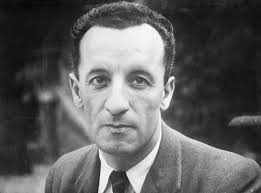
Merleau-Ponty was a French phenomenological philosopher.... [H]e wrote on perception, art, politics, religion, biology, psychology, psycho- analysis, language, nature, and history.... He was the only major phenomenologist of the first half of the twentieth century to engage extensively with the sciences. It is through this engagement that his writings became influential in the project of naturalizing phenomenology, in which phenome- nologists use the results of psychology and cognitive science.
Introductory Comments
For centuries, philosophers treated the human body like an awkward roommate of the mind. Descartes split us into a ghostly mind piloting a mechanical body; Locke reduced the body to a passive sensory mailbox delivering raw data for the mind to sort. Even fellow phenomenologists didn't quite arrive where Merleau-Ponty did: Husserl anchored intentionality in mental acts, leaving the body as a silent partner, while Hei- degger's analysis of existence remained curiously disembodied. Merleau-Ponty insisted this was all, quite literally, backwards. The body is not an object consciousness observes or a tool the mind employs; it is the very ground from which per- ception and meaning arise. Before "I think," there is "I can" - the hand already shaping itself to the doorknob, the body already in silent con- versation with the world.
The implications ripple outward. If the body is the primary site of knowing, then knowledge is never the detached, spectatorial affair philoso- phers from Plato onward imagined; it is situated, perspectival, and woven into bodily habit and skill. A pianist doesn't "think" her way through a sonata - her fingers carry an intelligence no ab- stract reasoning could replicate. Perception, too, is never the passive registration of atomic sensa- tions that empiricists supposed; we encounter meaningful wholes from the start, because our bodies are already oriented toward the world with purposes and history.
Some of Merleau-Ponty's Key Positions
Despite the long-established and widespread philosophical assumption that consciousness is the source of all knowledge, the body is in fact site of our experiencing and knowing the world. Indeed, the perceived world can't be disentan- gled fron the perceiving body, nor vice versa.
Or to make the point ontologically: Conscious- ness does not float around by itself. It inheres in us - in our bodies. Our bodies then are not only material things: they also constitute our perceptual openness to the world. Without our bodies, there are no perceptions. And without perceptions, there is no perceived world.
All this has important existential implications: Since our perceptions are intertwined with our bodies and the physical environment surround- ing our bodies, our interactions with the world are perceived as fundamental. But our involve- ment with the things of this world is constantly in flux, and we, therefore, are constantly seek- ing meaning in the new things we encounter.
Yet, of course, it is also true that we find mean- ing in things that are not material. This is large- ly due to language. Language not only allows us to consider things outside our surroundings, it also makes possible many aspects of what we call culture - religion, literature, poetry, cinema, etc. Language and art allow us to transcend our bodies and to replace our environment.
Place in the History of Ideas
Merleau-Ponty's Place in History of Ideas
Ted Toadvine: [Merleau-Ponty] was the leading academic proponent of existentialism and phe- nomenology in post-war France. Best known for his original and influential work on embodi- ment, perception, and ontology, he also made important contributions to the philosophy of art, history, language, nature, and politics. As- sociated in his early years with the existentialist movement through his friendship with Jean-Paul Sartre and Simone de Beauvoir, Merleau-Ponty played a central role in the dissemination of phenomenology, which he sought to inte- grate with Gestalt psychology, psychoanalysis, Marxism, and Saussurian linguistics…. [H]e influenced the post-structuralist generation of French thinkers who succeeded him, including Michel Foucault, Gilles Deleuze, and Jacques Derrida, whose similarities with and debt to the later Merleau-Ponty have often been under- estimated.
Jack Reynolds: Although it is difficult to summarize Merleau-Ponty’s work into neat propositions, we can say that he sought to develop a radical re-description of embodied experience (with a primacy given to studies of perception), and argued that these phenomena could not be suitably understood by the philosophical tradition because of its tendency to drift between two flawed and equally unsatisfactory alternatives: empiricism and, what he called, intellectualism.
Random Thoughts on Merleau-Ponty
Where is the self? For most of Western philoso- phy, the answer pointed somewhere behind the eyes. Descartes located it in the thinking mind - a ghostly tenant peering out through the win- dows of the skull. Locke housed it in the continu- ity of conscious memory, a mental autobiogra- phy we carry around and call "me." Hume, rum- maging through his own consciousness and find-ing nothing but a tumble of impressions, de- clared the self a convenient fiction - an eviction notice for the soul, if ever there was one. Even Kant, who rescued the self from Hume's skepti-cism, made it a formal mental structure rather than anything you could stub your toe with.
Merleau-Ponty upended this entire tradition by insisting that the self is not a mind contemplat- ing the world from a private theater but the lived body reaching, perceiving, and moving through a world it already understands before abstract thought arrives on the scene. And if who I am is inseparable from my embodied en- gagement with the world, then the self is not a fixed essence but an ongoing activity - some- thing I do rather than something I have. The carpenter's self lives partly in his hands, the dancer's in her limbs. The self is forever entan- gled with other bodies, other people, the textures and rhythms of lived experience. Philos- ophy spent centuries searching for the self in the attic of the mind; Merleau-Ponty found it down- stairs, already busy making breakfast.
Bourdieu (The body is our site of knowing the world. It's how we know.)
Heidegger (Philosophy should start with the objects of conscious experience.)
Humboldt, W. (Mind and body form a vital unity as seen in man's sensuality.)
Husserl (Thought is intentional. It is by nature about or directed toward objects)
Kierkegaard (Philosophy must embrace subjectivity as an essential resource.)
Marx (From each according to his ability, to each according to his needs.)
Nagel (We can't view reality devoid of assumptions, perspectives, and biases.)
Strawson (Mind and body are united in the primitive concept of personhood.)
Thinkers with opposing positions:
Augustine (Soul and body are distinct substances and soul is superior to body.)
Chalmers (A radical metaphysical split exists between realms of mind & matter)
Cousin (Reason enables us to pass beyond the relative and subjective.)
Descartes (We are fundamentally thinking beings. Our being rests in thought.)
Fichte (Consciousness is not grounded in anything outside of itself.)
Holbach (The universe is simply matter in motion, bound by laws of nature.)
Hutcheson (Mind & body are not causally linked. All causuality is due to God.)
Tillich (Faith in God is man's ultimate concern, even for the nonbeliever.)
What others said about Merleau-Ponty
San Woolfe: [Merleau-Ponty thought we] imbue the world with our own value and meaning, which is crucial to how we subjectively experience the world.
Ted Toadvine: … Merleau-Ponty focused on the problems of perception and embodiment as a starting point for clarifying the relation between the mind and the body, the objective world and the experienced world….
Jack Reynolds: He sought to rearticulate the relationship between subject and object, self and world... and his early and middle work did so primarily through an account of the lived and existential body. He argued that the... Philosophical tradition... has a tendency to consider the body simply as an object that a transcendent mind orders to perform varying functions.
Ayer: [For Merleau-Ponty] persons... exist "for themselves" not only as being self-conscious but rather in the sense that they freely make projects, so that at no time are their characters definitely fixed.
Ron McClamrock: [He] suggests the search for the self and consciousness need not be focused on the space within our skulls [- but in the lived body].
David Abram: [Merleau-Ponty's concept of "flesh" is] the mysterious tissue or matrix that underlies and gives rise to both the perceiver and the perceived as interdependent aspects of its spontaneous activity.
Ted Toadvine: Although phenomenology provided the overarching framework for [his philosophical] investigations, Merleau-Ponty also drew freely on empirical research in psychology and ethology, anthropology, psychoanalysis, linguistics, and the arts. His constant points of historical reference are Descartes, Kant, Hegel, and Marx.
Robert C. Solomon: Merleau-Ponty... replaces the Husserlian notion of "intentionality" with the more bodily notion of "motility," and declares that consciousness is not originally "I think" but "I am able to."
Schools: Common Sense Realism, Continental Philosophy, Dialectical Materialism, Empiricism, Existential Phenomenology, Existentialism, Holism, Marxism, Marxist Humanism, Personalism, Phenomenology, Post-structuralism, Romanticism, Structuralism, Western Marxism
Main interests: Alienation, Art and Aesthetics, Consciousness, Death, Desire, Epistemology, Free/Unfree Will, Habits, History, Human Will, Language, Literature, Memory, Metaphilosophy, Metaphysics, Mind, Nature, Perception, Personal Identity, Politics, Psychoanalysis, Psychology, Science, Semiotics, Will
Merleau-Ponty's answers to philosophical questions