I. Prigogine, Quine, Russell, B. F. Skinner, J. L.
Synge, Wolfgang Smith, Tarski, J. Vuillemin, C.
H. Waddington, Michel Weber, Sewall Wright,
Davidson, Niebuhr, C. Hartshorne, G. H. Mead
From Wikipedia
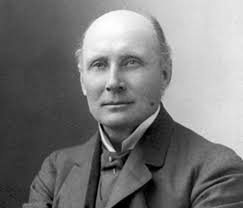
Whitehead was an English mathematician and philosopher. He created the philosophical school known as process philosophy, which has been applied in a wide variety of disciplines, including ecology, theology, education, physics, biology, economics, and psychology…. Whitehead argued that reality consists of processes rather than material objects, and that processes are best defined by their relations with other processes, thus rejecting the theory that reality is fundamen- tally constructed by bits of matter….
Introductory Comments
Few partnerships in intellectual history have aimed higher than the one between Whitehead and his former student Russell. In Principia Mathematica (1910–13), they set out to show that mathematics, that seemingly self-sufficient realm of numbers and equations, is really logic in fancy dress. The labor was immense. The groundwork for proving that 1 + 1 = 2 arrives only after several hundred pages, and the authors permit themselves the dry remark that the result is "occasionally useful." The project also fell short of its goal. It leaned on assumptions, such as an axiom asserting that infinitely many things exist, that looked less like pure logic than like convenient stipulation. And in 1931 Kurt Gödel showed that no system of this kind could prove every truth of arithmetic.
Still, the attempt left its mark, not least on Whitehead himself. Having spent a decade on one of the most abstract structures ever attempted, he became philosophy’s sharpest critic of mistaking abstractions for reality. Turning to the natural sciences, he argued that their basic concepts, such as the instant without duration and the particle sitting at a single point, are abstractions carved from the flux of experience. They succeed because they isolate manageable patterns and set everything else aside. Abstraction itself he considered indispensable, since thought cannot proceed without it. The trouble begins when we treat the abstraction as the concrete thing itself. This is the "fallacy of misplaced concreteness."
Some of Whitehead's Key Positions
Modern science inherited a picture of nature as bits of matter, each with a "simple location": fully present at one place and time, needing nothing beyond itself. Mind is cast as a different kind of thing altogether. This "bifurcation of nature" is a mistake. So is treating convenient abstractions as concrete reality, an error called the fallacy of misplaced concreteness.
The world consists not of enduring stuff but of momentary events, or "actual occasions." Each comes into being by taking up, or "prehending," the occasions before it, so relations make things what they are. Every occasion has both a physical and a mental aspect. Mind and matter thus differ in complexity, not in kind.
Reality is a "creative advance into novelty." Each occasion forms itself, perishes, and becomes material for its successors. Pure possibilities, such as shapes and colors, are permanent "eternal objects" that occasions draw upon.
God is neither First Cause nor Mighty Ruler, but the chief example of the principles governing everything else. God offers each occasion an ideal aim and preserves what the world achieves, working by persuasion rather than coercion. Since the world is made of processes rather than inert matter, change is intrinsic to nature and needs no external power to drive it. Living things, however, show an additional urge to live and to live better.
Place in the History of Ideas
Whitehead's Place in History of Ideas
Ronald Desmet: Although there are important continuities throughout his career, Whitehead’s intellectual life is often divided into three main periods. The first corresponds roughly to his time at Cambridge from 1884 to 1910. It was during these years that he worked primarily on issues in mathematics and logic.... The second main period, from 1910 to 1924, corresponds roughly to his time at London. During these years Whitehead concentrated mainly on issues in physics, the philosophy of science, and the philosophy of education. The third main period corresponds roughly to his time at Harvard from 1924 onward. It was during this time that he worked primarily on issues in metaphysics.
Gary L. Herstein: The most prominent area of ongoing Whiteheadian influence is within process theology. While Whitehead’s explicit philosophical treatments of God seldom went beyond that of an ideal principle of maximal coherence, many others have developed these ideas further. Writers such as Charles Harts- horne and John Cobb have speculated on, and argued for, a much more robust, ontological conception of God. Nothing in Whitehead’s own writings require such developments, but neither are they in any way precluded. The God of process theology tends to be far more personal and much more of a co-participant in the creative process of the universe than that which one often finds in orthodox religions.
Random Thoughts on Whitehead
Whitehead saw reality as a verb: a ceaseless flow of events, each arising, absorbing what came before, and passing on. He conceded, though, that most of the time we must treat it as a string of nouns. Science needs nouns because only stable, sharply bounded things can be measured and calculated. Seventeenth century physics triumphed by picturing nature as bits of matter parked at fixed points in space and time. Everyday life needs nouns too. Our senses tidy a vague, moving world into crisp objects we can grab, name, and avoid tripping over. None of this is a mistake. The mistake, which Whitehead called the "fallacy of misplaced concreteness," comes only when we forget the tidying and take the nouns for the whole story.
Consider the coffee cup on your table. Its molecules jostle without pause, its heat drains steadily into the room, and its clay was a riverbank before anyone thought to fire it. Even sitting still is something it is busily doing, renewing its shape from one moment to the next. Strictly speaking, it is less a cup than a cupping: a pattern of events that holds together just long enough to hold your coffee. None of this, of course, will help you at breakfast. Anyone who greeted the morning with the full process in view would still be hunting for the handle at noon. So we call it a cup, science gets its equations, and we get our caffeine. And the cup itself? No coffee, however strong, will ever wake us to how hard it works at doing absolutely nothing.
Bergson (Life & the world are processes and can't be reduced to brute matter.)
Deleuze (There is no one substance, only an always-differentiating process.)
Dewey (Education should be an active, engaged, and "hands-on" process.)
Goethe (Science and philosophy need to ponder the dynamic character of nature.)
Hegel (Reality is not a static set of facts. It is an ongoing process, a becoming.)
Heraclitus (Constant change is a fundamental aspect of the world.)
Humboldt, A. (Nature is dynamic and interdependent - not simple mechanics.)
Newman (A liberal education develops a capacity to think deeply and broadly.)
Pythagoras (Mathematics is a purely logical method of understanding the world.)
Seneca (The best way to establish virtue is through a liberal education.)
Thinkers with opposing positions:
Aristotle (Outside logic & math, truth of a statement must rest on evidence.)
Chalmers (A radical metaphysical split exists between realms of mind & matter)
Collingwood (Philosophy expresses rational as opposed to causal processes.)
Descartes (The workings of nature are completely physical and mechanical.)
Diderot (The universe is simply matter in motion, bound by laws of nature.)
Parmenides (Reality is one and changeless. Existence is timeless and uniform.)
What others said about Whitehead
Russell: As a teacher I regard Whitehead as perfect.
Colin Wilson: I believe like Whitehead that the universe is a single organism that somehow takes account of us. I don't believe that modern man is a stranded fragment of life in an empty universe.
Charles Hartshorne: A mathematician sensitive to so many of the values in our culture, so imaginative... in his thinking, so eager to learn from the great minds of the past and the present, so free from any narrow partisanship..., is one person in hundreds of millions. He can be mistaken, but even his mistakes may be more instructive than most other writers’ truth.
Shailer Mathews: [When reading Whitehead, it] is infuriating, and I must say embarrassing as well, to read page after page of relatively familiar words without understanding a single sentence.
H. L. Mencken: ... Dr. Whitehead occasionally indulges himself, like all metaphysicians, in what has a suspicious resemblance to nonsense.
Ronald Desmet: ... it is fair to say that Whitehead’s process philosophy would most likely have entered oblivion if the Chicago Divinity School and the Claremont School of Theology had not shown a major interest in it.
Henry Nelson Wieman: Not many people will [ever read Whitehead's recent book].... But its influence will radiate through concentric circles of popularization until the common man will think and work in the light of it, not knowing whence the light came. After a few decades of discussion and analysis one will be able to understand it more readily than can now be done.
Eric Hoffer: Whitehead thought it self-evident that you would get a good government if you took power out of the hands of the acquisitive and gave it to the learned and the cultivated. At present, a child... knows better than that.
Schools: Analytic Philosophy, Antireductionism, Emergentism, Holism, Intellectualism, Logicism, Metaphysical Idealism, Process Philosophy, Rationalism, Social Liberalism, Vitalism
Main interests: Causality, Consciousness, Desire, Education, Engineering, Evolution, Habits, Human Will, Logic, Mathematics, Metaphilosophy, Metaphysics, Mind, Physics, Politics, Probability, Psychology, Religion, Science, Time, Will