Charles Darwin (1809 - 1882)
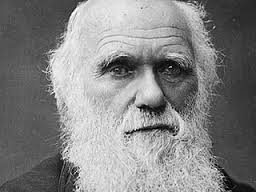
Open Darwin's interactive page (graphs of influences, similar and opposing positions, and quotes)
Background
Charles Darwin
Born: 12 February 1809 in Shrewsbury,
Shropshire, England
Died: 19 April 1882 (aged 73) in Kent, England
Main Interests: Evolution, Natural history,
Biology, Geology
Education: University of Edinburgh Medical
School and Christ's College, Cambridge (BA)
Known for: The Voyage of the Beagle, On the
Origin of Species, evolution by natural
selection, common descent
Influences: Goethe, Lamarck, Malthus, de
Buffon, A. Humboldt, Erasmus Darwin, Herschel,
Lyell, Hutton, Blyth, Alfred Russel Wallace
Influenced: Joseph Hooker, Thomas Huxley,
Herbert Spencer, Asa Gray, John Gould, Zola,
Nietzsche, Jack London, Freud, Romanes, James,
Haeckel, Lubbock, Bergson, Dewey, Santayana,
Eiseley, Stephen Jay Gould, Dawkins, Dennett
From Wikipedia
Darwin was an English naturalist, geologist, and biologist, widely known for his contributions to evolutionary biology. His proposition that all species of life have descended from a common ancestor is now generally accepted and consid- ered a fundamental scientific concept…. [H]e introduced his scientific theory that this branching pattern of evolution resulted from a process he called natural selection, in which the struggle for existence has a similar effect to the artificial selection involved in selective breeding.
Introductory Comments
Scientists are as tangled in the web of ideas as philosophers, and arguably more so. Philosophers can let their minds drift off into pure conjecture; scientists have to keep one eye on hard fact, which tethers them closer to the roost - and to the flock. Even a naturalist as original as Darwin could not work free of the questions other men had already asked. Nor did he want to. He read voraciously, corresponded constantly, and freely acknowledged his debts, beginning with one inside his own family. His grandfather Erasmus Darwin had speculated in Zoonomia that all warm-blooded life might have sprung from a single living filament.
Lamarck supplied the first systematic theory of how that process might work, driven by use, disuse, and the inheritance of traits acquired in a lifetime. Darwin thought little of the mechanism, but Lamarck's central insistence that species transmute over time was indispensable. Georges Cuvier, a fierce opponent of evolution, helped anyway: his work on fossil bones established that whole kinds of animals had gone extinct and that the strata held a succession of different creatures. Charles Lyell supplied the time such a succession required, arguing that ordinary forces working over unimaginable stretches had shaped the earth. And from Alexander von Humboldt, the great naturalist, came a vision of nature as a single interconnected whole. But it was not a naturalist who helped Darwin connect the last of the dots. It was an economist. (See Random Thoughts.)
Some of Darwin's Key Positions
More living things are born than can survive. Thus, any variation in traits between individuals that gives its bearer a slight edge - finding food, escaping predators, attracting a mate - makes it likelier that the bearer lives to breed and passes the trait along. The poorly suited leave fewer offspring, or none. The pressure behind this sorting process is struggle for existence.
Repeat the process over immense stretches of time and small advantages accumulate. Lineages divide, most go extinct, and this one mechanism accounts for the whole branching tree of life, every organism descending from a few common ancestors.
Nothing directs the process, not even God. Adaptations that look designed are the residue of countless small advantages. Moreover, the many examples of nature's cruelty - wasp larvae feeding inside a living caterpillar, etc. - are hard to square with a kindly Creator. But this is not an argument for atheism - only a claim that God is no longer needed to explain the complexity of nature.
As for man's place in nature, we must humbly acknowledge our kinship with other animals. Human beings evolved through the same natural processes as every other species and share many instincts, emotions, and mental capacities with other animals. Even the difference between the human mind and that of the higher animals is "one of degree and not of kind."
Place in the History of Ideas
Darwin's Place in History of Ideas
Daniel C. Dennett: The fundamental core of contemporary Darwinism, the theory of DNA-based reproduction and evolution, is now beyond dispute among scientists. It demon- strates its power every day, contributing crucially to the explanation of planet-sized facts of geology and meteorology, through middle-sized facts of ecology and agronomy, down to the latest microscopic facts of genetic engineering. It unifies all of biology and the history of our planet into a single grand story. Like Gulliver tied down in Lilliput, it is unbudgeable, not because of some one or two huge chains of argument that might - hope against hope - have weak links in them, but because it is securely tied by hundreds of thousands of threads of evidence anchoring it to virtually every other field of knowledge.
Michael Denton: His general theory, that all life on earth had originated and evolved by a gradual successive accumulation of fortuitous mutations, is still, as it was in Darwin’s time, a highly speculative hypothesis entirely without direct factual support.… The evolutionary paradigm… is more like a principle of medieval astrology than a serious twentieth century scientific theory.… One might have expected that a theory of such cardinal importance, a theory that literally changed the world, would have been something more than metaphysics, something more than a myth.
Random Thoughts on Darwin
By the late 1830s Darwin had every ingredient of a theory of evolution except the two that mattered. His grandfather Erasmus had guessed at a common origin. Lamarck had insisted that species change. Lyell had opened up the enormous stretches of time. Cuvier had shown that species die out. Humboldt had painted nature as a single restless system. So, Darwin had the who, what, when, and where - all he lacked was the how and why.
Enter Thomas Malthus, an English parson turned political economist with a talent for cold arithmetic. Malthus argued that, while food production can increase only arithmetically, human population, if unchecked, increases geometrically, continually pressing against the available food supply. Hence, the struggle for survival. Darwin read Malthus in October 1838, and, by his own account, everything fell into place. If far more are born than can possibly survive, then whatever trait helps an individual live long enough to breed will be preserved, and whatever handicaps it will be destroyed. That's natural selection, and Darwin knew it at once.
It's a classic detective story. Erasmus supplied the family connection among the suspects, Lamarck the movement, Lyell the long night in which the deed was done, Cuvier the body, and Humboldt the atmospheric description of the scene. But it was Malthus who lets slip the method and the motive - without ever suspecting a crime had been committed.
Influences
Darwin was influenced by: de Buffon, Goethe, Herschel, Humboldt, A., Hutton, Lamarck, Lyell, Malthus, Wallace, A.R.
Darwin influenced: Bergson, Dawkins, Dennett, Dewey, Eiseley, Freud, Gould, John, Gould, S.J., Gray, Asa, Haeckel, Huxley, James, London, Jack, Nietzsche, Santayana, Spencer, Zola
Similar and opposing positions
Thinkers with similar positions:
- Dawkins (Intricate design in the natural world can be explained thru science.)
- Einstein (Nature has no purpose or goal, nor any other anthropomorphic quality.)
- Foot (Moral judgments have a biological basis and are entrenched in our nature.)
- Fukuyama (Our moral instincts are innate & evolved with our social instincts.)
- Heraclitus (All is strife - a constant process of building up & tearing down.)
- Humboldt, A. (Nature is a "living whole” where all organisms are interdependent)
- Huxley (Humans, like all other species, have evolved from other species.)
- Malthus (Population multiplies geometrically and food supply arithmetically.)
Thinkers with opposing positions:
- Al-Farabi (Humans stand between two worlds - the earthly and the heavenly.)
- Bergson (There's a vital force in the world that pushes evolution onward.)
- Edwards (Intricate design in the natural world is the work of God alone.)
- Leibniz (The intricate interactions of nature reflect a pre-established harmony.)
- Muir (In studying nature we are also directly studying the handiwork of God.)
- Newton (Intricate design we see in nature proves existence of Great Designer)
- Plantinga (Evolution is not an entirely natural process. God helps guide it.)
- Sumner (Survival of the fittest requires we abandon liberal social reforms.)
What others said about Darwin
- Dennett: If I were to give an award for the single best idea anyone ever had, I'd give it to Darwin.
- Robert G. Ingersoll: The church teaches that man was created perfect, and that for six thousand years he has degenerated. Darwin demonstrated the falsity of this dogma.
- Cassirer: … the Darwinian theory claims not only to contain the answer to the problem of the origin of man but also the answer to all the questions as to the origin of human culture. When Darwin's theory first appeared, it seemed finally, after centuries of vain efforts, to have revealed the uniting bond that encompasses natural science and the humanities.
- Huxley: He found a great truth, trodden under foot, reviled by bigots, and ridiculed by all the world; he lived long enough to see it, chiefly by his own efforts, irrefragably established in science.
- Dawkins: Charles Darwin had a big idea, arguably the most powerful idea ever. And like all the best ideas it is beguilingly simple.
- Marx: Darwin’s work is most important and suits my purpose in that it provides a basis in natural science for the historical class struggle.
- David Brewster: His facts, though frequently new and interesting, are often little more than conjectures; and the grand phenomena of the world of life, and instinct, and reason, which other minds have woven into noble and elevating truths, have thus become in Mr. Darwin's hands the basis of a dangerous and degrading speculation.
- Harari: ... Darwin has deprived us of our souls. If you really understand the Theory of Evolution, you understand that there is no soul. This is a terrifying thought, not only to devote Christians and Muslims, but also to many secular people....
Schools: Agnosticism, Naturalism, Utilitarianism
Main interests: Biology, Botany, Communication, Environment/Conservation, Evolution, Geology, Meteorology, Nature, Progress, Science, Sexuality, Zoology
Darwin's answers to philosophical questions
Art and Aesthetics
A study of the numerous tribes and cultures reveals a wide variance in what is deemed beautiful and ugly.
Our judgment regarding the beauty of people - their face, hair, body, voice, etc. - is linked to sexual selection.
Ethics
Conscience is a product of our social instincts. It is in effect our fear of moral censure & our resolve to avoid such censure.
Language
Language "excites trains of thought which would never arise from the mere impression of the senses...."
Human language functions in many ways like the cries and calls of other animals. The difference is only one of degree.
Language developed through the imitation of natural sounds & man's own instinctive cries, aided by signs & gestures.
Nature
Natural selection has no goal, but through it "all corporeal & mental endowments... tend to progress toward perfection."
The widespread suffering found in nature argues against the existence of any benign or kindly force at work in nature.
The complexity found in nature is due to the very gradual adaptation of organisms to their very diverse environments.
As artificial selection creates breeds within a species, so too does natural selection create the species themselves.
Though the concept of natural selection is simple, its immense power can be seen in the amazing variety of species.
The difference between man & other animals is one of degree only. We share many instincts & abilities with animals.
Before the advent of civilization, virtually all life forms on earth were engaged in a struggle for survival. Most still are.
Though many animal & plant species exist, they differ in attributes & complexity only, not in objective worth or rank.
Political Philosophy
"If the misery of the poor be caused not by the laws of nature, but by our institutions, great is our sin."
Psychology
All our emotions and their physical manifestations are adaptations that enhance our chances of survival and/or mating.
Though our intelligence evolved from primitive instincts of our nonhuman ancestors, many instincts still guide us.
"It is not the strongest of the species that survive, nor the most intelligent, but the one most responsive to change."
Religion and Theology
Evolution alone explains the intricate designs, complex interactions and amazing abilities we see throughout nature.
Everything in nature is determined by fixed laws. Miracles are the products of unscientific or superstitious minds.
Science
"[S]cience consists in grouping facts so that general laws or conclusions may be drawn from them."
"I have... endeavored to... give up any hypothesis, however much beloved…, as soon as facts are shown to be opposed to it."
The process of natural selection has led to all the amazing diversity of life forms we now see on earth, including our own.
Sex and Gender
Many animals exhibit the emotion of love, especially social animals that mate and are devoted to raising their young.
Since it's their job to fight enemies, hunt animals & fashion weapons, it's natural that men are the stronger & smarter sex.
Society
"In the long history of humankind… those who learned to collaborate and improvise most effectively have prevailed."