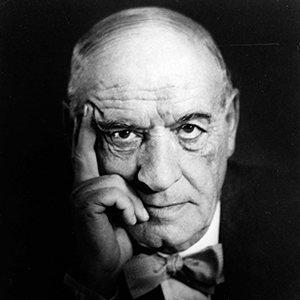
Ortega was a Spanish philosopher and essayist…. His philosophy has been characterized as a "philosophy of life" that "comprised a long-hidden beginning in a pragmatist metaphysics inspired by William James, and with a general method from a realist phenomenology imitating Edmund Husserl, which served both his proto-existentialism (prior to Martin Heidegger's) and his realist historicism, which has been compared to both Wilhelm Dilthey and Benedetto Croce."
Introductory Comments
Every human life comes with scenery. A person is born at a particular time, in a particular place, into a particular body, family, language, and set of troubles, and none of it was chosen. Ortega called all this "circumstance," and he insisted it was not the backdrop to a life but half of it. What makes a life distinctively one's own is not some exalted inner essence but this concrete tangle of situation and choice, which no one else inhabits in quite the same way. Readers of Heidegger or Sartre will feel a jolt of recognition, but the chronology runs the other way. Ortega was sketching these ideas by 1914, well before Being and Time, and he later pointed out, a little testily, that the Germans had gotten the credit. But where Heidegger dwelt on anxiety, guilt, and being-toward-death, and Sartre on nausea and nothingness, Ortega described life as a task to be accomplished, even a kind of sport.
Ortega also differed in his understanding of Western philosophy. As he told the story, the ancients were realists, treating the world as simply there and the mind as its mirror. The moderns, from Descartes onward, were idealists, sealing the self inside its own consciousness and making the world its contents. Ortega declared both bankrupt. Reality, he argued, is relational from the start - the self-with-things, a single fused unit in which neither half can claim priority. There is no disembodied consciousness floating free of circumstances, and no object carries meaning apart from the life that encounters it.
Some of Ortega's Key Positions
The gravest threat to modern Europe is not a party or a class but a new human type: the "mass man." He feels himself just like everyone else, is content to be so, and claims the right to impose his commonplace opinions on all. He turns up among aristocrats and scientists as readily as among laborers. Bolshevism and Fascism, for all their mutual hostility, are twin symptoms of his rise: both scorn reasons and prefer direct action to argument.
Against them stands liberal democracy, the highest form of public life yet achieved. Its essence is generosity: the majority restrains its power so that the minority, even the enemy, may live and speak. When that restraint collapses into "hyperdemocracy," the mass crushes whatever differs from it. A healthy society depends instead on select minorities. These are not a hereditary elite but individuals who demand more of themselves than of others, and whose example the rest freely follow.
"I am I and my circumstance, and if I do not save it, I do not save myself." Idealism errs by dissolving the world into the thinking subject, and realism errs by treating the world as complete in itself. The fundamental reality is "my life," the ongoing encounter of a self with its circumstance. Every view of reality is therefore taken from somewhere, and truth is approached by integrating perspectives rather than escaping them.
Place in the History of Ideas
Ortega's Place in History of Ideas
Neil McInnes: Ortega called his philosophy the "metaphysics of vital reason," or "ratio-vitalism." By metaphysics he meant the quest for an ultimate or radical reality in which all else was rooted and from which every particular being derived its measure of reality. He found this ultimate reality in Life, a word that he first used in a biological sense, like the vitalists, but which soon came to mean "my life" and "your life" - the career and destiny of an individual in a given society and at a certain point in history.... Ortega sought to go beyond the opposition of idealism (which, he claimed, asserted the ontological priority of the self) and realism (which asserted the priority of the things the self knows). He asserted that in truth self and things were constitutive of each other, each needing the other in order to exist. The sole reality was the self-with-things
Harold Raley: It is easy to understand why sincere scholars of his work have labeled Ortega in so many conflicting ways and why it is hard for anyone to resist doing so. He was a man of uncommon complexity, and if one searches for them within his writings there may be found the proofs of his liberalism and conservatism, his debts to other thinkers and his own originality. He can be categorized at once as a man of the privileged and the populace, which caused him to be generally distrusted by politicians of all stripes.
Random Thoughts on Ortega
There is an old parable about blind men and an elephant. One grabs the trunk and announces a snake, another pats the flank and announces a wall, and a third clutches a leg and announces a tree. The usual moral is that they are all wrong. Ortega drew a different moral: each of them is right about something. Every point of view, he argued in The Modern Theme, catches some part of reality that no other can catch, and the one false perspective is the one claiming to be the only one. Truth is reached not by leaping out of all viewpoints to some view from nowhere, but by fitting the partial views together. In Ortega’s grand phrase, the perfect fitting-together of every perspective would be the point of view of God.
It is an appealing picture, but it leaves a nagging question. Fitting pieces together requires knowing how they fit: which views overlap, which are distorted, and which should be thrown out. That sorting can’t be done by collecting perspectives like stamps in an album. It calls for standards of evidence and argument that reach beyond any single viewpoint. Ortega was hardly blind to this. He rejected relativism as firmly as he rejected rationalism, and he expected truth to be pieced together across individuals, nations, and generations, a project that looks a great deal like reasoning together. Yet he was so taken with the dream of a perfect fit that he never quite explained how anyone - even God - could assemble an elephant out of snakes, walls, and trees.
Ortega influenced: Bunuel, Luis, de Benoist, A., de Carvalho, de Rivera, P., Gaos, Jose, Harman, Heidegger, Komar, Milan, Machado, A., Marías, Julian, Morente, M.G., Zambrano, M.
Similar and opposing positions
Thinkers with similar positions:
Chrysippus (Free will springs from our participation in the deterministic world.)
Dilthey (Our understanding depends on past worldviews and interpretations.)
Heidegger (Philosophy should start with the objects of conscious experience.)
Herder (We are in no way free by submerging our individuality in a group.)
Husserl (Philosophy must leave behind all prejudices & previously held beliefs.)
James (An abiding self or pure ego holds together our stream of consciousness.)
Jaspers (Philosophy should focus on lived experience, not abstractions.)
Marcuse (Capitalism can lead to a dehumanizing objectification of ourselves.)
Mill (Freedom is not something we find in the state, but in ourselves.)
Sartre (Identity is not a given. Our actions determine who we are.)
Thinkers with opposing positions:
Borges (Man's search for meaning in a seemingly infinite universe is fruitless.)
Hayek (Only free market capitalism is consistent with freedom & democracy.)
Maistre (Authority in politics does not derive from reason, but from religion.)
Rousseau (Liberty is self-rule & self-rule is obedience to the "general will.")
Skinner (Free will is not possible in our deterministic world.)
Sumner (Survival of the fittest requires we abandon liberal social reforms.)
What others said about Ortega
Pedro Blas Gonzalez: Ortega saw positivism [and its emphasis on science] as destructive of man’s capacity for self-reflection.
Marnie Binder: He held various identities: he was a philosopher, educator, essayist, theorist, critic, editor, and politician. He did not strive to be a "professional philosopher"; rather, he aimed to be a "philosophical essayist."
Neil McInnes: Ortega called his theory of knowledge "perspectivism." The world can be known only from a specific point of view. There is no possibility of transcending one's relative perspectives through absolute or impartial knowledge.... Each perspective is unique, irreplaceable, and necessary, and all are equally true.
Pedro Blas Gonzalez: [Ortega] realized… it is necessary to understand human life as biographical, not merely biological…. Biographical life is a fundamental existential category in Ortega’s work.
Morgan Sloan: Turning the famous conclusion of René Descartes, “I think therefore I am”, on its head, Ortega instead says, "I live therefore I think."
Marnie Binder: [For Ortega the] first and therefore radical reality is the self, living, and all else radiates from this..... The world is not given to us ready-made; it is an interpretation made within human life.
Oliver W. Holmes, Jr.: Ortega’s perspectivist doctrine, as a synthetic principle, also implied for him a doctrine by which one may "attempt to order the world from the point of view of life." The principle of human life, which constituted the reality of human experience, became the philosophical category through which Ortega synthesized the universe.
Harold Raley: The jubilant Ortega at the height of his rhetorical and lyrical power is almost irresistible. One tends either to yield to his genius in appreciation or flee from him annoyed by his brilliance.
Main interests: Alienation, Art and Aesthetics, Death, Education, Epistemology, Free/Unfree Will, Freedom, Government, Habits, History, History of Philosophy, Human Will, Immortality, Language, Literature, Metaphilosophy, Metaphors, Metaphysics, Mind, Personal Identity, Poetry, Politics, Psychology, Semiotics, Social Theory, Time, Will