Influences: Locke, J. S. Mill, Ricardo, Adam Smith,
François Quesnay, Andrew Bisset, James Mill
Influenced: Grant Allen, Peter Barnes, Gary
Becker, Arthur Brisbane, Einstein, Sara Bard
Field, Keir Hardie, John Haynes Holmes, Jiang
Kanghu, Helen Keller, Christopher Lasch, José
Martí, Bill Moyers, Scott Nearing, George
Norris, Franz Oppenheimer, F. Roosevelt, T.
Roosevelt, G. B. Shaw, Herbert A. Simon, Joseph
Stiglitz, Ida Tarbell, Tolstoy, William Vickrey, H.
G. Wells, Bill Mollison, Sun Yat-Sen, Silvio
Gesell, John Dewey, Milton Friedman
From Wikipedia
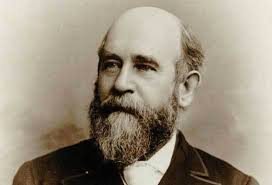
George was an American political economist, social philosopher and journalist. His writing was immensely popular in 19th-century Ameri- ca and sparked several reform movements.... He inspired the economic philosophy known as Georgism, the belief that people should own the value they produce themselves, but that the economic value of land... should belong equally to all members of society. George fa- mously argued that a single tax on land... would create a more productive and just society.
Introductory Comments
Aha moments belong mostly to the folklore of science. Archimedes leaps from his bath shouting "Eureka!" An apple falls on, or at least near, Newton. Philosophers get fewer such scenes, since their ideas tend to accumulate slowly. Kant needed the better part of a decade to work out that the mind shapes experience rather than merely receiving it. Still, philosophy has its eurekas. Descartes, alone in a stove-heated room in 1619, emerged with the vision of a new method. And Kuhn, puzzling over Aristotle's physics one summer afternoon, suddenly saw it not as bad physics but as a paradigm shift in how we see the world.
Henry George's moment came in 1871, on horseback. George, then a self-taught San Francisco newspaperman, had paused on a hill overlooking the bay. As he later told it: "I asked a passing teamster, for want of something better to say, what land was worth there. He… said, 'I don't know exactly, but there is a man over there who will sell some land for a thousand dollars an acre.' Like a flash it came upon me that there was the reason of advancing poverty with advancing wealth. With the growth of population, land grows in value, and the men who work it must pay more for the privilege." George's leap was to see in it the answer to his age's great riddle: why poverty marched in step with progress. One wonders what the teamster would have thought had he known that his casual remark would help launch a bestseller and an international reform movement.
Some of Henry George's Key Positions
Value created by labor belongs to the laborer. Value that comes from land and natural resources, which no one made, belongs to everyone. Honoring this distinction would cure the chronic ills of industrial society, poverty first among them.
Consider the paradox: why does poverty persist, and even deepen, as a society grows richer? The answer is land. As population and industry grow, the land they need becomes more valuable, and landowners collect that increase as rent without lifting a finger. Rising rents absorb the gains of progress and hold wages near subsistence, while speculators keep good land idle in hopes of a better price.
The remedy is to tax the rental value of land itself, apart from any buildings or improvements on it, and to abolish taxes on labor, capital, and trade. Owners would keep their titles, but the community would collect the value the community had created.
The land tax should be paired with a second reform. "Natural monopolies" such as railroads, telegraphs, and gas and water works should be publicly owned and run at or near cost. One more thing: if the land tax produces a surplus, it should be paid out to citizens as a cash "dividend." (The idea here is now often linked to universal basic income. However, it belongs to his followers rather than to George himself.)
Place in the History of Ideas
Henry George's Place in History of Ideas
John A. Hobson: Henry George may be considered to have exercised a more directly powerful formative and educative influence over English radicalism of the last fifteen years than any other man…. [He] was able to drive an abstract notion, that of economic rent, into the minds of a large number of "practical" men, and so generate therefrom a social movement. George had all the popular gifts of the American orator and journalist, with something more. Sincerity rang out of every utterance.
Robert Heilbroner: Henry George is outraged at the spectacle of men whose incomes - some- times fabulous incomes - derive not from the services they have rendered the community, but merely from the fact that they have had the good fortune to hold advantageously situated soil. Ricardo, of course, saw all this long before him. But at best, Ricardo had only claimed that the tendency of a growing society to enrich the holders of its land would redound to the misfortune of the capitalist. To Henry George, this was only the entering wedge. The injustice of rents not only robbed the capitalist of his honest profit but weighed on the shoulders of the workingman as well. More damaging yet, he found it to be the cause of those industrial "paroxysms," as he called them, that from time to time shook society to its roots.... [What's needed is] one single massive tax on land, a tax which would absorb all rents.
Random Thoughts on Henry George
Every suffering age wants to know who is to blame, and Henry George gave his an answer that fit on a postcard: the landlord. In the Gilded Age, as factories multiplied and fortunes swelled while slums swelled faster, his explanation struck a vast readership as plainly right. Nor was it naive. George was self-taught but rigorous, and his theory had real machinery. As society grows more productive, land grows more valuable, and owners pocket the increase as rent, leaving wages where they were. And urban land values really did soar.
Most economic historians, though, would say George found a cause, not the cause. Industrial-age inequality also owed much to concentrated capital, a flood of workers from farms and from abroad, machines that made old skills obsolete, and unions too weak to bargain. No single villain stands at the center of that tangle, which is exactly what makes it so hard to hold in one's head - too many threads, too knotted together, to fit into one tidy story.
So the secret of George's appeal may lie less in his comprehensiveness than in his comprehensibility. It helped that for most of history, land really had been wealth. To many readers, the claim that the landless suffered because of the landed felt less like a theory than a memory. Plus, ideas that travel tend to be simple and vivid: Memes circle the globe in an afternoon, while subtle and nuanced books sit on the shelf muttering to themselves.
George, Henry influenced: Brisbane, A., Dewey, Einstein, Field, Sara B., Gesell, Silvio, Keller, Helen, Lasch, C., Moyers, Bill, Nearing, Scott, Norris, George, Roosevelt, F., Roosevelt, T., Shaw, Simon, Herbert, Stiglitz, Joseph, Sun Yat-Sen, Tarbell, Ida, Tolstoy, Wells, H.G.
Similar and opposing positions
Thinkers with similar positions:
Bakunin (A communist vested with absolute power would soon become a tyrant.)
Dewey (Democracy applies not just to politics, but also to industry & society.)
Fromm (We need a socialist humanism that fights both injustice & alienation.)
Galbraith (Govt. should play an assertive role in improving general welfare.)
Irigaray (As rational beings women must be given the same rights as men.)
Keynes (Government has an important role in maintaining a good economy.)
Rawls (Social justice requires a fair, though not equal, distribution of wealth)
Ricardo (The economic value of a good is based on the work that went into it.)
Thinkers with opposing positions:
Burke (Laws of commerce are laws of Nature & therefore the laws of God.)
Dostoyevsky (The cure to social ills is not socialism, but a true Christianity.)
Engels (The working class will lead the revolution against the bourgeoisie.)
Evola (Liberal democracy represents an ignoble trend towards mediocrity.)
Hayek (Only free market capitalism is consistent with freedom & democracy.)
Mill (Government interference in an economy is usually counterproductive.)
Nozick (Rights are best secured by minimal state limited to narrow functions.)
Pythagoras (All possessions should be in common among friends.)
What others said about George, Henry
Tolstoy: [Henry George was] one of the greatest men of the 19th century.
Dewey: No man, no graduate of a higher educational institution, has a right to regard himself as an educated man in social thought unless he has some first-hand acquaintance with the theoretical contribution of this great... thinker.
Robert Heilbroner: ... while George’s mechanical diagnosis is superficial and faulty, his basic criticism of society is a moral and not a mechanistic one. Why, asks Henry George, should rent exist? Why should a man benefit merely from the fact of ownership, when he may render no services to the community in exchange?
Friedman: In my opinion the least bad tax is the property tax on the unimproved value of land, the Henry George argument of many, many years ago.
Spencer MacCallum: [Henry George was] undeniably the greatest writer and orator on free trade who ever lived.
George Henry Soule Jr.: [George was at the time] the most famous American economic writer [and] author of a book which probably had a larger world-wide circulation than any other work on economics ever written.
Einstein: Men like Henry George are rare unfortunately. One cannot imagine a more beautiful combination of intellectual keenness, artistic form and fervent love of justice. Every line is written as if for our generation. The spreading of these works is a really deserving cause, for our generation especially has many and important things to learn from Henry George.
J. A. Hobson: Henry George may be considered to have exercised a more directly powerful formative and educative influence over English radicalism of the last fifteen years than any other man.
Schools: Classical Economics, Feminism, Socialism
Main interests: Commerce, Economics, Equality, Government, Journalism, Political Activism, Politics, Property, Social Criticism, Social Philosophy, Wealth, Welfare State
George, Henry's answers to philosophical questions