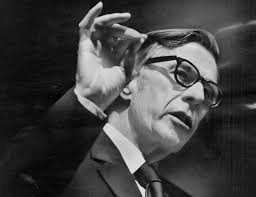
John Galbraith (1908 - 2006)
Open Galbraith's interactive page (graphs of influences, similar and opposing positions, and quotes)
Background
John Galbraith
Born: October 15, 1908 in Iona Station, Ontario,
Canada
Died: April 29, 2006 (aged 97) in Cambridge,
Massachusetts, USA
Alma mater: Ontario Agricultural College,
University of California, Berkeley
Main Interests: Economist, Politics
Contributions: Countervailing power,
technostructure, conventional wisdom
Influences: Thorstein Veblen, Adam Smith, Karl
Marx, John Maynard Keynes, Michał Kalecki,
Gardiner Means, Adolf A. Berle, James Tobin
Influenced: James K. Galbraith, Joseph Stiglitz,
Yanis Varoufak, Jacques Ellul, Robert L.
Heilbroner, Stephany Griffith-Jones, Paul A.
Baran, Keith M. Lewin, Steven Pressman,
Harvey J. Levin
From Wikipedia
Galbraith was a Canadian-American economist, diplomat, public official, and intellectual. His books on economic topics were bestsellers from the 1950s through the 2000s. As an economist, he leaned toward post-Keynesian economics from an institutionalist perspective…. He... wrote four dozen books, including several novels, and published more than a thousand articles and essays on various subjects. Among his works was a trilogy on economics, American Capitalism, The Affluent Society, and The New Industrial State.
Introductory Comments
Galbraith was a towering figure in 20th-century economics - not just for his stature (he stood 6'8") but for his willingness to challenge what he called "conventional wisdom," a term he himself coined. The most surprising aspect of his work was his demolition of the "Sovereign Con- sumer." Classical economics holds that consum- ers dictate what is produced through their pre-existing desires, with firms obediently respond- ing to demand. Galbraith argued the reverse: that large corporations deploy sophisticated advertising and marketing to manufacture the very desires they then profitably satisfy. This "dependence effect" means that the reassuring notion that the market faithfully serves authen- tic human needs is largely myth. You whip up a craving and then congratulate yourself for satisfying it - the economic equivalent of a fire- fighter who commits arson so he can be a hero.
Accordingly, Galbraith argued that classical eco-nomics, which was born in eras of genuine scar- city and focused on production to meet urgent material needs, is now obsolete in wealthy, post-WWII America. Instead, large corporations now manufacture artifical demand for private goods - cars, gadgets, status symbols - fueling endless private consumption while starving public goods like education, infrastructure, clean air, and social services. The result is what Galbraith memorably described as "private affluence and public squalor."
Some of Galbraith's Key Positions
Economics is a practical discipline and, as such, we should be wary of all doctrinaire econo- mists, whether they be conservative or liberal. Privatization is good when it is proves efficient and fair and bad when it doesn't. Likewise, public ownership is good when it benefits society at large and bad when it doesn't. The proof is in the pudding, not in the preaching.
This pragmatic principle also applies to govern- ment regulation over the economy. The Great Crash of 1929 proved that Wall Street needs to be regulated, but many aspects of the economy require little, if any, regualtion.
As to governmental stimulus to the economy, Keynes was right that during a recession gov- ernment should spend money to prop up the ecomony and protect its citizens from undue hardships. Even when not in a recession, gov- ernment should invest in certain projects, like highways and education, that will help support an even stronger ecomony in the future.
However, we should not equate ever-increasing material production with economic and societal health. If large pockets of poverty are allowed to exist, the economy is neither just nor healthy - no matter the amount of material goods it produces. Government, therefore, needs to wage a "war on poverty" so that all people can benefit from a strong economy.
Place in the History of Ideas
Galbraith's Place in History of Ideas
Amartya Sen: If Walter Bagehot was right that "one of the greatest pains to human nature is the pain of a new idea," Ken caused an extraordinary amount of pain. Both in his economic thinking and in his political activities, he was dedicated to resisting, and where possible overturning, what he famously called "conventional wisdom" (one of his many turns of phrase that have since become commonplace locutions). Rejecting the standard economic theory based on small, anonymous households and firms that autonomously engage in perfectly functioning markets, Ken instead saw an economic stage dominated by large, nameable actors: big business, big labor, big government. Sorting out their roles and respective power was central to his analysis, and the continually shifting tensions in the interplay among them... was the real story of how an economy behaved.
J. Bradford DeLong: If there were justice in the world, John Kenneth Galbraith would rank as the twentieth century’s most influential Ameri- can economist. He has published several books that are among the best analyses of modern US history , played a key role in midcentury policymaking, and advised more presidents and senators than would seem possible in three lifetimes. Yet today, Galbraith’s influence on economics is small, and his influence on US politics is receding by the year.
Random Thoughts on Galbraith
In his analysis of the "dependence effect" (see Introductory Comments), Galbraith was essen- tially arguing that you can't cleanly separate "the economy" from the cultural and corporate machinery that influences the consumers who participate in it. That is a deeply uncomfortable thought if your entire theoretical framework rests on taking consumer preferences as a giv- en - as the unmoved mover of economic life. Most economists who held to this "accepted sequence" responded Galbraith's claim not by refuting him, but by ignoring him, which is itself a quiet tribute to how much his argument stung: In academia the surest sign that someone has touched a nerve is not rebuttal but silence.
In fairness to his critics, though, Galbraith was in some respects more sociologist than econo- mist - someone who emphasized power, institu- tions, and social reality over the timeless ele- gance of mathematical models. Plus, it's proba-bly true his arguments were at times not suffi- ciently rigorous. Still, Galbraith's warning re- mains relevant: that unchecked corporate-driv- en affluence risks producing a society that is materially rich but civically and environmental- ly bankrupt. In an era of record private wealth concentration, crumling public infrastructure, struggling school systems, and a climate crisis driven largely by manufactured consumption, that warning has aged better than the serene confidence of those who dismissed it.
Influences
Galbraith was influenced by: Berle, Adolf, Kalecki, M, Keynes, Marx, Means, G., Smith, Adam, Tobin, James, Veblen
Galbraith influenced: Baran, Paul A., Ellul, Jacques, Griffith-Jones, Heilbroner, R., Levin, Harvey, Lewin, Keith, Pressman, S., Stiglitz, Joseph, Varoufak, Y.
Similar and opposing positions
Thinkers with similar positions:
- Keynes (Government has an important role in maintaining a good economy.)
- Krugman (Govt. interference in an economy is at times needed as a stimulus.)
- Rawls (Govt. should provide greatest benefit to those least advantaged.)
- Ruskin (Most importantly, govt. should promote economic and social justice.)
- Saint-Simon (Society ought to strive to improve conditions of the poorest class.)
- Saint-Simon (Society ought to strive to improve conditions of the poorest class.)
- Smith, Adam (Govt. must be very careful when interfering with the economy.)
Thinkers with opposing positions:
- Engels (All recorded history hitherto has been a history of class struggle.)
- Friedman (Government stimulus programs hurt the self-regulating economy.)
- Hayek (Only free market capitalism is consistent with freedom & democracy.)
- Mises (A priori reason, not empirical & statistical analysis, explains economics.)
- Nozick (Rights are best secured by minimal state limited to narrow functions.)
- Rothbard (Govt. should protect our freedom - not improve the general welfare.)
- Spencer (Govt. should not interfere in the economic survival of the fittest.)
- Stirner (The state should be replaced with a voluntary union of egotists.)
- Sumner (Survival of the fittest requires we abandon liberal social reforms.)
What others said about Galbraith
- Paul Samuelson: His is an artistic, speculative mind. He sets up hypotheses which go beyond the data, [as have] some of the greatest scholars in history….
- J. Stiglitz: What Galbraith understood... is that Adam Smith's "invisible hand" - the notion that the individual pursuit of maximum profit guides capitalist markets to efficiency - is so invisible because, quite often, it's just not there.
- J. Bradford DeLong: At the beginning of the twenty-first century, it has become clear who John Kenneth Galbraith really is: Sisyphus, constantly pushing the boulder of social-democratic enlightenment up the hill. But the hill, it turns out, is too steep, and Galbraith not mighty enough.
- Stephen A. Marglin: The central importance of the corporation, and the fear that government was no longer able to provide an adequate countervailing force against corporate influence..., was the subject of his last book….
- Henry Luce: I taught Galbraith how to write - and have regretted it ever since.
- J. Bradford DeLong: Nearly all economists today are Paul Samuelson's children. Many are Keynes' children. Friedman, Robert Lucas, Robert Solow, and James Tobin all have plenty of descendants. But there are few Galbraithians on the ground.
- Robert Skidelsky: Galbraith has often been compared to Keynes.... But the way they did their economics was very different…. Keynes thought that ideas ruled the roost; Galbraith thought it was structures of power. His was a non-Marxist version of class struggle, with the intelligentsia as the engine of social innovation and carrier of the "public purpose."
- Paul Krugman: Although Galbraith is a Harvard economics professor..., he has never been taken seriously by his academic colleagues, who regard him as more of a "media personality."
Schools: Humanism, Liberalism, Secular Humanism, Social Liberalism
Main interests: Commerce, Economics, Labor, Politics, Wealth, Welfare State
Galbraith's answers to philosophical questions
Art and Aesthetics
"There is certainly no absolute standard of beauty. That precisely is what makes its pursuit so interesting."
Economics
The health of an economy can't be based solely on the amount of goods produced. Social fairness must also be considered.
Corporate and other forces at work in the economy at times produce results that no one wants, such as pollution and poverty.
If corporate interests are allowed free rein, class conflict is inevitable. That's why government must play a role in the economy.
"The modern conservative is engaged in one of man's oldest exercises in moral philosophy... [a] justification for selfishness."
"Under capitalism, man exploits man. Under communism, it's just the opposite."
Though property rights must be respected, legislation should be passed to prevent the dangers of unregulated capitalism.
Education
"[T]here is no literate population in the world that is poor, and there is no illiterate population that is anything but poor."
Philosophy
"Ideas are inherently conservative. They yield not to the attack of other ideas but to the massive onslaught of circumstance…."
Political Philosophy
Even when not in a recession, government should invest in certain projects, like better highways and improved education.
Social justice requires that our government wage a "war on poverty" so that all people can benefit from a strong economy.
A healthy economy seeks neither absolute freedom nor absolute equality, but rather a balance between freedom & fairness.
Psychology
"If you work on something a little bit every day, you end up with something that is massive."
Science
Unlike the past, scientific progress today is more due to specialists interacting with other specialists, rather than to genius.