Boethius (480 - 524)
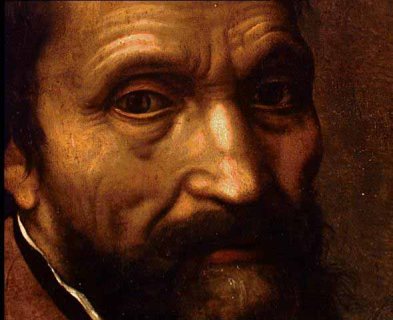
Open Boethius's interactive page (graphs of influences, similar and opposing positions, and quotes)
Background
Anicius Manlius Severinus Boethius
Born: AD 480 in Rome, Kingdom of Odoacer
Died: AD 524 (age about 44) in Pavia,
Ostrogothic Kingdom
Notable work: The Consolation of Philosophy
Region: Northern Italy
School: Neoplatonism
Main interests: problem of universals, theology,
music
Notable ideas: The Wheel of Fortune
Influences: Plato, Aristotle, Cicero, Seneca,
Plotinus, Porphyry, Saint Augustine, Proclus
Influenced: All Medieval philosophy - notably
Johannes Scotus Eriugena, Peter Abelard,
William of Ockham, Albertus Magnus, Saint
Thomas Aquinas, Alain of Lille, Chaucer, Dante
Alighieri, Remigius of Auxerre, Nicholas Trivet,
Gilbert of Poitiers, Jean de Meun
From Wikipedia
In seeking to reconcile the teachings of Plato and Aristotle with Christian theology, Boethius sought to translate the entirety of the Greek classics for Western scholars. He published numerous transcriptions and commentaries of the works of Nicomachus, Porphyry, and Cicero, among others, and wrote extensively on matters concerning music, mathematics, and theology. Though his translations were unfinished following an untimely death, it is largely due to them that the works of Aristotle survived into the Renaissance.
Introductory Comments
Boethius rose high in the government of the Ostrogothic Kingdom, earning both influence and enemies along the way through his attacks on corruption and his defense of political allies. It was perhaps no surprise, then, when he himself was imprisoned on charges of treason that he regarded as entirely false. Fortunately for posterity, his jailers allowed him enough pen and paper to write his masterpiece, The Consolation of Philosophy. In it, Lady Philosophy appears to him in prison, not so much to comfort him as to scold him out of his self-pitying funk. Why the despair? Had he really expected wealth, status, and political power to last forever? His sudden fall from senior official to common prisoner might even prove a blessing in disguise: now stripped of worldly distractions, he is finally free to devote himself to what alone can bring genuine happiness - wisdom and virtue.
And so, thanks in part to Boethius, the word "philosophy" has become for many almost a synonym for "consolation." It is a word we throw out like a lifeline to those who feel swamped by misfortune - a buoyant word, accompanied by buoyant clichés about seeing "the big picture" and remembering "this too shall pass." Yet Socrates would have disagreed. Philosophy should be, if anything, discomforting - more a kick in the pants than a pat on the back. Philosophers question accepted norms, unsettle moral certainties, and occasionally pull reality itself out from under our feet. None of which is very ladylike.
Some of Boethius's Key Positions
A careful study of logic - above all the logic of Aristotle - can teach us a great deal about our world: how things relate to one another, how universals attach to particulars, what categories all things fall under, and how logical argument itself proceeds. In logic the mind learns to reason rightly.
Mathematics has as much to teach. Arithmetic and music, for instance, prove to be intertwined, so that understanding the one deepens our grasp of the other. And by recognizing the order and harmony revealed through mathematics and music, we gain a deeper appreciation of the order and harmony of the universe itself.
But philosophy does more than impart useful arts like logic, mathematics, and music. She also brings context to our struggles and offers profound consolation amid the inevitable tribulations of life. She consoles by revealing eternal truths that transcend every passing trouble.
Chief among those truths is the nature of Fortune, pictured as a wheel that never stops turning. The wheel's turning teaches a hard lesson: don't build your happiness on wealth, status, or power, since Fortune giveth and Fortune taketh, indifferent to justice. Real good, the kind that survives every turn of the wheel, lies elsewhere - in virtue and in the eternal truths that don't rise or fall with circumstance. What matters is not what spins but what stays put.
Place in the History of Ideas
Boethius's Place in History of Ideas
Russell: Throughout the Middle Ages he was read and admired, regarded always as a devout Christian and treated almost as if he had been one of the Fathers. Yet his Consolations of Philosophy, written in 524 while he was awaiting execution, is purely Platonic; it does not prove that he was not a Christian, but it does show that pagan philosophy had a much stronger hold on him than Christian theology. Some theological works, especially one on the Trinity, which are attributed to him, are by many authorities considered to be spurious; but it was probably owing to them that the Middle Ages were able to regard him as orthodox, and to imbibe from him much Platonism which would otherwise have been viewed with suspicion.
Anthony Kenny: Boethius was not only the last philosopher of the old Latin philosophical tradition: his Consolation can be read as an anthology of all that he valued in the classical Greek philosophy. It was perhaps a compliment to the pagan thinkers from whom he had learnt that he eliminated from his philosophical testament any Christian element. Even the treatment of the relation between divine foreknowledge and human freedom, so influential during the Christian centuries, is couched within the framework of the Stoic discussion of the relation between providence and fate.
Random Thoughts on Boethius
By reminding readers that earthly fortune - including what William James memorably called "the bitch-goddess success" - is fleeting, and that true happiness comes only from wisdom and inner virtue, Boethius can genuinely console those who are suffering. But what about those currently riding high, or at least doing fine? Might they find his outlook less consoling than unsettling, even depressing? Why, they might ask, spoil the fun while there's still fun to be had? Let wisdom and perspective be the consolation prize for those who've already lost the game, and leave the rest of us to our pipe dreams and our foolish little paradises. A fool's paradise, after all, is still a paradise. Why burst the bubble before it's good and ready to burst on its own?
And even granting that Boethius comforts some who suffer, it doesn't follow that he comforts most. Does the average grieving or ruined person really want to be told they're being too emotional, that they simply need perspective? Is the Big Picture actually where most people find solace when their world is falling apart? Or do most of us, when things go south, prefer the warm, tight embrace of self-pity to the cold, windy view from Boethius's mountaintop? Even joyous mountain climbers, after all, don't linger long at the summit - the air up there is thin, and the grand perspective rather lonely. Perhaps this is philosophy's oldest problem: it offers altitude when what many of us really want is shelter.
Influences
Boethius was influenced by: Aristotle, Augustine, Cicero, Iamblichus, Plato, Plotinus, Porphyry, Proclus, Pythagoras, Seneca
Boethius influenced: Abelard, Alain of Lille, Albertus Mag., Aquinas, Boccaccio, Chaucer, Dante, Eriugena, Gilbert, Jean de Meun, Ockham, Petrarch, Remigius, Trivet
Similar and opposing positions
Thinkers with similar positions:
- Albertus Mag. (Music can nourish perfection through contemplation.)
- Augustine (Only good exists. Evil is merely the privation of the good.)
- Duns Scotus (God's foreknowledge is compatible with contingency of things.)
- Epictetus (Serenity can be achieved thru self-discipline, temperance & stoicism.)
- Ficino (A hierarchy of substances descends from God down to lowly matter.)
- Marcus Aurelius (Peace & happiness depend upon the quality of your thoughts.)
- Plantinga (God's perfect foreknowledge is compatible with human free will.)
- Plotinus (The purely contemplative part of the Soul is its higher & eternal part.)
- Proclus (Things are known according to the character of the knowing subject.)
Thinkers with opposing positions:
- Bataille (To be free means to be unrestrained by any chains of morality.)
- Dawkins (Religion teaches us to be satisfied with our lack of understanding.)
- Luther (Given God's sovereignty & our own sinfulness, there is no free will.)
- Machiavelli (Living virtuously & wisely does not necessarily lead to happiness.)
- Merleau-Ponty (The partiality of our view of things is essential & inevitable.)
- Nietzsche (Christianity has a "slave morality" placing weakness over strength.)
- Oakeshott (Philosophy is self-scrutinizing, but not a higher mode of thinking.)
What others said about Boethius
- Valla: [Boethius was] the last of the Romans, the first of the scholastics.
- Copleston: ... it was in connection with a text of Boethius that the problem of universal terms was raised, a problem which was discussed, with varying degrees of sophistication, throughout the Middle Ages.
- Edward Gibbon: While Boethius, oppressed with fetters, expected each moment the sentence or the stroke of death, he composed, in the tower of Pavia, the "Consolation Of Philosophy"; a golden volume not unworthy of the leisure of Plato or Tully, but which claims incomparable merit from the barbarism of the times and the situation of the author.
- Anthony Kenny: Free choice... is difficult to reconcile with... a God who foresees everything.... [However, Boethius says] that God is outside time, and so it is a mistake to speak of providence as involving foreknowledge at all.
- Dante: [Boethius] pointed out the world's dark ways, to all who listen, its deceits unfolding.
- Russell: [Boethius’s] great learning [combined with a] zeal for the public good was unique.... During the two centuries before his time and the ten centuries after it, [no] man of learning [was] so free from superstition and fanaticism.
- Lewis, C.S.: "De Consolatione Philosophiae" was for centuries the most influential book ever written in Latin. It was translated into Old High German, Italian, Spanish, and Greek; into French...; into English.... Until about two hundred years ago it would, I think, have been hard to find an educated man in any European country who did not love it.
- Arnaldo Momigliano: Many people have turned to Christianity for consolation. Boethius turned to paganism. His Christianity collapsed - it collapsed so thoroughly that perhaps he did not even notice its disappearance.
Schools: Augustinianism, Medieval Realism, Neoplatonism, Platonism, Stoicism
Main interests: Classics, Fate, Free/Unfree Will, Happiness, Immortality, Justice, Logic, Music, Spirituality, Theology, Universals, Virtue, Wisdom
Boethius's answers to philosophical questions
Ethics
"A man content to go to heaven alone will never go to heaven."
"Through Love the universe... makes changes all without discord: earth's elements, though contrary, abide" in peace.
History
As the wheel of history constantly turns, those with power & wealth will fall & those who are poor and hungry will rise.
Metaphysics
"The now that passes produces time, the now that remains produces eternity."
In the contemplation of God we can share in that freedom enjoyed only by divine and supernatural substances.
Nature
"[T]he condition of human nature is just this; man towers above the rest of creation so long as he realizes his own nature…."
Philosophy
Logic explains the connection of universals to particulars, the categories under which all things fall, and much else.
By revealing truths & values that are eternal & transcendent, philosophy is great consolation during times of trouble.
Psychology
"Nothing is miserable but what is thought so, and contrariwise, every estate is happy if he that bears it be content."
First "escape the burden of [the] influence [of false goods]; then afterwards true goods may gain possession of your spirit."
Happiness is attained through sufficiency, virtue and wisdom - the wisdom that gives context to our problems in life.
Religion and Theology
"If there is a God, whence proceed so many evils? If there is no God, whence cometh any good?"
Though faith is of course important, it must, if at all possible, be reconciled with reason.
God's perfect foreknowledge is compatible with our free will, since foreknowledge does not imply predetermination.
Science
Recognizing the order and harmony of mathematics and music helps us in our understanding of the universe itself.