Peter Abelard (1079 - 1142)
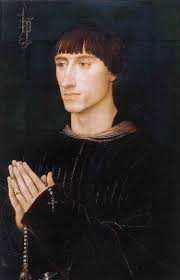
Open Abelard's interactive page (graphs of influences, similar and opposing positions, and quotes)
Background
Peter Abelard
Born: 1079 in Le Pallet near Nantes, France
Died: 21 April 1142 (age 62 or 63) in the Abbey
of Saint-Marcel near Chalon-sur-Saône, France
Era: Medieval philosophy
Region: Western philosophers
Schools: Scholasticism, Conceptualism
Main interests: Metaphysics, logic, philosophy
of language, theology, ethics, music, poetry,
philosophy of mind
Influences: Aristotle, Plato, Porphyry, Boethius,
Roscellinus, Augustine, Cicero, Horace, Ovid,
Lucan, Seneca, Virgil, William of Champeaux,
Jesus
Influenced: John of Salisbury, William of
Ockham, Aquinas, Héloïse
From Wikipedia
Peter Abelard was a medieval French scholastic philosopher, leading logician, theologian, poet, composer and musician. In philosophy, he is cele- brated for his logical solution to the problem of universals via nominalism and conceptualism and his pioneering of intent in ethics. Often referred to as the "Descartes of the twelfth century," he is considered a forerunner of Rousseau, Kant, and Spinoza. He is sometimes credited as a chief forerunner of modern empiricism…. He was a defender of women and of their education.
Introductory Comments
The story sounds like the invention of a tabloid, but it isn't: famous philosopher castrated by the kinsmen of the female student he seduced. In popular culture, if the name Abelard rings a bell, this is the bell. It has inspired poems, novels, operas, plays, and films. Heloise - a great beauty and one of the best-educated women of her age - takes private lessons from Abelard, a brilliant philosopher and charismatic teacher. Sparks fly. Robes drop. Rumors spread. A child is born. Heloise's uncle hires two thugs. Knives are raised. The deed is done. Then Heloise withdraws to a convent for the rest of her life, while Abelard resumes his career as a philosopher - now more famous, or infamous, than ever.
And yet their love endures, preserved in a remarkable exchange of letters. Both confess not only their love but their sin - though in strikingly different keys. Abelard is penitent in the conventional manner, and his language often runs to boilerplate: "While I was utterly absorbed in pride and sensuality, God's grace, the cure for both diseases, was forced upon me." Heloise dwells instead on the depth of their love - a love that overleaps the ordinary bounds of society. Where Abelard can sound as though he is preaching a sermon, Heloise sounds like a romantic novelist, fixed on what the two of them actually lived, together and apart. He reached for the eternal, she for the unforgettable - and between the two of them, the actual truth never stood a chance.
Some of Abelard's Key Positions
We should look to Aristotle, not Plato, as our chief philosophical authority - especially on the vexed question of universals (terms like "human" or "red" that apply to many particular things at once). Plato located universals in a higher, immaterial realm of Forms, existing independently of the particular things that "participate" in them.
This gets things backward. Universals are not free-floating entities waiting to be discovered in some heavenly realm; they are words and concepts by which the mind picks out a genuine similarity shared by particular things. Strip away the mind that does the picking out, and the universal itself is nowhere to be found - though the real likeness among things remains.
Apart from God, the angels, and the human soul, everything in the world is a composite of form and matter, and forms exist embedded in the objects that have them, not in some separate realm unto themselves.
None of this rationalism is meant to threaten religious faith - quite the opposite. Reason should take priority precisely because it is faith's surest pathway: we ought to understand in order to believe, not simply believe without asking why. And logic is reason's finest instrument. A logical entailment is what links an earlier statement to a later one, so that, in the well-turned phrase, the conclusion lies hidden within the premises.
But not every entailment works the same way - some link categorical statements (statements simply asserting something), others conditional or hypothetical statements (statements of the "if... then" variety), and still others involve relations of opposition between statements. Sorting out these different logical relationships was, to my mind, philosophy's most urgent unfinished business.
Place in the History of Ideas
Abelard's Place in History of Ideas
Wilhelm Windelband: Universals, Abelard teaches, cannot be things, but just as little can they be mere words.... Universals could not be the indispensable forms of all knowledge, as they in fact actually are, if there were not something in the nature of things which we apprehend and predicate in these universals.
Kevin Guilfoy: The fundamental commitment behind Abelard's nominalism, that there is nothing that is not individual (or at least particular), is the conceptual core of all his metaphysical thought. Abelard held that the individual is primary, ontologically basic, and requires no explanation.... If Abelard could be said to have a metaphysical project it would be to show that other [metaphysical "items"] can be reductively explained in terms of individuals (or at least of particulars).
Bertrand Russell: [Abelard's book Sic et Non (Yes and No)] gives dialectical arguments for and against a great variety of theses, often without attempting to arrive at a conclusion; clearly he likes the disputation itself, and considers it useful as sharpening the wits. The book had a considerable effect in waking people from their dogmatic slumbers. Abelard's view, that (apart from Scripture) dialectic is the sole road to truth... had, at the time, a valuable effect as a solvent of prejudices and an encouragement to the fearless use of the intellect.
Random Thoughts on Abelard
Medieval philosophers waged a metaphysical battle related to, but distinct from, the one between Plato and Aristotle: the problem of universals. Are universals - terms like cow or table that apply to many individual things at once - themselves real things, immaterial and eternal realities existing in a realm of their own? Or are they nothing more than arbitrary names we've invented to sort individual things into convenient bins? Realists, like Anselm, held the former view; Nominalists, like Ockham (writing two centuries later), held the latter. If this fight between Realists and Nominalists now sounds peculiar, even a little silly, that's probably because we've lost sight of how the question of universals connected to bigger medieval concerns - the nature of God's mind, and the very possibility of religious truth.
Abelard staked out a middle ground, a position later thinkers would call conceptualism. Universals, he argued, are more than arbitrary names, yet they don't exist in some separate realm of their own either. They are real in the way that thoughts are real - mental abstractions built from genuine similarities the mind discovers in the world. (One large four-legged creature, chewing grass. Another large four-legged creature, chewing grass. Another... Ah, yes, I've got: cow.) Call him, if you like, a Nominalist who took the mind's creative power seriously - or a Realist who located reality not in some heavenly realm, but in the one place he was sure it existed: the human intellect.
Influences
Abelard was influenced by: Aristotle, Augustine, Boethius, Cicero, Horace, Jesus, Lucan, Ovid, Paul of Tarsus, Plato, Porphyry, Roscellinus, Seneca, Virgil, William of C.
Abelard influenced: Aquinas, Heloise, John of Salis., Lombard, P., Ockham
Similar and opposing positions
Thinkers with similar positions:
- Aquinas (Universals are "embedded" in particular objects as their "whatness.")
- Boethius (Logic is an important discipline and tool when doing philosophy.)
- Eriugena (Philosophy is not in the service of theology. Reason precedes faith.)
- Frege (Logic must consider propositional "attitudes" in its explanations.)
- Goodman (Philosophy, logic, and math should dispense with set theory.)
- Kant (Subjective intention or good will determines the moral value of actions.)
- Ockham (Universals are just concepts. Only concrete individual things are real.)
Thinkers with opposing positions:
- Duns Scotus (Universals are real but are not independent of individual things.)
- Kierkegaard (Most Christian beliefs are irrational and require a leap of faith.)
- Luther (Reason cannot aid faith. It is the greatest enemy that faith has.)
- Maimonides (God is all good. Evil is not a real force - just the absence of good.)
- Mill (Consequences, not intentions, determine the moral value of actions.)
- Nietzsche (Christianity has a "slave morality" placing weakness over strength.)
- Pascal (God is infinitely incomprehensible. We can't reason our way to God.)
- Pseudo-Denys (God is beyond reason. We know what He isn't, not what He is.)
- Quine (Sets or collections are required abstract objects in science and math.)
What others said about Abelard
- Anthony Kenny: ... to the world at large [Abelard] is more famous as a tragic lover than as an original philosopher.
- Cristina Nehring: ... there's a grandeur to [the] high-stakes romance [of Abelard and Heloise], to self-sacrifice, that's missing from our latex-love culture - and it's a grandeur we perhaps crave to recover.
- Anthony Gottlieb: [Abelard was] the first serious moral philosopher of medieval times. He went beyond the established traditions of pious moralizing, which usually involved little more than quoting Scripture or other religious authorities, and tried to apply rational analysis to the nature of moral goodness.
- Wilhelm Windelband: [Abelard] is, so far as it was possible within the limits of the ideas of his time, the spokesman of free science, the prophet of the newly awakened impulse toward real and independent knowledge.
- Heloise: The unhappy consequences of our love and your disgrace have made me put on the habit of chastity, but I am not penitent of the past.
- Ralph McInerny: There is an element of exaggeration in [Abealrd], no matter how we view him. Always controversial, seldom dull, he seems never to have run out of surprises for his contemporaries.
- Kevin Guilfoy: Abelard holds a doctrine of double creation. God first created the four basic elements and then combined the four basic elements into various individuals according to the exemplars in his mind. Only God has this power to assemble parts into a single discrete individual substance. Only God can impose form on matter.
- Johann Erdmann: ... furthest removed from both extremes [regarding universals] is Abelard.... He really brings the strife between realism and nominalism to an end, so that this question ceases to be the chief philosophical problem.
Schools: Christian Theology, Nominalism, Rationalism, Scholasticism, Voluntarism
Main interests: Ethics, Free/Unfree Will, Immortality, Language, Logic, Love, Metaphysics, Mind, Music, Poetry, Religion, Theology, Universals, Virtue
Abelard's answers to philosophical questions
Education
"Education is not the filling of a vessel, but the kindling of a fire; it is through curiosity and passion that true learning occurs."
Epistemology
Logic is an essential tool in that it shows how earlier statements are linked to later and final statements.
"Truth is not a destination but a path, and we must strive to walk that path with courage and humility."
"The key to wisdom is… frequent doubting, for by doubting we are led to question and by questioning we arrive at the truth."
"It is not enough to know, we must also do; true wisdom lies in the practical application of knowledge."
Ethics
Since it is natural to do what God wants and to aspire to an Afterlife, our happiness is naturally linked to virtue.
First know thyself: "To truly understand another person, we must first strive to understand ourselves and our own biases."
"To live a meaningful life, one must strive to leave a positive impact on the world and make a difference in the lives of others."
Our actions will be judged neither by their nature nor their consequences, but by our intentions in doing them.
"Love is the foundation of all moral and ethical principles; it is through love that we find meaning and purpose in our lives."
"The men who abandon themselves to the passions of this miserable life, are compared in Scripture to beasts."
Language
"Language is generated by the intellect and generates the intellect."
Though a sentence says something, it does not correspond to some thing. Sentences describe; they do not denote.
Metaphysics
Apart from God, angels and the human soul, everything in the world is a composite of form and matter.
Universals have reality only as concepts inside the human mind. They do not exist in a realm unto themselves.
Change is key: "Embrace change, for it is through change & adaptation that we grow & become better versions of ourselves."
Mind
Our thoughts are not mental copies of external things. They're about our interests in or our intentionality towards objects.
Philosophy
To be more useful, Aristotle's syllogisms must be expanded to include hypothetical and conditional sentences.
Psychology
"Love is not a fleeting emotion, but a state of being that requires dedication, perseverance, and understanding."
If there is such a thing as happiness, "I am persuaded it is the union of two persons who love each other with perfect liberty."
Religion and Theology
Though reason has a limited role in matters of faith, its role is important in that it can at times clarify or illuminate faith.
"The Son of God took our nature, and in it took upon himself to teach us [and die for us], thus binding us to himself thru love."