Austin, J.L. (1911 - 1960)
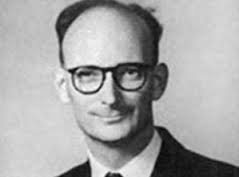
Open Austin, J.L.'s interactive page (graphs of influences, similar and opposing positions, and quotes)
Background
J. L. Austin
Born: 26 March 1911 in Lancaster, England
Died: 8 February 1960 (aged 48) in Oxford,
England
Alma mater: Balliol College, Oxford
Schools: Ordinary language philosophy, Analytic
philosophy
Main interests: Philosophy of language,
philosophy of mind, ethics, philosophy of
perception
Influences: Gilbert Ryle, G. E. Moore, Bertrand
Russell, Aristotle, John Cook Wilson, H. A.
Prichard
Influenced: John Searle, Rom Harré, Stanley
Cavell, Judith Butler, Noam Chomsky, Jean-
François Lyotard, Michel Foucault, R. M. Hare,
H. L. A. Hart, Eve Kosofsky, Sandra Laugier,
Thomas Nagel
From Wikipedia
Austin was a British philosopher of language and leading proponent of ordinary language philoso- phy, perhaps best known for developing the theory of speech acts. Austin pointed out that we use language to do things as well as to assert things, and that the utterance of a statement like "I promise to do so-and-so" is best understood as doing something - making a promise - rather than making an assertion about anything…. Austin, in providing his theory of speech acts, makes a sig- nificant challenge to the philosophy of language.
Introductory Comments
Being surrounded by logical positivists, lJ. L. Austin grew impatient with their tidy but im- poverished picture of language - the assump- tion that meaningful utterances are either logical tautologies or empirical reports about the world. He called this the descriptive fallacy: the philosopher's habit of treating all language as if it were in the business of describing reality, when in fact only a fraction of what we say does anything of the sort. Austin felt that logical positivism, for all its rigor, had been looking at language the way a tone-deaf critic might analyze music - fastidiously counting notes while missing the performance entirely.
Austin's remedy was to take ordinary language seriously as a subject of philosophical investiga- tion in its own right. His central insight was that utterances are speech acts - that when we speak, we are always doing something, not merely saying something. Every utterance, he argued, carries a locutionary dimension (what is said), an illocutionary dimension (what is done in saying it - promise, warn, apologize, com-mand, etc.), and a perlocutionary dimension (the effect produced on the hearer). Meaning, then, is inseparable from context, convention, and intention - and what the later Wittgenstein called shared forms of life. In short, Austin was saying, in effect, that language did not evolve to mirror the world (what survival benefit is there in that?), but rather to deal with it.
Some of J. L. Austin's Key Positions
Though philosophers have traditionally as- sumed that language's primary function is to make assertions, language also does things. To say, for example, "I promise to do so-and-so," is to in fact make a promise. Likewise, language is used to convince others to do certain things - excuse ourselves for not doing certain things, woo potential lovers, confuse potential com- petitors, cheer up those who are depressed, calm down those who are angry, plus accuse, challenge, entertain, apologize, criticize, fanta- size, immortalize, and a thousand other things.
All this is to say that language should not be seen as simply the instrument we use to communicate truths to one another. When philosophers and linguists analyze language only in terms of truth-value - as they have traditionally done for centuries - they in effect claim that language's function is merely to assert and describe.
In recognizing that language does much more than simply assert things, we can also throw some needed light on the age-old debate over universals: Since language does much more than communicate truths, we should not expect that the components of language - individual words - point to some transcendent truths or, to use Plato's term, eternal forms. As sentences serve innumerable functions, so too do the individual words they contain.
Place in the History of Ideas
J. L. Austin's Place in History of Ideas
Guy Longworth: [Austin] made a number of contributions in various areas of philosophy, including important work on knowledge, per- ception, action, freedom, truth, language, and the use of language in speech acts. Distinctions that Austin draws in his work on speech acts - in particular his distinction between locution- ary, illocutionary, and perlocutionary acts - have assumed something like canonical status in more recent work.... His work on truth has played an important role in recent discussions of the extent to which sentence meaning can be accounted for in terms of truth-conditions.
A. J. Ayer: Austin took seriously the view put forward by Wittgenstein and the Vienna Circle that philosophers had been gratuitously puz- zled and in some cases led into talking nonsense by their failure to understand the workings of the language they were employing, and consequent abuses of it. Unlike Wittgenstein, however, Austin did not aim merely at the dissolution of philosophical problems through the correction of these linguistic errors. He believed that a painstaking investigation of the ways in which some set of expressions of a natural language, like English, were ordinarily used would have a positive value. It might... show that philosophers had simply simply entangled themselves in a pseudo-problem, but it might also uncover [genuine] problems, of which it would point the way to a solution.....
Random Thoughts on J. L. Austin
Perhaps the most remarkable thing about Aus- tin's philosophy is not what he said but that it needed saying at all. That language does more than state facts - that we use words to promise, warn, marry, and mourn - is something any at- tentive five-year-old grasps intuitively. Yet by the mid-20th century, some of the finest minds in British and American philosophy had so thoroughly convinced themselves that mean- ingful language must be fact-stating that Aus- tin's corrective landed with the force of revela- tion. The logical positivists had built an austere cathedral of thought - verification principles, truth conditions, logical syntax - and in doing so had bricked up all the windows. Austin simply opened a door and let ordinary life back in. The rush of fresh air was apparently shocking.
But the deeper lesson extends well beyond one philosophical movement. Austin's case is a cau- tionary tale about what happens when brilliant people - be they philosophers or scientists, e-conomists or theologians - spend too long talk- ing exclusively to one another: shared assump- tions become invisible, technical vocabulary be- comes a sealed ecosystem, and the experts be- come the last people in the room to notice what everyone else takes for granted. Austin's great gift was, then, a form of intellectual cour- age most of us find surprisingly difficult: the willingness to take the obvious seriously - not in order to stifle questions, but to ask better ones.
Influences
Austin, J.L. was influenced by: Aristotle, Moore, Prichard, H.A., Reid, Russell, Ryle, Wilson, J.C.
Austin, J.L. influenced: Bourdieu, Butler, Judith, Cavell, Chomsky, Foucault, Hare, Harre, Rom, Hart, Kosofsky, Eve, Laugier, S., Lyotard, Nagel, Searle, Strawson
Similar and opposing positions
Thinkers with similar positions:
- Brandom (We adopt different vocabularies to different contexts & problems.)
- Dennett (We must posit intentional states to explain human behaviour.)
- DeRose (Validity of knowledge claims depends largely on aim & context.)
- Grice (Meaning in language is closely linked to the speaker's intentions.)
- Pinker (Language evolved as a practical tool, not as a purely logical instrument.)
- Searle (Words not only assert things, but also do or perform things.)
- Strawson (Language's apparent imperfections are signs of expressive power.)
- Wittgenstein (Language is an activity or form of life. It's a "game" we play.)
Thinkers with opposing positions:
- Ayer (Language that is not verifiable is not true or untrue but meaningless.)
- Derrida (The focus on intentionality in speech-act theory is misguided.)
- Frege (Logical & philosophical problems can be solved by perfecting language.)
- Plato (Universals are real and our words are often derived from them.)
- Russell (Language is ultimately dependent upon a layer of atomic facts.)
- Schlick (A statement that cannot be falsified by evidence is meaningless.)
- Stevenson (Moral statements do not express propositions but mere emotions.)
- Tarski (The meaning of a sentence is equivalent to its truth conditions.)
What others said about Austin, J.L.
- F. Berdini: Like Socrates, he seemed to destroy all philosophical orthodoxy without presenting an alternative, equally comforting, orthodoxy.
- Nigel Warburton: … what Austin cared about most deeply in his dealings with words was not the words themselves, but things we did with them. In thinking about [this], Austin found a new way of thinking about… our lives.
- Guy Longworth: I’ve suggested that Austin’s view of the putative distinction between performatives and constatives is less straightforward than it might at first seem. And [Austin himself] bears out that assessment. Although much of [his] book seems to be devoted to pursuit of a distinction between performatives and constatives, none of the attempts succeeds.
- Bryan Magee: Austin came to see the main task of philosophy as being… to not so much solve the philosophical problem as dissolve it, in other words to show that it did not properly arise.
- Claudia Bianchi: According to John Searle, he was both passionately loved and hated by his contemporaries.
- Nigel Warburton: [For Austin, so] much of ordinary life consists in illocutions of one sort or another: promising, warning, scolding, apologizing. But modern feminists took Austin’s project forward to places [he never conceived].
- Ayer: [Austin] introduced a new set of distinctions in the nature of what he liked to call "speech-acts." He distinguished the locutionary act which was said to be "roughly equivalent to uttering a certain sentence with a certain sense and reference" from illocutionary acts "such as informing, ordering, warning, undertaking, etc."...
- Guy Longworth: His central insight was that philosophical objections to common sense are often based on mistaken views about its content and commitments.
Schools: Analytic Philosophy, Common Sense Realism, Linguistic Philosophy philosophy, Ordinary Language Philosophy, Quietism, Speech Act Theory
Main interests: Ethics, Language, Metaphilosophy, Mind, Perception, Semantics
Austin, J.L.'s answers to philosophical questions
Epistemology
"It should be quite clear... that there are no criteria to be laid down in general for distinguishing the real from the not real."
"...we never directly perceive or sense, material objects..., but only sense-data (or our own ideas,… percepts, etc.)."
"The human intellect and senses are, indeed, inherently fallible and delusive, but not inveterately so."
"The truth or falsity of a statement depends not merely on the meanings of words but on what act you were performing...."
Language
Our words are often performative utterances - like prominsing or warning - with ends that go beyond simple communication.
"Ordinary language embodies the metaphysics of the Stone Age."
Language "can never be forearmed against all possible cases that may arise and call for description: fact is richer than diction."
Metaphysics
Words don't point to universals. They serve functions. And as sentences serve many functions, so too the words they contain.
Philosophy
"It is not enough to show how clever we are by showing how obscure everything is." Philosophers should aim for clarity.
Until philosophers realize that language is used not only to assert things but also to do things, they'll remain confused.