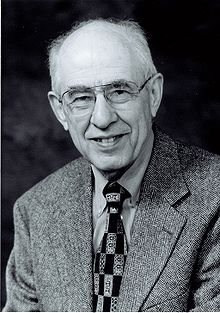
Putnam was an American philosopher, mathema- tician, and computer scientist, and a major figure in analytic philosophy in the second half of the 20th century. He made significant contributions to philosophy of mind, philosophy of language, philosophy of mathematics, and philosophy of science.... Despite [several] changes of view, throughout his career Putnam remained commit- ted to scientific realism, roughly the view that mature scientific theories are approximately true descriptions of ways things are.
Introductory Comments
Putnam is famous for having changed his mind - repeatedly and unapologetically - on questions he himself helped put on the philosophical map. In the 1960s he founded functionalism, arguing that minds are like Turing machines: mental states are defined not by the stuff they are made of but by the functional or computa- tional role they play, so in principle a mind could run on neurons, silicon, or sufficiently clever Martian cheese. Yet in Representation and Reality (1988) he became functionalism's sharp-est critic, concluding that meaning and inten- tionality depend Inherently on environment, context, and interpretation - not on internal computation alone.
Nor did the mind-changing stop there. Putnam moved from scientific realism to "internal realism" to a chastened commonsense realism; rejected the fact/value dichotomy since our de- scriptions of reality are always shot through with evaluations; and traded mid-century analytic austerity for the humaner American pragmatism, where James, Dewey, and Peirce showed him that thought is continuous with life rather than hovering above it. The thread running through these shifts was a steady campaign against the artificial walls modern philosophy had erected - between fact and value, science and humanity, thought and life. Putnam, in short, spent his career discovering that most of philosophy's tidy dichotomies leak.
Some of Putnam's Key Positions
Though our mental states are no doubt linked to physical occurrences in our brains, any one mental state can be correlated with any num- ber of physical occurrences. We should not assume a one-to-one relation here. Different species on earth, alien beings in outer space, silicon-based life forms we ourselves may cre- ate, even fellow humans - all these may experi- ence identical mental states linked to or spring- ing from very different physical occurrences.
With this in mind, functionalism - which identi- fies similar mental states with their functions, rather than with their physical correlates - is a better explanation of the mind and the body than is mind-body correlation itself. That is, since particular mental states can be linked to numerous physical states, what matters most is the function of a mental state, especially insofar as it helps its physical "owner" survive and thrive in the physical world.
However, identical mental states need not point to identical externalities. Consider the following thought experiment: Assume there is a "Twin Earth" that is exactly like our Earth, except that what looks like water there is composed not of H2O, but of XYZ. Therefore, when an earthling and his Twin Earth twin both say "water," their mental experiences may be identical, but they point to very different physical things.
Place in the History of Ideas
Putnam's Place in History of Ideas
Yemima Ben-Menahem: He is best known for his semantic externalism, according to which lin- guistic meanings are not purely mental entities but reach out to external reality; his antireduc- tionist philosophy of mind; and his persistent defense of realism, the view that truth and knowledge are objective. In his later years he became increasingly sensitive to the moral aspects of epistemology and metaphysics and, more generally, to philosophy’s moral calling.
Sanjit Chakraborty: He is often called the "Renaissance man of philosophy" in the sense that he could make highly original and path- breaking contribution to the emerging fields of Epistemology, Metaphysics, Ethics, Philosophy of Mind, Philosophy of Language, Logic, Mathe- matics, Computer science, and Political philoso- phy. He was especially erudite in matters of science..., with special contribution to mathematics, logic, and physics.
Erik Dreff: His most notable flip-flop involved the functionalist or computational theory of mind, of which he was a founding expositor, but which he came to reject. Another turnabout involved metaphysical realism, the idea that reality is constructed and exists independent of (human) consciousness. Later Putnam adopted what he called "internal realism" - the human mind, he concluded, divides and differentiates existence.
Random Thoughts on Putnam
As he grew older, Putnam's attention drifted - or rather, marched purposefully - toward ethics and religion, subjects his early analytic training had treated as someone else's department. Influenced by various Jewish philosophers and shaped by his midlife return to observant Juda-ism (starting at around age 50 and with a bar mitzvah at 68), he became convinced that moral and religious life were not optional ornaments on the rational mind but among its most seri- ous expressions. Thus, middle-aged Putnam became a practicing (non-Orthodox) Jew who prayed daily and observed Jewish rituals.
This is not to say that Putnam ever believed in a God, at least not God as supernatural deity. Religion, for him, was a way of living, not a metaphysical belief system. Following Wittgen-stein (and his wife Ruth Anna Putnam, also a philosopher), he saw religious language as em- bedded in practices and forms of life rather than as describing supernatural facts. And from Jewish thinkers like Buber, Rosenzweig, and Levinas, Putnam took the idea that "God" is encountered primarily through ethical relation to other persons - the demand of the human face - rather than through doctrine. In this sense, Putnam's lifelong war on tidy dichoto- mies (between fact and value, science and humanity, thought and life) culminated with his war against the most fundamental and chal-lenging dichotomy of all: self and other.
Putnam influenced: Boolos, G., Boyd, R., Burge, Tyler, Davidson, Dennett, Field, Hartry, Fodor, Kripke, Lewis, D., Nussbaum, Worrall, J.
Similar and opposing positions
Thinkers with similar positions:
Brandom (We adopt different vocabularies to different contexts & problems.)
Davidson (Though mind springs from matter, it can't be reduced to matter.)
Fodor (There are multiple descriptions of reality that are equally true.)
Goodman (There are no unquestionable "givens" in what we call knowledge.)
James (Choosing a metaphysical framework is ultimately a pragmatic matter.)
Mead (Our knowledge of the world is largely shaped by pragmatic concerns.)
Nagel (We can't view reality devoid of assumptions, perspectives, and biases.)
Quine (Mathematics is not a purely logical, but a "quasi-empirical" method.)
Rorty (Language can't represent reality by "holding a mirror up to nature.")
Thinkers with opposing positions:
Ayer (Objects have no essential properties making them what they are.)
Carnap (Scientific knowledge can be reduced to a series of sense-data claims.)
Collingwood (The distinction between the mental & the material is conceptual.)
Marcel (Science & technology threaten to destroy the mystery of being.)
Pythagoras (Mathematics is a purely logical method of understanding the world.)
Rousseau (So-called "progress" in science can lead us away from real truth.)
Skinner (Behavior is a matter of stimuli & responses, not psyche or inner states.)
What others said about Putnam
Sidney Morgenbesser: He’s a quantum philosopher. I can’t understand him and his position at the same time.
Chomsky: Hilary Putnam is one of the most distinguished philosophers of the modern era, and just speaking personally, one of the smartest and most impressive thinkers I have ever been privileged to meet.
Bijoy Boruah: Putnam was well-known for his breadth of thinking, so much so that he is compared with the versatility of Aristotle.... Putnam probed extensively into issues in metaphysics, epistemology, philosophy of mathematics, philosophy of physics, philosophy of language, philosophy of mind, ethics, and value theory.
Yemima Ben-Menahem: The unifying theme of Putnam’s philosophy is his defense of realism, the view that, ordinarily, assertions (including theories, beliefs, and so on) are objectively true or false.
Jane O'Grady: By focusing on the role… of mental states, his theory of functionalism offered a plausible solution to the mind-body problem.
Bruce Weber: In the world of contemporary philosophers, Professor Putnam was known for the breadth of his thinking, the vividness of his provocative arguments, and his… willingness to change his mind.
McGinn: Putnam thinks that what is in your head does not determine your meaning because it does not determine reference. The people on Earth and Twin Earth have the same things going on in their heads, but they don't mean the same thing by the term "water" because they don't refer to the same thing. [Water on Twin Earth has a different chemical makeup.]
Yemima Ben-Menahem: Although he remained an active philosopher of science, keeping abreast of... areas such as… quantum mechanics, he became increasingly critical of scientism, the view that all knowledge is scientific.
Schools: Analytic Philosophy, Common Sense Realism, Computationalism, Empiricism, Jewish Theology, Linguistic Philosophy
philosophy, Naturalism, Neopragmatism, Post-analytic Philosophy, Post-positivism, Pragmatism, Rationalism, Skepticism
Main interests: Epistemology, Fact–value distinction, Free/Unfree Will, History of Philosophy, Language, Mathematics, Metaphilosophy, Mind, Science, Semantics, Universals