Franz Brentano (1838 - 1917)
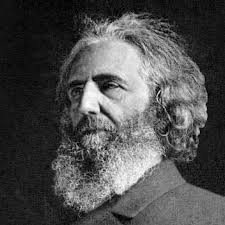
Open Brentano's interactive page (graphs of influences, similar and opposing positions, and quotes)
Background
Franz Brentano
Born: January 16, 1838 in Marienberg am Rhein
(de), Rhine Province, Prussia
Died: March 17, 1917 (aged 79) in Zürich,
Switzerland
Schools: Intentionalism, Empirical psychology,
Austrian phenomenology, Austrian Realism,
Brentano School
Main interests: Ontology, Psychology, Religion,
Metaphysics, Ethics, Logic, Theology, History
of Philosophy, Aesthetics, Philosophy of Mind
Influences: Aristotle, Hume, Friedrich Adolf
Trendelenburg, Bernard Bolzano, Comte, Mill
Influenced: Husserl, Heidegger, Alexius Meinong,
Christian von Ehrenfels, Rudolf Steiner, Tomáš
Masaryk, Freud, Kazimierz Twardowski, Carl
Stumpf, Anton Marty, George Stout, Rudolf
Carnap, Kafka, Max Scheler, Aurel Kolnai,
Antonio Millán-Puelles, Sartre, William James
From Wikipedia
Brentano was a German philosopher and psy- chologist. His 1874 Psychology from an Empirical Standpoint... is credited with having reintroduced the medieval scholastic concept of intentionality into contemporary philosophy. Originally a Catholic priest, Brentano withdrew from the priesthood in 1873 due to the dogmatic definition of papal infallibility.... Working subsequently as a non-denominational professor, his teaching trig- gered research in a wide array of fields such as linguistics, logic, mathematics and... psychology.
Introductory Comments
Some philosophers are remembered for their books. Brentano is remembered at least as much for his lecture hall. Through his classrooms passed Freud, Husserl, Meinong, Stumpf, Twardowski, and a young Tomáš Masaryk, future founder of Czechoslovakia. Few teachers have had such a roster, and fewer have watched their students wander so far from the syllabus.
What Brentano gave them was an old idea in new clothes: Every mental act is about something. To see is to see something, to fear is to fear something, and the something need not exist - a ghost will do as well as a bear. Brentano recovered this idea from the medieval Scholastics. This "aboutness," later named intentionality, became what distinguishes a mind from a stone. It also set psychology a new order of business. Before explaining mental life by its causes, one must first describe it as it is lived from the inside.
The students ran in all directions. Husserl turned descriptive psychology into phenomenology. Stumpf helped prepare the ground for Gestalt psychology. Meinong provoked Russell, Twardowski founded a school of Polish logicians, and Heidegger traced his lifelong question about being to Brentano's dissertation on Aristotle. As for Freud, the link is ironic. Brentano argued at length that there are no unconscious mental states, and his most famous student built a career on the opposite assumption.
Some of Brentano's Key Positions
The psychologist's primary evidence is inner perception, the immediate awareness each of us has of our own mental acts as they occur. This is not introspection in the sense of deliberately observing one's own mind, which is impossible: turn around to watch your anger, and you will find it has already cooled.
Every mental act is directed at an object. To see is to see something; to judge is to judge something; to love or hate is to love or hate something. Borrowing from the medieval Scholastics, this is called the "intentional inexistence" of the object. The odd phrase means existence in the mind, not nonexistence. The object need not be real: one can fear a ghost or long for a golden age that never was. This directedness, which later philosophers named intentionality, is what separates mental phenomena from physical ones.
Psychology thus has two branches. Descriptive psychology analyzes and classifies the elements of consciousness as they present themselves to the subject. Genetic psychology explains their causes, largely through physiology. Description must come first, since one can't explain what one has not yet described. The two kinds of perception also differ in certainty. Inner perception is self-evident: one can't be mistaken about them. Outer perception is not. The colors and sounds we sense need not exist as they appear, and the world that produces them is known only by inference.
Place in the History of Ideas
Brentano's Place in History of Ideas
R. M. Chisholm & P. Simons: He made significant contributions to almost every branch of philos- ophy, notably psychology and philosophy of mind, ontology, ethics and the philosophy of language. He also published several books on the history of philosophy, especially Aristotle, and contended that philosophy proceeds in cycles of advance and decline. He is best known for reintroducing the scholastic concept of in- tentionality into philosophy and proclaiming it as the characteristic mark of the mental. His teachings, especially those on what he called descriptive psychology, influenced the phenom- enological movement in the 20th century, but because of his concern for precise statement and his sensitivity to the dangers of the undisci- plined use of philosophical language, his work also bears affinities to analytic philosophy.
Robert C. Solomon: Franz Brentano was no enthusiast for the transcendental revolution in philosophy. Like many philosophers and scien- tists in the late nineteenth century he despised the speculation and obscurity that Kant and the German idealists had brought to philosophy, and sought a return to the solid testimony of the senses. He was an empiricist much in the mold of John Locke, and the psychology, ontol- ogy, and ethics he developed in the final years of the last century were explicity based on "the empirical standpoint." He [tried to focus again on] the details of conscious experience....
Random Thoughts on Brentano
Brentano's insight that every mental act is about something carries an evolutionary moral he never drew. A mind that is always about something is a mind that keeps track of its surroundings: what lies ahead, what lurks behind, and most urgently, which things you can eat and which things can eat you. Aboutness lets a creature sort the relevant from the irrelevant, anticipate what comes next, and act before it'is too late. Small wonder, one might think, that natural selection favored it. Except that natural selection got along without it for a very long time. A bacterium swims toward nutrients and away from poison with no evident inner life, and a computer can track a missile without the slightest sense of alarm. So why did evolution bother with experienced aboutness when unconscious processing might have done the job?
Perhaps consciousness is simply the cheaper solution, a lighter and more efficient way of handling complex information than any unconscious equivalent. Brentano himself might have found the question oddly posed. Since he denied that there are unconscious mental states, unconscious "aboutness" would by his lights be no aboutness at all. And even granting the efficiency story, it only explains why consciousness would be useful, not how it is possible. That's what Chalmers calls the "hard problem": how can a physical process, be it ever so "clever," become subjective experience? Evolution might explain why this trick caught on, but not how the trick is done.
Influences
Brentano was influenced by: Aristotle, Bolzano, Comte, Hume, Mill, Trendelenburg
Brentano influenced: Carnap, Ehrenfels, C., Freud, Heidegger, Husserl, James, Kafka, Kolnai, Aurel, Marty, Anton, Masaryk, T., Meinong, A., Millan-Puelles, Sartre, Scheler, Steiner, Stout, George, Stumpf, Twardowski, K.
Similar and opposing positions
Thinkers with similar positions:
- Aristotle (Primary substances are individual objects, not universal forms.)
- Freud (Descriptive psychology springs from understanding inner perceptions.)
- Heidegger (Philosophy should start with the objects of conscious experience.)
- Husserl (Thought is intentional. It is by nature about or directed toward objects)
- Kant (All our perceptions are held together in a unity of consciousness.)
- Ortega (Philosophy must focus on lived experience - the life of each individual.)
- Piaget (Behavior springs more from internal conceptions than external stimuli)
- Sartre (Intentionality or "aboutness" is the main characteristic of the mind.)
- Stumpf (Natural sciences yield only hypotheses and never universal truths.)
Thinkers with opposing positions:
- Bergson (Duration is a continuous flow, immeasurable and unquantifiable.)
- Hobbes (All things, including humans and their minds, are entirely material.)
- Kant (Morality should be based on formal procedural rules or maxims.)
- Locke (The mind at birth is a blank slate that experience will write upon.)
- Santayana (Mind has no causal power. All motion has merely physical causes.)
- Schelling (Mythology & religion are true complements to speculative philosophy)
- Skinner (Our behavior can be reduced to matters of stimulus and response.)
What others said about Brentano
- Mark Textor: Brentano’s philosophical program was to show that every concept can ultimately be derived from perceptions: he was a concept empiricist.
- Wolfgang Huemer: Brentano was strongly influenced by Aristotle and the Scholastics as well as by the empiricist and positivist movements of the early nineteenth century.
- Dieter Münch: The concept of Intentionality is only a problematic link between Brentano and phenomenology. This is already indicated by the fact that Brentano later gave up the term "intentional" because he thought that his views in this connection had been misunderstood.
- Sidgwick: Brentano maintained that there is a "faculty" of "love and hate" in the human mind as real as that of theoretical judgment. In part at least values are the product of this simple and indivisible faculty.
- John A Goldsmith: I don’t know anyone whose intellectual descendants spanned such a broad range of ages, disciplines and influence....
- Wolfgang Huemer: A central principle of Brentano’s philosophy, which should become widely accepted among Brentano’s students, was that philosophy should be done in a rigorous, scientific manner.
- Wolfgang Stegmüller: Brentano's significance for contemporary philosophy is still singularly underestimated. There is a striking disparity between the very great effect he has had on present-day philosophy and the relatively meager attention paid his teachings in current philosophical instruction and research.
- Herbert Spiegelberg: Brentano's psychological phenomena are always acts, taking this term in a very broad sense which comprises experiences of undergoing as well as of doing....
Schools: Personalism, Phenomenology
Main interests: Art and Aesthetics, Ethics, History of Philosophy, Logic, Metaphysics, Mind, Psychology, Religion, Semantics, Theology
Brentano's answers to philosophical questions
Epistemology
Intentionality, not empirical evidence, is what most bridges the gap between mental phenomena and the external world.
Ethics
Values are based upon emotions and can be described in terms of love and hate.
Mind
"Every mental phenomenon includes something as object within itself, although they do not do so in the same way."
Philosophy
"The right method of philosophy is no other than that of the natural sciences."
Science
The physical sciences rely on objective experiments, but the social sciences can also advance through subjective accounts.