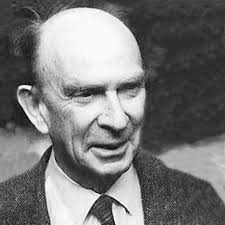
Peter Strawson (1919 - 2006)
Open Strawson's interactive page (graphs of influences, similar and opposing positions, and quotes)
Background
Peter Strawson
Born: 23 November 1919 in Ealing, West London
Died: 13 February 2006 (aged 86) in London
Alma mater: St John's College, Oxford
School: Analytic
Main interests: Philosophy of language,
Philosophy of mind, metaphysics, epistemology,
history of philosophy, logic, perception, free will
Notable ideas: Ordinary language philosophy,
the distinction between sortal and
characterising universals
Influences: Ludwig Wittgenstein, Immanuel
Kant, J. L. Austin, Bertrand Russell, A. J. Ayer,
Gilbert Ryle, Paul Grice, J. D. Mabbott
Influenced: David Lewis, Ted Honderich, Colin
McGinn, Arda Denkel, Ramchandra Gandhi,
Martin Hollis, Robert Hanna, Keith Donnellan,
Joshua Knobe, John Searle, Pierre Bourdieu,
John McDowell
From Wikipedia
In philosophical methodology, there are (at least) two important and interrelated features of Strawson's work that are worthy of note. The first is the project of a "descriptive" metaphysics, and the second is his notion of a shared conceptual scheme, composed of concepts operated in everyday life. In his book Individuals, Strawson attempts to give a description of various concepts that form an interconnected web, representing (part of) our common, shared, human conceptual scheme.
Introductory Comments
In the mid-twentieth century, Strawson's Ox- ford colleagues had largely pronounced meta- physics dead - a victim of logical positivism's insistence that any claim not empirically verifi-able was, at best, poetry and, at worst, non- sense. Strawson, ever the polite rebel, thought this postmortem premature. He proposed a revival under a new and more modest banner: descriptive metaphysics. Unlike the "revision- ary" metaphysics of Descartes or Leibniz, which sought to overhaul our conceptual scheme and tell us what really exists behind the curtain, descriptive metaphysics aims only to map the deep structure of the concepts we actually use when we think and talk about the world. Its job is cartography, not conquest.
Consider his treatment of "individuals," the subject of his 1959 book of that name. What, Strawson asks, are the most basic things we pick out in thought and speech? His answer: material bodies in space and time - the rock-bottom particulars without which reference itself would collapse. But among these basic particulars, persons occupy a peculiar seat. A person is not a ghost grafted onto a gadget (à la Descartes); rather, "person" is a primitive con- cept to which we ascribe both physical and mental predicates. You can't slice a human individual cleanly into body and mind - at least not without killing the former and banishing the latter to who (or God) knows where.
Some of Strawson's Key Positions
Due to the British tradition of empiricism, the growing influence of logical positivism, and the now obvious excesses of nineteenth century British idealsim, some twentieth century British philosophers, like A. J. Ayer, denied the validity of all metaphysics. But this in effect was the throwing out of a very important baby with an admittedly malodorous bathwater. Instead of dismissing all metaphysics as meaningless verbiage, we should develop a "revisionary metaphysics" that tries to improve upon our current, everyday understanding of the world.
Consider the metaphysical question regarding individuality: What determines or delimits an individual thing? What is fundamental to our concept of individuality? What role does space play here? What about time? As Kant taught us, we need to explore the categories and assump- tions of our own thinking so that we may be better understand and improve upon them.
- And know when certain age-old questions are irrelevant or fuitle. Such as: how can our as- sumption of universal causality be consistent with our belief in free will? The answer starts by accepting the immutable nature of certain human reactions, like praise, blame, resent- ment. Since the ways we hold each other to account can't be changed, nor can our assump- tions about causality, the conflict between freedom and causality is in a sense illusory.
Place in the History of Ideas
Strawson's Place in History of Ideas
Jane O'Grady: Strawson first gained philosoph- ical fame at the age of 29 in 1950, when he criticised Bertrand Russell's renowned "Theory of Descriptions" for failing to do justice to the richness of ordinary language. Strawson, an intellectual prize-fighter, soon took on the Oxford ordinary language philosopher, J. L. Austin, and the American giant of logic, Willard van Orman Quine. Strawson, even more than Hume, Kant, and Wittgenstein, insisted on the richness and ineluctability of ordinary language and natural beliefs.
Anil Gomes: Strawson’s commitment to our ordinary ways of thinking comes out in a certain sort of relaxed realism which became characteristic of a strand of Oxford philosophy. This relaxed realism... stands in opposition to two pulls in philosophy. The first is that of skepticism or eliminativism which cannot find a way to make sense of some aspect of our ordinary life - say, the colors of objects, or moral values, or our capacity to make free decisions.... The skeptic is a revisionary metaphysician who charges our ordinary ways of thinking with confusion and error. The second pull is that of reductionism…. Strawson’s instinctive tendencies lie opposed to each of these extremes, and one can see his work, in different ways across a wide variety of debates, as showing how ordinary thought can be defended against both of these tendencies.
Random Thoughts on Strawson
Strawson hoped to catch and gut (see Introduc- tory Comments). He was also after bigger fish - causality, free will, and the vexed question of whether these two can share the same pond. In his 1962 essay "Freedom and Resentment," he argued that moral responsibility, is not ground- ed in some undiscovered metaphysical fact about determinism, but in our natural emotion- al responses - resentment, gratitude, indigna- tion. These reactive attitudes, as he called them, are not conclusions we reach after philosophi- cal deliberation; they are the very fabric of interpersonal life. Even if the determinists were entirely right, we could not and would not abandon these attitudes, for to do so would be to stop treating one another as persons at all.
Critics have not been universally charmed. Some object that appealing to what we cannot help but feel merely sidesteps the metaphysical question: if determinism really undermines re- sponsibility, our reactive attitudes are, however ineradicable, simply mistaken. Others worry that Strawson's naturalism smuggles in a quiet conservatism - whatever we happen to do be- comes whatever we ought to do. Still, there is something bracing about his suggestion that the compatibility problem dissolves once we stop staring down at it from thirty thousand metaphysical feet and just land the plane. Then, back on earth, we can solve the causality-free will problem not with a theorem, but a shrug.
Influences
Strawson was influenced by: Austin, J.L., Ayer, Grice, Paul, Kant, Mabbott, J.D., Russell, Ryle, Wittgenstein
Strawson influenced: Bourdieu, Denkel, Arda, Donnellan, K., Gandhi, R., Hanna, Robert, Hollis, Martin, Honderich, Knobe, Joshua, Lewis, David, McDowell, McGinn, Searle
Similar and opposing positions
Thinkers with similar positions:
- Austin, J.L. (The validity of knowledge claims depends on their aim & context.)
- Dennett (Free will and determinism become compatible through rationality.)
- Grice (Meaning in language is closely linked to the speaker's intentions.)
- Herder (Language helps shape the unique thinking & feelings of a people.)
- McGinn (Free will is compatible with mental, not physical, causation.)
- Merleau-Ponty (Mind & body unite in a consciousness that is itself embodied.)
- Searle (Words not only assert things, but also do or perform things.)
- Wittgenstein (Words are tools. A word's meaning is its use in the language.)
Thinkers with opposing positions:
- Berkeley (We only really know the immediate impressions of our senses.)
- Carnap (Meaning of a sentence is equivalent to stating its truth conditions.)
- Derrida (The focus on intentionality in speech-act theory is misguided.)
- Einstein (Free will isn't compatible with determinism. Our wills are determined.)
- Frege (Logical & philosophical problems can be solved by perfecting language.)
- Russell (Language that is not verifiable is not true or untrue but meaningless.)
- Schlick (A statement that cannot be falsified by evidence is meaningless.)
- Wittgenstein (Ordinary language analysis can dissolve all metaphysical issues.)
What others said about Strawson
- Searle: [More than anyone else, Strawson] resurrected metaphysics (albeit descriptive metaphysics) as a respectable philosophical enterprise.
- Jane O'Grady: From meticulous analysis of how humans actually describe the world, Strawson spun what he called "descriptive metaphysics" at a time when metaphysics was anathema….
- Searle: In the middle 1950s Strawson's concerns shifted from investigations of ordinary language to an enterprise he named descriptive metaphysics. This enterprise differs from "revisionary metaphysics" in that it is content to describe the actual structure of our thought about the world rather than attempting to produce a better structure….
- Anil Gomes: Indeed, not only is there no conflict between our ordinary ways of thinking and a scientific story about how the world works, Strawson argued that the former must itself take precedence.
- Paul Snowdon: He wrote most notably about the philosophy of language, metaphysics, epistemology and the history of philosophy, especially Kant.
- Jane O'Grady: … he sought to give a rational account of beliefs "stubbornly held… at a primitive level of reflection"; these, even if rejected, or apparently rejected, by philosophers "at a more sophisticated level of reflection."
- Anil Gomes: The skeptic... finds our ordinary ways of thinking to be wanting. The reductionist defends our ordinary ways of thinking, but only by reducing them to something more scientifically respectable. [Strawson doesn't accept] the idea that our natural metaphysics is beholden to the physical sciences for its legitimacy, and thus finds no need to eliminate or reduce.
- Paul Snowdon: Strawson’s basic assumption is that we have no choice but to employ the core concepts of common-sense, those of body, person, space and time, and causation, and also those of meaning, reference and truth.
Schools: Analytic Philosophy, Common Sense Realism, Linguistic Philosophy philosophy, Neo-Kantianism, Ordinary Language Philosophy
Main interests: Consciousness, Epistemology, Free/Unfree Will, History of Philosophy, Language, Logic, Metaphysics, Mind, Perception, Personal Identity, Semantics, Will
Strawson's answers to philosophical questions
Language
Meaning in language is not reducible to formal logic. Meaning springs naturally and effortlessly from language itself.
No one has explained "the exact logic of any expression of ordinary language; for ordinary language has no exact logic."
Logical systems like Russell's are too narrow and distort the richer, more nuanced logic embedded in natural language.
Metaphysics
Since our assumptions about causality and responsibility can't be changed, the conflict between them is in a sense illusory.
In the context of descriptive metaphysics, consciousness and body are ascribed to one and the same thing - namely, a person.
"Person" is a basic concept - we ascribe both mental and physical predicates to the same entity. A person is not mind + body.
Individuation is basic to our ontology: We think of the world as made up of particular things, some being independent of us.
Descriptive metaphysics (how we actually conceive the world) is more philosophically revealing than revisionary metaphysics.
Philosophy
Philosophy should describe our actual conceptual scheme rather than try to replace it with a "better" one.
"No philosopher understands his predecessors until he has re-thought their thought in his own contemporary terms…."
Ordinary language reveals deep truths about how we structure our experience, & philosophers should attend to it carefully.