Luce Irigaray (1930)
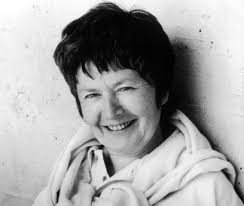
Open Irigaray's interactive page (graphs of influences, similar and opposing positions, and quotes)
Background
Luce Irigaray
Born: 3 May 1930 in Blaton, Bernissart,
Wallonia, Belgium
Nationality: French
Alma mater: Catholic University of Louvain
Era: Contemporary philosophy
Region: Western Philosophy
Schools: Continental philosophy, feminism,
post-structuralism
Notable ideas: "Women on the market"
Main interests: Feminism, psycology, linguistics,
psychoanalysis, cultural theory, sexuality,
social criticism, ethics, politics
Influences: Sigmund Freud, Jacques Lacan,
Emmanuel Levinas, Jacques Derrida, Maurice
Merleau-Ponty, Martin Heidegger, Michel
Foucault, Karl Marx, Friedrich Hölderlin
Influenced: Catherine Malabou, Martha P.
Nochimson, Judith Butler, Elizabeth Grosz
From Wikipedia
Irigaray is a Belgian-born French feminist, philoso- pher, linguist, psycholinguist, psychoanalyst, and cultural theorist who examined the uses and mis- uses of language in relation to women. Irigaray's first and most well known book... was Speculum of the Other Woman, which analyzes the texts of Freud, Hegel, Plato, Aristotle, Descartes, and Kant through the lens of phallocentrism…. Irigaray em-ploys three different modes in her investigations into the nature of gender, language, and identity: the analytic, the essayistic, and the lyrical poetic.
Introductory Comments
For Irigaray, Western culture has never actually staged an encounter between two sexes; it has staged a long monologue by one. From Plato to Freud, the masculine has supplied the template of the human, and the feminine has appeared only as its shadow, mirror, or missing piece - woman as the not-quite-man, the helpful ab- sence against which presence defines itself. Philosophy, psychoanalysis, and language all take the masculine as their reference point, their measure of the human, their definition of reason itself. What looks like a relation be- tween the sexes is really the masculine talking to itself in a flattering glass.
Equality, therefore, can't mean simply grant- ing women access to a world already defined by men. Such an approach, Irigaray insists, would merely invite women to mimic masculine sub- jectivity and desires. Instead, culture itself - its foundations in language, imagery, and social ex- change - must be transformed so that feminine subjectivity can emerge in full voice and body. What's needed is a transformation of culture deep enough so that ethics, politics, and normal everyday concerns can be approached as an en- counter between two independent subjectivi- ties, not the echo chamber of one. Love itself, in such a culture, would become not conquest, nor fusion, nor possession, but a meeting across difference - two genuinely different and mutu- ally irreducible subjects touching one another.
Some of Irigaray's Key Positions
Throughout history, nearly all societies have been organized around a phallocentric symbolic order - a system that treats masculine experi- ence as the norm of reason, authority, autono- my, and full human subjecthood. Freud's "penis envy" is a symptom of this logic, not a discovery about women: his framework could only imagine female sexuality as a deficient version of male sexuality, because his entire system presupposes a single masculine standard.
In this phallic economy, women have historical-ly been treated not primarily as independent subjects but as goods whose value is deter- mined within systems designed by men. Using Marx’s distinction between use value and ex- change value, the mother is prized chiefly for her service, the virgin for her exchange value in marriage alliances, and the prostitute as both use and exchange - her body temporarily com- modified in an explicitly transactional market.
Male dominance is inscribed in language itself. The supposedly neutral "I" of Western discourse is already coded masculine, so a woman who speaks as "I" speaks as an honorary man within a grammar that has no place for her. The reme-dy is not simply that women grow more assert-ive, but the elaboration of sexual difference: a feminine way of speaking, a female genealogy, and civil forms that recognize two subjects rather than one universal and its deviation.
Place in the History of Ideas
Irigaray's Place in History of Ideas
Sarah K. Donovan: She is an interdisciplinary thinker who works between philosophy, psychoanalysis, and linguistics. Originally a student of the famous analyst Jacques Lacan, Irigaray’s departure from Lacan in Speculum of the Other Woman, where she critiques the exclusion of women from both philosophy and psychoanalytic theory, earned her recognition as a leading feminist theorist and continental philosopher. Her subsequent texts provide a comprehensive analysis and critique of the exclusion of women from the history of philosophy, psychoanalytic theory, and structural linguistics…. Her work has generated productive discussions about how to define femininity and sexual difference… and assessing the risk involved in engaging categories historically used to oppress women.
Hillary Chute: This brings us to the aspect of [Irigaray's writing] that stands out the most: its powerful obsession with Eros. This direction in Irigaray's work has always distinguished her enterprise and is perhaps responsible for the renewed respectful attention to even her earliest theorizations of the body. Irigaray's most fervent argument here is for the creative - but not necessarily procreative - integrity of what she memorably names "carnal sharing." Irigaray goes further here in specifying the parameters and contours of "the carnal" than do other feminist theorists.
Random Thoughts on Irigaray"
For Irigaray, speech does not merely describe reality - it quietly builds it, brick by verbal brick. Thus, if women must speak only in concepts, metaphors, and grammars fashioned by men, they will remain guests forever living in some- one else’s house, careful not to rearrange the furniture. To prevent this, Irigaray calls for new forms of expression in which women speak as women, not merely as honorary men. She ad- mired forms of speech that are more relational than dominating, more multiple than singular, more fluid than rigidly hierarchical - language that moves like breath, touch, rhythm, and exchange rather than a marching band.
What might such a language actually look like? Irigaray here remains (perhaps necessarily so) vague. She points toward dialogue rather than monologue, touch rather than visual mastery, feminine multiplicity rather than phallic mono- logue. She also suggests using metaphors drawn from weaving rather than building, and narra- tives centered on cyclical rhythms of birth, care, embodiment, and renewal rather than endless heroic striving. She even suggests a new syntax of fluidity and plurality rather than rigid sub- ject-object opposition (her famous "two lips" forever moving). But even if such a new femi-nine language were possible (a big IF), the ques- tion remains: As the two lips finally speak freely and fluidly, how long will it take before the old phallic logician interrupts with a "Yes, but -"?
Influences
Irigaray was influenced by: Derrida, Foucault, Freud, Heidegger, Holderlin, Lacan, Levinas, Marx, Merleau-Ponty
Irigaray influenced: Butler, Judith, Grosz, E., Malabou, C., Nochimson, M.
Similar and opposing positions
Thinkers with similar positions:
- Adler (The power dynamics between men and women are harmful to both.)
- Averroes (Women should be educated & the best among them should help rule.)
- Butler, Judith (Terms "gender" and "sex" are socially and culturally constructed.)
- Condorcet (Patriarchal norms that oppress & marginalize women must end.)
- de Beauvoir (Women's oppression is due to the social construction of gender.)
- Derrida (Western culture imposes implicit hierarchies on a text's meaning.)
- Fuller (Women have a right to a good education and meaningful employment.)
- George, Henry (As rational beings women must be given same rights as men.)
- Montaigne (Education is crucial to the emancipation of all individuals.)
Thinkers with opposing positions:
- Evola (Women are by nature completely subordinate to men & must remain so.)
- Fichte (Active citizenship and civic freedom should be withheld from women.)
- Freud (Penis envy explains much about the psychology of girls and women.)
- Kristeva (Gender identity is more a psychological matter than cultural or social.)
- Nussbaum (The claim that gender is just a cultural construct is not plausible.)
- Paglia (Sex and gender are not social constructs. They are rooted in biology.)
- Wollstonecraft (Men are not the ideal toward which women should aspire.)
What others said about Irigaray
- Sarah K. Donovan: [Irigaray] believes that language itself must change if women are to have their own subjectivity… recognized at a cultural level.
- Yvette Russell: [By showing] the "blind spots"... of Freud, Plato, Lacan, Kant and others, Irigaray illustrated how the feminine has been colonized by a male fantasy of an inverted other through which he can project himself as subject.
- Sarah K. Donovan: Irigaray alleges that women have been traditionally associated with matter and nature to the expense of a female subject position. While women can become subjects if they assimilate to male subjectivity, a separate subject position for women does not exist. Irigaray’s goal is to uncover the absence of a female subject position….
- Hillary Chute: Irigaray's focus on the carnal emphasizes that carnal union can be a privileged place of individuation, an engaged practice even more rigorous than the renunciation of the flesh.
- Jordan Ross: ... Irigaray insists that we must not call for equality between men and women but instead [change] our conception of human identity….
- Mary Beth Mader: She argued that there is no authentic heterosexuality in Western culture, because the culture... cultivates only a male subject..., particularly in the domains of law, religion, political theory, philosophy, and art.
- Hillary Chute: One of her primary targets is the too-abstract nature of Western culture. Attention to the body demands… an "accomplished" and "connected" interiority…. Our reigning ethos is too speculative, sociological, she wagers; it has run away from - but needs desperately to return to - consideration and cultivation of sensory perceptions.
- Nasrullah Mambrol: [Her position is that] psychoanalysis has always inscribed masculine ideology. Irigaray seeks to uncover a feminine order of meaning so that the sexual identity of the woman may be constructed.
Schools: Continental Philosophy, Critical Theory, Deconstructionism, Essentialism, Feminism, Humanism, Pluralism, Post-modernism, Post-structuralism
Main interests: Cultural Criticism, Desire, Eroticism, Ethics, Family, Language, Literary theory, Love, Politics, Power, Psychoanalysis, Psychology, Sexuality, Social Criticism
Irigaray's answers to philosophical questions
Ethics
"'I love to you' is [the more respectul]: I love to who you are, to what you do, without reducing you to an object of my love."
Nature
"Nature is a universal that is shareable by all, males and females..., and can thus be of use in mediating between all."
Philosophy
"Socrates defined philosophy as… preparation for death. Indeed, without death there would hardly [be] any philosophizing."
Psychology
"Be what you are becoming without clinging to what you might have been; what you might yet be."
Sex and Gender
Female sexuality is multiple and diffuse, not neatly organized around a single center of desire.
Man & woman "have to fulfill what they are [as gendered beings] & at the same time realize [their] unity [as human beings]."
Society
Love, ethics, and social life would be richer if men and women encountered one another as two irreducibly different subjects.