Robin Collingwood (1889 - 1943)
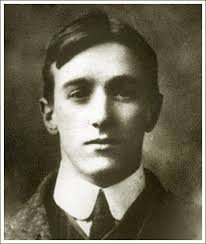
Open Collingwood's interactive page (graphs of influences, similar and opposing positions, and quotes)
Background
R. G. Collingwood
Born: 22 February 1889 in Gillhead, Cartmel Fell,
Lancashire, England
Died: 9 January 1943 (aged 53) in Coniston,
Lancashire, England
Alma mater: University College, Oxford
Notable works: The Principles of Art, The Idea of
History
Notable ideas: Historical imagination,
"historicism", Aesthetic expressivism
Schools: British Idealism, Historism
Main interests: Metaphysics, Philosophy of
history, aesthetics, archaeology
Influences: Hegel, Wilhelm Dilthey, Kant,
Giambattista Vico, F. H. Bradley, John A. Smith,
Benedetto Croce, Giovanni Gentile, Guido de
Ruggiero, John Ruskin
Influenced: Alasdair MacIntyre, Michael Joseph
Oakeshott, Errol Harris, Eric Birley, Gadamer
From Wikipedia
R. G. Collingwood was an English philosopher, historian, and archaeologist. He is best known for his philosophical works, including The Principles of Art and the posthumously published The Idea of History.... [The Idea of History] came to be a major inspiration for philosophy of history in the English-speaking world and is extensively cited, leading to an ironic remark by commentator Louis Mink that Collingwood is coming to be "the best known neglected thinker of our time." ... Colling- wood was a fellow of Pembroke College, Oxford.
Introductory Comments
Ask a schoolchild what history is, and the answer may well be "dates" - a long list of who did what to whom, and when. For Collingwood, that list is where the historian's work begins, not where it ends. A chronicle can record that Caesar crossed the Rubicon. The historian wants to know what Caesar was thinking when he did. In saying this, Collingwood was not endorsing mere empathy or intuition as historical methods. The historian must instead carefully rethink Caesar's thoughts: the problem he faced, the options before him, the reasoning that carried him across. Sources cannot do this work on their own. Documents, artifacts, and the rest of the past's debris become evidence only when the historian puts a question to them.
This is why Collingwood called history a science - historians reason from evidence to conclusions they can defend. Imagination does the building, but evidence inspects every beam. One model he offered was the detective, who must reconstruct the crime from clues and well-aimed questions. He brought the idea even closer to home: Recovering what you thought ten years ago, or even five minutes ago, was for him an act of historical thinking: you reenact your own past thought much as you would Caesar's. It is tempting to go one step further and say that our life stories are history too, assembled from evidence and revised with hindsight. Collingwood might have balked at that last step. Still, when he wrote his autobiography, it was mostly the story of his thinking.
Some of Collingwood's Key Positions
History is a science in the broad sense: an organized body of knowledge reached by systematic inquiry. A natural event has only an observable "outside," but a historical event also has an "inside": the thought of the agent who acted. That inside is the historian's real business, so all history is the history of thought.
Past thought cannot be observed, so the historian must reenact it, rethinking the problem the agent faced and the reasoning used to meet it. This is not emotional sympathy but a critical act that both reconstructs and judges. It must also capture the agent's beliefs, even ones the historian rejects.
The historian's instrument is the "historical imagination," strictly bound by evidence. Instead of pasting together earlier authorities, the historian questions the sources and builds a coherent web of inference. No science of human nature can substitute; history is the only route to knowing what the mind has done.
Switching gears: Art is the expression of emotion. The artist starts with a feeling only dimly sensed and discovers what it is by expressing it. Work designed to produce a predetermined effect is mere craft: "amusement" if done for pleasure, "magic" if done for practical ends. The true work of art exists in the imagination, and audiences grasp it by recreating the artist's expression, much as the historian reenacts past thought.
Place in the History of Ideas
Collingwood's Place in History of Ideas
James Connelly: [Collingwood] took the primary task of a philosophy of history to be that of articulating not an epistemological theory accounting for how the past can be known, but that of disambiguating the subject matter of history from that of natural science.... [Collingwood claimed] that the presuppositions of history are different from those of natural science because reenacting the thoughts of past agents involves rethinking conceptual connections. Historians presuppose that past agents are responsive to norms, not that their behaviour conforms to natural laws. The task of philosophical analysis is to uncover these different presuppositions with a view to showing that there is no conflict between the claims of history and those of science, not because historical explanations are incomplete nomological explanations, but because they are complete explanations of a different kind....
Giuseppina D’Oro: [Collingwood] tended to be rather wary of the label "idealist," and in his correspondence with Gilbert Ryle he explicitly rejected it. However, in his lectures on Central Problems of Metaphysics he tentatively pro- pounded a form of what he termed "objective idealism." But, nonetheless, as in his response to Ryle, he continued to rail against those who sought to pin his position down to an "ism," once remarking that "I am not going to be pigeon-holed into one of your neat categories."
Random Thoughts on Collingwood
If Collingwood is right that all history is the history of thought, historians of ideas should feel right at home. Hobbes’s Leviathan makes the point. Read cold, it looks like a blueprint for absolute sovereignty. Read as an answer to a question, it comes alive. Hobbes had fled to Paris as England slid toward civil war, and his question was what could possibly stop people from killing one another. Collingwood used this very book to press a sharper point. Leviathan and Plato’s Republic, he argued, are not rival theories of the same thing, because the Greek polis and the modern state are different things. Their authors were answering different questions. Even Hume, who looks about as far from the barricades as a philosopher can get, was answering questions of his own time. Could science be carried into the study of human nature?
And yet philosophers still argue with Hume about causation as if the ink were still wet. Is that a mistake? Collingwood thought the notion of "eternal problems" in philosophy largely was. But his own theory complicates the verdict. Renactment works only because a thought, unlike a battle, can happen twice. When a reader follows Hume's argument, Collingwood held, the reader thinks Hume's very thought, not a copy of it. So ideas turn out to be historical in their questions and oddly durable in their reasoning. Perhaps that is the real lesson for historians of ideas: the questions belong to their age, but the arguments keep climbing off the page and walking around.
Influences
Collingwood was influenced by: Bradley, Croce, De Ruggiero, Dilthey, Gentile, Hegel, Kant, Ruskin, Smith, John A., Vico
Collingwood influenced: Birley, Eric, Gadamer, Harris, Errol, MacIntyre, Oakeshott, Skinner, Q., Strauss
Similar and opposing positions
Thinkers with similar positions:
- Croce (Works of art are essentially expressions of intuition and emotion.)
- Dilthey (Unlike science, the humanities understand human expressions of life.)
- Horkheimer (Cultural, not just economic, forces drive history & shape society.)
- Jacobi (Dogmatic systems in philosophy lead thinkers far away from the truth.)
- Jefferson (Freedom of expression is essential for a healthy government.)
- Merleau-Ponty (Mind & body unite in a consciousness that is itself embodied.)
- Oakeshott (Each intellectual discipline has it own perspective on the world.)
- Vico (Human sciences require different methods from the natural sciences.)
Thinkers with opposing positions:
- Ayer (Language that is not verifiable is not true or untrue but meaningless.)
- Comte (The study of society should be scientific, quantifiable, and objective.)
- Davidson (The distinction between the mental & the material is metaphysical.)
- Gadamer (Meaning of a text changes with each generation of interpreters.)
- Goodman (There's no sharp divisions between art, science & normal experience)
- Hume (We only really know the immediate impressions of our senses.)
- Lukács (Art must not only express emotion: it must confront objective reality.)
- Ruskin (Above all else, the artist must be true to nature, not to convention.)
What others said about Collingwood
- Ray Monk: [For Collingwood, to] understand a work of art, a person, a historical epoch or a religion is, so to speak, to “get inside its mind,”...
- Ayer: ... Collingwood's startling conclusion [is] that there can be no history of anything other than thought, and then only of such thought as "can be re-enacted in the historical mind."
- James Connelly: [For Collingwood, the] distinction between the historical past and the natural past corresponds to the distinction between... the sciences of mind and nature: the former study actions, insofar as they [are expressions] of thought, the latter study events insofar as they approach their subject matter as instantiating certain observable patterns.
- Ray Monk: ... Collingwood made important contributions to aesthetics, the philosophy of history, metaphysics, the philosophy of language, and the understanding of philosophical method.
- W. J. van der Dussen: Collingwood believed that mind should be studied on its own terms, which led him to disparage the pretensions of psychology.
- Ayer: [Collingwood's argument] that art is to be identified with language and that both consist in the expression of emotion stands obviously in need of further refinement, but it makes a number of interesting points by the way.
- Giuseppina D’Oro: During the 1950s and 1960s his philosophy of history... occupied center stage in the debate concerning the nature of explanation in the social sciences and whether or not they are ultimately reducible to explanations in the natural sciences.... [Some thought his work here as] a powerful antidote against Carl Hempel’s claim for methodological unity.
- W. J. van der Dussen: Collingwood's... reputation is... unique, in that in his own lifetime he was primarily esteemed as an archaeologist and main expert on Roman Britain, whereas after his death he is especially known as a philosopher.
Schools: British Idealism, Historicism, Metaphysical Idealism, Process Philosophy
Main interests: Art and Aesthetics, Free/Unfree Will, History, Logic, Metaphysics
Collingwood's answers to philosophical questions
Art and Aesthetics
"Primarily, [art] is an 'internal' or 'mental' thing, something (as we commonly say) 'existing in his head' and there only."
The term "beauty" has no aesthetic implication. It just means excellent, whether it refers to a statue, a theory, or whatever.
Too often artists try to express emotions that are expected & accepted by society. Such attempts always produce bad art.
The true meaning of representative art is "that the feeling evoked by the artifact resembles the feeling evoked by the original."
Writing can't be separated into "pure" & "applied": "Subject without style is barbarism; style without subject is dilettantism."
The critic supplements the "author's partial account of some matter by adding certain aspects... the author... overlooked."
History
Historians rely on imagination tempered by a careful consideration of known facts & a shrewd understanding of behavior.
Though history is a science of sorts, it requires, unlike the natural sciences, a type of literary imagination to re-enact the past.
"The value of history, then, is that it teaches us what man has done and thus what man is."
Language
"Language... has both expressiveness and meaning. [It expresses an] emotion, [but also] refers beyond that emotion...."
Metaphysics
"Thus the past as past and the future as future do not exist at all, but are purely ideal...."
"Perfect freedom is reserved for the man who lives by his own work and in that work does what he wants to do."
Nature
Greek natural science "said that the world of nature is not only alive but intelligent" - a living soul "with a mind of its own."
Philosophy
Philosophy doesn't deal with the unknown, but teaches us "to know in a different way things we already knew in some way."
Religion and Theology
Ritual and the mythology behind it "are inseparable and come into existence together, sacred act and sacred story...."
Science
"Thus natural science is not a way of knowing the real world; its value lies not in its truth but in its utility...."