Henry Sidgwick (1838 - 1900)
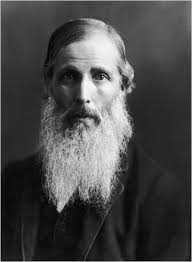
Open Sidgwick's interactive page (graphs of influences, similar and opposing positions, and quotes)
Background
Henry Sidgwick
Born: 31 May 1838 in Skipton, Yorkshire, England
Died: 28 August 1900 (aged 62) in Cambridge,
Cambridgeshire, England
Alma mater: Trinity College, Cambridge
School: Utilitarianism
Main interests: Ethics, politics, political theory,
economics, classics, educational theory,
parapsychology
Notable ideas: Ethical hedonism, paradox of
hedonism
Influences: Jeremy Bentham, David Hume, John
Stuart Mill, Herbert Spencer, Kant, Hegel,
Joseph Butler
Influenced: R. M. Hare, Mordecai Kaplan, John
Rawls, Alfred Marshall, G. E. Moore, Peter
Singer, Derek Parfit, J. J. C. Smart, Hastings
Rashdall, Bertrand Russell, C. D. Broad
From Wikipedia
Sidgwick was an English utilitarian philosopher and economist and is best known in philosophy for his utilitarian treatise The Methods of Ethics. His work in economics has also had a lasting influence. He was the Knightbridge Professor of Moral Philosophy at the University of Cambridge from 1883 until his death. He was one of the founders and first president of the Society for Psychical Research and a member of the Metaphysical Society and promoted the higher education of women.
Introductory Comments
Bentham's utilitarianism makes two claims that sit together uneasily. The first is descriptive: human beings are ultimately moved by pleasure and pain, a view called psychological hedonism. The second is prescriptive: we ought to pursue the greatest happiness of everyone. But how does one get from "I naturally pursue my own happiness" to "I ought to pursue yours as well"? Rewards, punishments, sympathy, and social approval can make good behavior personally rewarding, but they do not solve the harder case in which my happiness and everyone else's part company. Sidgwick's first move was therefore to reject psychological hedonism. People plainly desire things other than their own pleasure - knowledge, achievement, revenge, or the welfare of others.
But clearing the ground exposed a deeper crack. The unresolved conflict now involved two rational imperatives: proper self-interest versus proper general interest. Reason seemed to tell each person to maximize both his own happiness and everyone else's happiness. Sidgwick looked for something that might reconcile the two. Social rewards help, but virtue goes unrewarded often enough. A God who balanced the books in the hereafter could settle the matter, but Sidgwick did not believe such a God existed. So The Methods of Ethics ends not with triumph but with a candid admission that the problem remains - for Sidgwick, an unhappy ending, though hardly the greatest unhappiness of the greatest number.
Some of Sidgwick's Key Positions
Ethics offers three "methods," or rational procedures for deciding what one ought to do. Egoism seeks one's own greatest happiness, intuitionism follows moral rules known directly to be binding, and utilitarianism seeks the greatest happiness of all. Moral philosophy's task is to test these methods and see how far they can be reconciled.
The rules of common-sense morality are not self-evident. Examined closely, they prove vague, full of exceptions, and often in conflict. Only a few abstract axioms survive scrutiny. Justice requires treating similar cases alike. Prudence requires equal concern for every part of one's life. Benevolence holds that no one's good matters more, "from the point of view of the universe," than anyone else's. These axioms are grasped by reason, not by hunch.
Psychological hedonism, the claim that people always act for pleasure, is false, and so it cannot support any ethical argument.
Egoism, however, cannot be refuted. Self-interest and impartial benevolence are equally rational, and when they conflict, reason cannot choose between them. This "dualism of practical reason" is the deepest problem in ethics. Only a morally ordered universe, perhaps one governed by God, could resolve it, and no such order can be proved on ethical grounds.
Place in the History of Ideas
Sidgwick's Place in History of Ideas
Bart Schultz: His masterpiece, The Methods of Ethics…, in many ways marked the culmination of the classical utilitarian tradition - the tradi- tion of Jeremy Bentham and James and John Stuart Mill - with its emphasis on "the greatest happiness of the greatest number" as the fundamental normative demand. Sidgwick’s treatment of that position was more compre- hensive and scholarly than any previous one, and he set the agenda for most of the twenti- eth-century debates between utilitarians and their critics. Utilitarians and consequentialists from G. E. Moore and Bertrand Russell... down to Peter Singer... have acknowledged Sidgwick’s Methods as a vital source for their arguments.
Bernard Corry: The core of Sidgwick’s major contribution [to economics] is contained in his discussion of the art of political economy. He was at pains to dissociate economic science from the political doctrines of laissez-faire and suggested various conditions under which state interference in the productive process may become desirable: one important condition is the divergence of private and social benefits.... However, he did not present a general a priori case for government interference whenever this divergence obtains - each situation has to be considered on its own.... Although he expressed grave doubts about the feasibility of a total socialist solution, [his views place] him squarely in the English Fabian tradition.
Random Thoughts on Sidgwick
Sidgwick was hardly the first to tussle with thwe problem of hedonsim. In 1726, Joseph Butler argued that most of our desires aim at things outside self: food, shelter, a friend's welfare. Pleasure follows when a desire is satisfied; it is not what we were after. Benevolence, Butler held, is as natural as self-love. Two and a half centuries later, Thomas Nagel argued that altruism needs no self-interested foundation at all. To see oneself as merely one person among others, all equally real, is already to have reason to care about them. Psychological hedonism has been refuted so often that the refutations could fill a library. Yet self-interest keeps popping back up, smirking, as if to mock the whole enterprise of ethics.
Perhaps the smirk says that logic is on its side, and that self-interest is simply what it means to have a self. Sidgwick half-believed this. The distinction between one person and another struck him as "real and fundamental," which is why he could never dismiss the egoist. But what kind of thing is this self? Hume, peering inward, found no self at all, only a theater in which perceptions come and go. Of course this theater seems to be populated with actors, but the self need not always be the star. It's just one character on the stage - yes, vivid and never offstage, but just character, like the many others we carry about in our heads. Egoism then looks less like a logical deduction than a storytelling bias - and one that can be overcome. Yes, easier said than done, but so is most of ethics.
Influences
Sidgwick was influenced by: Bentham, Butler, Joseph, Hegel, Hume, Kant, Mill, Spencer
Sidgwick influenced: Broad, C.D., Hare, Kaplan, M., Marshall, A., Moore, Parfit, Rashdall, H., Rawls, Russell, Singer, Peter, Smart, J.J.C.
Similar and opposing positions
Thinkers with similar positions:
- Abelard (Consequences, not intentions, determine the moral value of actions.)
- Anscombe (Ethics must distinguish foreseen from unforeseen consequences.)
- Bentham (Greatest happiness of greatest number determines right & wrong.)
- Fuller (A liberal education develops a capacity to think deeply and broadly.)
- Mill (Our guiding moral principle must be to advance the general welfare.)
- Seneca (The best way to establish virtue is through a liberal education.)
- Socrates (We should carefully examine our key moral concepts and beliefs.)
- Wolff (Human reason is able to reach moral truth by its own efforts.)
- Wollstonecraft (As rational beings, girls must be educated in same way as boys.)
Thinkers with opposing positions:
- Aristotle (Women are more impulsive, deceptive and irrational than men.)
- Bataille (To be free means to be unrestrained by any chains of morality.)
- Evola (Women are by nature completely subordinate to men & must remain so.)
- Fichte (Active citizenship and civic freedom should be withheld from women.)
- Kant (Moral worth is not based on results, but on adherence to principles.)
- Spinoza (Moral absolutes do not exist. Nothing is inherently good or evil.)
- Williams, B. (We can't reduce moral decisions to a few utilitarian algorithms.)
What others said about Sidgwick
- J. J. C. Smart: [Sidgwick's "The Methods of Ethics" is] the best book ever written on ethics.
- Alan Gauld: Like many of his contemporaries, Sidgwick wondered whether religious belief is possible in the new scientific age, and this preoccupation stimulated a strong interest in claims of psychic phenomena.
- Bernard Corry: Thus the central problem of ethics for Sidgwick was located in the conflict between personal inclination and duty toward others. Eventually Sidgwick admitted that without some sort of religious sanction, the attempt to rationally demonstrate the ethical necessity of extending self-love to love for others was a failure.
- Bart Schultz: [Sidgwick's] "Methods" has also served as a general model for how to do ethical theory, since it provides a series of systematic, historically informed comparisons between utilitarianism and its leading alternatives.
- Rawls: [Sidgick's "The Methods of Ethics" was the] first truly academic work in moral theory, modern in both method and spirit.
- Hayek: The last comprehensive attempt to restate the principles of a free society, already much qualified and in the restrained form expected of an academic textbook, is Henry Sidgwick, "The Elements of Politics."
- David Ritchie: [Sidgwick's] method is Bentham's; but there is none of Bentham's strong critical antagonism to the institutions of his time, and the mode of thought is much more what we might expect from an end-of-the-nineteenth-century Blackstone, or... Hegel, showing the rationality of the existing order of things, with only a few modest proposals of reform.
- Bart Schultz: Engaging with Sidgwick’s work remains an excellent way to cultivate a serious philosophical interest in ethics, metaethics, and practical ethics, not to mention the history of these subjects.
Schools: Common Sense Realism, Consequentialism, Ethical Hedonism, Intuitionism, Utilitarianism
Main interests: Classics, Economics, Education, Ethics, Happiness, Political Theory, Politics, Property, Virtue
Sidgwick's answers to philosophical questions
Economics
Though self-interest is a driving force in the economic world, we must at times regulate the economy so that all may prosper.
Ethics
Though ethical decisions are ultimately justified on a utilitarian basis, what's right and wrong is usually self-evident.
When making moral decisions, we should consider both practical, utilitarian consequences and intuitive, moral principles.
We have a moral intuition that tells us that what is right for oneself must also be right for others.
Moral intuitions serve to temper instinctive self-interest in a way that makes room for more generous utilitarian princples.
"Reason shows me that if my happiness is desirable..., the equal happiness of any other person must be equally desirable."
Philosophy
[The philosopher's] function is to tell men what they ought to think, rather than what they do think…."
[The philosopher can] transcend Common Sense in his premises, and [diverge] from Common Sense in his conclusions."
Psychology
"Two authorities, roughly speaking Butler’s 'self-love' and 'Conscience,' claim to rule, and neither will yield to the other."
Religion and Theology
Along with our moral intuitions, religion helps temper our selfishness in a way that allows for a more generous, moral life.
Though I find no rational basis for belief in immortality, the general loss of such a belief would greatly harm the social order.
Sex and Gender
Women must be given the same opportunities for higher education as men - including those at the finest universitities.