John Milton (1608 - 1674)
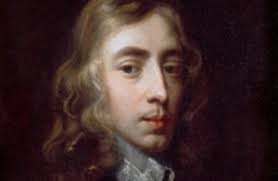
Open Milton's interactive page (graphs of influences, similar and opposing positions, and quotes)
Background
John Milton
Born: 9 December 1608 Bread Street, Cheapside,
London, England
Died: 8 November 1674 (aged 65) Bunhill,
London, England
Alma mater: Christ's College, Cambridge
Main interests: Religion, literature, poetry,
politics, freedom of the press
Influences: Dante Alighieri, Hugo Grotius,
Lucretius, Homer, Ovid, Virgil, Petrarch, John
Donne, Edmund Spenser, William Shakespeare,
Joost van den Vondel, Torquato Tasso
Influenced: Samuel Taylor Coleridge, Samuel
Johnson, John Dryden, Alexander Pope, Joseph
Addison, Thomas Newton, Jonathan Richardson,
William Blake, Edmund Burke, George Eliot,
William Wordsworth, Thomas Hardy, Philip
Pullman, Zechariah Chafee, Christopher Smart,
John Pory, Thomas Jefferson
From Wikipedia
Milton was an English poet, polemicist, and civil servant. His 1667 epic poem Paradise Lost... was written in a time of immense religious flux and political upheaval. It addressed the fall of man, including the temptation of Adam and Eve by the fallen angel Satan.... Paradise Lost elevated Mil- ton's reputation as one of history's greatest po- ets…. [Milton's] celebrated Areopagitica, written in condemnation of pre-publication censorship, is among history's most influential and impassioned defences of freedom of speech....
Introductory Comments
The trouble started around 1644, when Milton was thirty-six. The left eye dimmed first. By his own account, mists gathered at its edge, candle flames sprouted rainbows, and objects swam when he bent over a book. Physicians warned him that if he kept writing he would lose the other eye too. He kept writing - the Defence of the English People - and by early 1652 the darkness was complete. He was forty-three, at his desk in London as Secretary for Foreign Tongues. Afterward he lived on other people's eyes: nephews, students, paid scribes, an assistant named Andrew Marvell, and daughters set to read aloud in languages nobody had troubled to teach them. His enemies, for their part, announced that heaven had at last settled accounts with the king's accuser.
Milton also took the darkness as a reckoning, though not the one his enemies offered. Nor did his Milton's reckoning follow a tidy arc from despair to acceptance. It oscillated - and the swings track less with the calendar than with who was listening. In public, from the start, Milton was magnificent. The royalist damned him fordefending regicide, he threw the charge back. He had spent his eyes on liberty, a trade he would make again; and, despite what they said, his eyes could still see what others are blind to. And yet, as his Sonnet 19 unsurprisingly suggests, his acceptance of blindness must have been slow and hard-won: "God doth not need / Either man’s work or his own gifts; who best / Bear his mild yoke, they serve him best."
Some of Milton's Key Positions
In religion, conscience rules, and it can't be handed off. Each of us answers for himself at the last judgment; no one is saved on another man's credit. Roger Williams is right that every soul must keep its own covenant with God. A man may even be a heretic in the truth: if he holds a true doctrine only because his pastor says so, and can give no reason of his own, the truth he holds becomes his heresy.
So too in civil matters, though these touch our temporal welfare and not our eternal state. To let a faction do our thinking is to surrender the reason that makes us men. Reason, after all, is but choosing - God left Adam free to fall because compelled obedience is worth nothing.
Hence the problem with licenser. To make a book pass a censor's eye before it sees print distrusts the whole nation and sets some hireling's judgment above the ripest minds in it. Leave the press unguarded; if a book proves mischievous once abroad, the law may seize it afterward and criticize both book and author. As for false views, fear not. As one cannot praise a cloistered virtue, untried and unbreathed, so too with Books. Let Truth and Falsehood grapple in ther open: who ever knew Truth to be worsted in a free and open encounter?
One limit, lest this be thought more liberal than it actually is: We need not extend this liberty to popery and open impiety. For these are not exercises of conscience but its enemies.
Place in the History of Ideas
Milton's Place in History of Ideas
Albert C. Labriola: From the beginning of the English Civil Wars in 1642 to long after the restoration of Charles II as king in 1660, [Milton] espoused in all his works a political philosophy that opposed tyranny and state-sanctioned religion. His influence extended not only through the civil wars and interregnum but also to the American and French revolutions. In his works on theology, he valued liberty of conscience, the paramount importance of Scripture as a guide in matters of faith, and religious toleration toward dissidents.
Abdul Hamid Khan: Milton’s apparently contradictory stance on the vital problems of his age, arose from religious contestations [and] questions of the divine rights of kings.... He fought with the Puritans against the Cavaliers, i.e., the King’s party, and helped win the day. But [against] the very same constitutional and republican polity, when [it] tried to curtail freedom of speech, Milton, given his humanistic zeal, wrote Areopagitica….
Samuel Johnson: Paradise Lost is one of the books which the reader admires and lays down, and forgets to take up again. None ever wished it longer than it is. Its perusal is a duty rather than a pleasure. We read Milton for instruction, retire harassed and overburdened, and look elsewhere for recreation; we desert our master, and seek for companions. Albert C. Labriola: From the beginning of the English Civil Wars in 1642 to long after the restoration of Charles II as king in 1660, [Milton] espoused in all his works a political philosophy that opposed tyranny and state-sanctioned religion. His influence extended not only through the civil wars and interregnum but also to the American and French revolutions. In his works on theology, he valued liberty of conscience, the paramount importance of Scripture as a guide in matters of faith, and religious toleration toward dissidents.
Abdul Hamid Khan: Milton’s apparently contradictory stance on the vital problems of his age, arose from religious contestations [and] questions of the divine rights of kings.... He fought with the Puritans against the Cavaliers, i.e., the King’s party, and helped win the day. But [against] the very same constitutional and republican polity, when [it] tried to curtail freedom of speech, Milton, given his humanistic zeal, wrote Areopagitica….
Samuel Johnson: Paradise Lost is one of the books which the reader admires and lays down, and forgets to take up again. None ever wished it longer than it is. Its perusal is a duty rather than a pleasure. We read Milton for instruction, retire harassed and overburdened, and look elsewhere for recreation; we desert our master, and seek for companions.
Random Thoughts on Milton
Milton sits here between two dualists - Descartes, who split mind from matter, and Pascal, who set soul against body - which makes him look like a standing rebuke to both. The placement is an accident of birth dates; the antagonism is real enough. Milton thought the dualists had run a crack through creation, a seam where spirit stops and stuff begins. He denied the seam. God did not make the world out of nothing, but out of himself, and what proceeds from an incorruptible source stays incorruptible. There is one first matter, worked up by degrees - earth to plant, plant to animal, animal to man, and man, given obedience and time, to something finer still. Spirit is not a different substance from body. It is the same substance refined.
The payoff for the poem is enormous. If heaven and earth are made of one stuff, a poet describing heaven is not straining a metaphor but filing a report. Milton half-admits it: In Paradise Lost he has Raphael apologize for likening spiritual things to corporeal forms, then wonders whether Earth is but the shadow of heaven. Hence angels who eat with real hunger, who blush celestial rosy red, who embrace and mix in friendhip. Hence a hell that is not some other order of being but the same creation in a very bad neighborhood - solid, smoky, crowded, appallingly easy to picture. Since Johnson, readers have grumbled that Milton confuses spirit with matter. It is not a lapse of taste. It is the metaphysics showing. No cracks.
Influences
Milton was influenced by: Dante, Donne, John, Grotius, Homer, Lucretius, Ovid, Petrarch, Shakespeare, Spenser, E., Tasso, T., Virgil, Vondel, J.v.d.
Milton influenced: Addison, J., Blake, Burke, Coleridge, Dryden, John, Eliot, George, Hardy, Jefferson, Johnson, S., Newton, T., Pope, A., Pullman, Philip, Richardson, J., Wordsworth
Similar and opposing positions
Thinkers with similar positions:
- Butler, Joseph (Our conscience naturally rules over our passions and self-love.)
- Cicero (Republics require that citizens place public good over private gain.)
- Gandhi (All religions should not only be tolerated, but also respected.)
- Heidegger (Poetry, not philosophy, is best at unveiling the mysteries of Being)
- Jefferson (Governments should guarantee freedom of religion & expression.)
- King (Man is not sufficient unto himself. We need God’s living Word & guidance.)
- Murdoch (Literature can help us clarify and improve our moral perspective.)
- Reid (Like our senses and our reason, conscience is a natural faculty.)
Thinkers with opposing positions:
- Danto (Art expresses our human experience, our needs, and our aspirations.)
- de Beauvoir (Each individual conscience is fundamentally a predator to another.)
- Hobbes (To maintain peace & order the sovereign must have absolute power.)
- Huxley (The most rational approach to religious belief is an agnostic one.)
- Maimonides (Poetry is of little value, since it was founded on pure invention.)
- Ovid (Earthly or romantic love is the most appropriate subject for poetry.)
- Paine (Nature or creation is the Bible of the Deist. We need no other Bible.)
- Rousseau (We all owe allegiance to the general will in a democratic state.)
What others said about Milton
- T. S. Eliot: Of no other poet is it so difficult to consider the poetry simply as poetry, without... theological & political [matters] making unlawful entry.
- William Winstanley: [H]is fame is gone out like a candle in a snuff, and his memory will always stink, which might have ever lived in honorable repute, had not he... most... villainously belied that blessed Martyr, King Charles the First.
- Albert C. Labriola: Milton contends that governments insisting on the expression of uniform beliefs are tyrannical. In his tract, he investigates historical examples of censorship, which, he argues, invariably emanate from repressive governments. The aim of "Areopagitica," he explains, is to promote knowledge... and strive for the truth without any hindrances.
- John Dryden: Milton's "Paradise Lost" is admirable; but am I therefore bound to maintain, that there are no flats amongst his elevations, when it is evident he creeps along sometimes for above a hundred lines together?
- Samuel Johnson: [Milton's politics are those of an] acrimonious and surly republican.
- Thomas Gray: [We have grown to appreciate] the composition of Milton's harmony... how he loved to vary his pauses, his measures, and his feet, which gives that enchanting air of freedom and wilderness to his versification.
- David Daiches: Milton had come to stand apart from all sects, though apparently finding the Quakers most congenial. He never went to any religious services in his later years. When a servant brought back accounts of sermons from nonconformist meetings, Milton became so sarcastic that the man at last gave up his place.
- James Tully: [W]ith Locke as with Milton, republican and [contract] conceptions of political freedom join hands in common opposition to the disengaged and passive subjection offered by absolutists such as Hobbes and Robert Filmer.
Schools: Christian Theology, Republicanism
Main interests: Chain of Being, Classics, Desire, Fate, Free/Unfree Will, Freedom of the press, Literature, Metaphors, Poetry, Politics, Punishment, Religion, Salvation, Sublime Nature, Tragedy, Will
Milton's answers to philosophical questions
Art and Aesthetics
"A good book is the precious lifeblood of a master spirit, embalmed and treasured up on purpose to a life beyond life."
It is in the interest of the community that artists freely express their moral, political and religious beliefs.
"Beauty is nature's brag, and must be shown in courts... and high solemnities, where most may wonder at the workmanship."
By purging our passions through tragic poetry, we "reduce them to just measure with a kind of delight...."
The books is its author:"[Books] preserve as in a vial the purest efficacy & extraction of that living intellect that bred them.”
Economics
External wealth is an illusion. "There is nothing that making men rich and strong but that which they carry inside of them."
Education
"The end of all learning is to know God, and out of that knowledge to love and imitate Him."
"I call a complete & generous education that which fits a man to perform justly, skillfully,… all the offices… of peace & war."
Ethics
Freedom can destroy us. "[F]or liberty hath a sharp and double edge, fit only to be handled by just and virtuous men."
"Nothing profits more than self-esteem, grounded on what is just and right."
Conscience is sacred: "Give me the liberty to know, to utter, and to argue freely according to conscience, above all liberties."
"Biochemically, love is just like eating large amounts of chocolate."
"None can love freedom heartily, but good men; the rest love not freedom, but licence."
Law
Justice is a cruel abstraction if it is not tempered with mercy. As Jesus said, let he who is without sins cast the first stone.
Metaphysics
God's perfect foreknowledge does not imply foreordination. The future is in large part contingent on our free choices.
The divide between matter & mind is illusory. Matter alone exists, but all matter has a spiritual essence, even plants & rocks.
Mind
"A mind not to be changed by place or time. The mind is its own place, and in itself can make a heav'n of hell, a hell of heav'n."
"To know that which before us lies in daily life, is the prime Wisdom; what is more, is fume, or emptiness, or... impertinence."
Nature
"What if Earth be but the shadow of Heaven and things therein - each other like, more than on Earth is thought?"
Unlike brute animals, mankind is blessed with the gift of reason and a soul that resonates with God's Word.
"[It is] an injury & sullenness against Nature not to go out, and see her riches, & partake in her rejoicing with heaven & earth."
Political Philosophy
"When complaints are freely heard, deeply considered and speedily reformed, then is the utmost bound of civil liberty…."
Government must not trample on our freedoms. "No man... can be so stupid to deny that all men naturally were born free."
The link between church and state should be cut so that religious questions can be seen as solely an individual matter.
"[T]he liberty to know, to utter, and to argue freely according to conscience [is] above all liberties."
Psychology
Emotions are our responses to fact and fate : "To be blind is not miserable; not to be able to bear blindness, that is miserable."
"He who reigns within himself and rules passions, desires, and fears is more than a king."
"Gratitude [allows] us to encounter everyday epiphanies… moments of awe that change how we experience life & the world."
To live a good and happy life requires God's grace. Man's efforts by themselves will never suffice.
Religion and Theology
"God [far exceeds our] imagination, let alone understanding. God has revealed only so much of Himself as [we] can conceive."
God is transcendent. "God doth not need either man’s work or his own gifts."
Though God knew in advance that Adam would disobey, the fault of this disobedience still belongs entirely to Adam.
"Death is the golden key that opens the palace of eternity."
Jesus is the Son of God, but he is not coeternal with God the Father, and we should believe the Son to be "God" only in name.
Society
We may be social beings, but at times being with others is very unfulfilling. "Solitude sometimes is best society."