Giovanni Gentile (1875 - 1944)
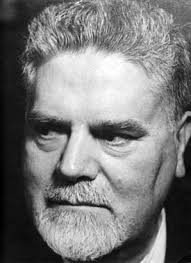
Open Gentile's interactive page (graphs of influences, similar and opposing positions, and quotes)
Background
Giovanni Gentile
Born: 30 May 1875 in Castelvetrano, Italy
Died: 15 April 1944 (aged 68) in Florence, Italy
Political party: National Fascist Party
(1923–1943)
Alma mater: University of Florence
School: Idealism
Main interests: Metaphysics, education, politics,
ontology, epistemology, aesthetics, history
Influences: Plato, Giambattista Vico, Hegel,
Vincenzo Gioberti, Antonio Rosmini-Serbati,
Bertrando Spaventa, Giuseppe Mazzini,
Pasquale Galluppi, Karl Marx, Kant, Friedrich
Nietzsche, Benedetto Croce, Antonio Labriola,
Georges Sorel
Influenced: Giovanni Treccani, Ugo Spirito,
Benedetto Croce, Benito Mussolini, Giuseppe
Bottai, Luigi Federzoni, Margherita Sarfatti, A.
James Gregor, R. G. Collingwood, A. Gramsci
From Wikipedia
Gentile was an Italian pedagogue, philosopher, and politician. He, alongside Benedetto Croce, was one of the major exponents of Italian idealism in Italian philosophy, and also devised his own sys- tem of thought, which he called "actual idealism" or "actualism," which has been described as "the subjective extreme of the idealist tradition." Described by himself and by Benito Mussolini as the "philosopher of fascism," he was influential in providing an intellectual foundation for Italian fascism….
Introductory Comments
For two decades, Gentile and Benedetto Croce were the twin pillars of Italian philosophy, friends and collaborators who together revived Hegel for a new century. Then politics came between them, as politics will. Gentile had never been quite the ivory-tower recluse he is sometimes made out to be. Before the First World War, he fought hard over how Italy should educate its young. When war came, he championed Italy’s entry and found in the national struggle a kind of spiritual awakening. The disappointing peace brought strikes, unrest, and a parliament that seemed unable to govern. It left him convinced that liberal Italy had lost its nerve.
When Mussolini took power in October 1922, he made Gentile Minister of Public Instruction. A few months later Gentile joined the Fascist Party, explaining that liberalism, properly understood, found its fulfillment in fascism. Gentile went on to draft the Manifesto of Fascist Intellectuals and much of the official Doctrine of Fascism. In them he gave the regime its philosophical vocabulary: the totalitarian state as a spiritual reality living within each citizen. Croce answered with a counter-manifesto, and the friendship was over. Gentile stayed loyal to the end, backing Mussolini’s rump republic in the north after the regime collapsed. In April 1944, partisans shot him outside his home in Florence. His strange political odyssey was over. The philosopher who claimed reality is the act of thinking met a reality no thinking could absorb.
Some of Gentile's Key Positions
Hegel was right that the real is ideal, but he stopped short. He treated thought as a finished system of concepts. In fact, reality is the living act of thinking itself, happening now. This "pure act" is all there is. Nature, history, and other people do not stand outside thought; they are objects that thinking creates and makes its own. And the thinker is not the individual mind, but the one universal self at work in every act of thought.
Truth, then, cannot mean matching ideas to an external world. It is what thought achieves as it realizes itself. In art, the mind expresses itself. In religion, it bows before an object it takes to be wholly other: God. In philosophy, it recognizes that this other was always its own activity.
The state, likewise, is no mere contract among isolated persons. It is the individual’s own will raised to universality, a spiritual reality living within each citizen. Freedom lies in identifying with the state,. Liberalism, which sets person against state, repeats the error of the isolated mind.
Marx saw that human beings make their world through activity. But by wedding this insight to materialism, he produced a contradiction: a dialectic of matter, when dialectic belongs only to thought. And by reducing the state to an instrument of class rule, he missed its spiritual nature. Fascism is the political expression of the truth that reality is spirit.
Place in the History of Ideas
Gentile's Place in History of Ideas
A. James Gregor: ... Gentile supplied Fascism its justificatory rationale: the totalitarianism that informed Fascism's antidemocratic convictions. It was he who defined the relationship between the individual, any association of individuals, and the political state. It was Gentile who made obedience, work, and sacrifice, the ethic of a national community in developmental rebellion against what he took to be the hegemonic impostures of imperialism.
H. S. Harris: In his fascist apologias it often seems as if whatever is done in the name of the existing State must be patiently, even joyfully, accepted and endured as a condition for any further advance - an attitude that is more reminiscent of Thomas Hobbes than of Giuseppe Mazzini.
Frank E. Smitha: Among fascists was the belief that they were acting with a purpose without which the world would be absurd. Gentile stood against the positivism that limited authentic knowledge to that based on sense experience. Fascist philosophy, claimed Gentile, was not skeptical, nor agnostic, nor pessimistic, nor passively optimistic. Fascism, he claimed, was man engaged in a moral and intellectual struggle in an exercise of free will in the creation of a new world.
Random Thoughts on Gentile
Most of us picture the mind as a private room, with the world somewhere outside the window. Gentile tore down the walls. If reality is the act of thinking, there is no room and no outside, only one vast, unfolding activity in which every individual takes part. The lonely self, peering out at a world it can never quite reach, turns out to be an abstraction. The real self is universal, and freedom lies not in guarding one’s private corner but in willing oneself into that larger life. And where did Gentile find that larger life made concrete? In the state. He meant not a bureaucracy of clerks and rubber stamps but something like a cathedral of consciousness, the living expression of Italy’s spiritual unity.
But here is the puzzle. Gentile’s universal thinker belongs to no country, no party, no century. Yet somehow it settles in Rome, puts on a uniform, and answers to Mussolini. How does a free act of thought that embraces everything come to be embodied in this particular government - with its particular police, prisons, and a press office? And to boot: a totalitarian government that swallows its citizens by depriving them of their freedom? Gentile would reply that the state does not swallow the individual but fulfills him. His critics, Croce among them, saw it otherwise. To them, a philosophy that began by freeing the mind from the world ended by handing it over to the state. Which leaves a further puzzle: Did Gentile take his idealism too far, or not far enough?
Influences
Gentile was influenced by: Croce, Galluppi, P., Gioberti, V., Hegel, Kant, Labriola, A., Marx, Mazzini, G., Nietzsche, Plato, Rosmini, A., Sorel, Spaventa, B., Vico
Gentile influenced: Bottai, G., Collingwood, Croce, Federzoni, L., Gramsci, Gregor, A. J., Mussolini, Sarfatti, M., Spirito, Ugo, Treccani, G.
Similar and opposing positions
Thinkers with similar positions:
- Bosanquet (The state has more reality than the individual persons within it.)
- Bradley (Reality is ideal, whole and one. There are no real separate things.)
- Carlyle (The history of the world is but the biography of great men.)
- Evola (Liberal democracy represents an ignoble trend towards mediocrity.)
- Evola (Mixing with inferior non-European races leads to cultural decline.)
- Nietzsche (Great men shape and direct history. The masses just follow along.)
- Schmitt (A strong leader must at times be above the law for the general good.)
- Sorel (A moral revival of the country is needed to save it from decadence.)
Thinkers with opposing positions:
- Agamben (The law is always the best guarantor of human freedom & rights.)
- Fromm (Authoritarianism is never justified. We must hold onto our freedom.)
- Hobbes (All things, including humans and their minds, are entirely material.)
- Jefferson (Certain rights are natural or inherent by virtue of our humanity.)
- Jung (The replacement of God with the state leads to alienation & fanaticism.)
- Ockham (Universals are just concepts. Only concrete individual things are real.)
- Proudhon (All forms of absolutisms are evil: government, capitalism & religion.)
- Socrates (Politics should be guided by morality. Might does not make right.)
What others said about Gentile
- Mussolini: It was Gentile who prepared the road for those - like me - who wished to take it.
- Croce: [Gentile] holds the honor of having been the most rigorous neo-Hegelian in the entire history of Western philosophy and the dishonor of having been the official philosopher of Fascism in Italy.
- H. S. Harris: [For Gentile] the State is, on the one side, that complex of social institutions, cultural traditions, and ethical values that appears to the individual as the actual fabric of his own moral personality; on the other side it is all the ideals that have still to be striven for and achieved in the actual world in which he lives.
- A. James Gregor: [Gentile believed that in] the modern world, only the nation could provide the material, intellectual, political, and moral environment in which the individual might find fulfillment.
- Flaminia Incecchi: Giovanni Gentile remains to this day one of Italy’s most illustrious, prolific, lucid, and problematic thinkers.
- Valmai Burwood Evans: [As minsiter of public education, Gentile raised] the standard of culture required fom both teachers and scholars in universities and schools [and increased the] opportunity for adult education.
- A. James Gregor: The fact was that the philosophical neo-idealism that served Fascism as its normative foundation shared its origins with orthodox Marxism through their common connection to Hegelianism…. Like Marx, Gentile rejected the "liberal" conviction that human beings are best understood as independent... monads, possessed of inherent freedoms....
- F. Incecchi: Despite the... theoretical character of Gentile’s elaborations, [he] became a strong advocate of Italy’s participation in the First World War, on the grounds that only war was capable of molding the Italians into a nation.
Schools: Metaphysical Idealism, Nationalism
Main interests: Art and Aesthetics, Education, Epistemology, History, Metaphysics, Political Activism, Politics, Racism, Social Philosophy
Gentile's answers to philosophical questions
Economics
By transforming Hegel's dialectic into something completely physical, Marx robbed the state of its spiritual dimension.
Metaphysics
Reality is identical to the actual process and content of thought. Universal spirit reveals itself in our thoughts.
Reality does not consist of the physical things we see about us. Rather, it consists of the thoughts we have inside the mind.
Political Philosophy
State authority "was not a product, but a presupposition." The state doesn't depend on people: people depend on the state.
Since the concept of the state is our most elevated secular idea, the state deserves our complete allegiance. Hence, fascism.
In Fascism what is called barbarity is actually "the expression of the healthy energies which shatter false and baleful idols."
"The Fascist state, on the other hand, is a popular state, and, in that sense, a democratic State par excellence."
In Fascism the State's interests and the individual's rights cannot conflict, since "the State and the individual are one."
Religion and Theology
The fact that we may have invented the concept of God makes it no less true, since our thoughts are the basis of reality itself.
Society
Fascism can't conflict with human ends, for the simple reason that "for Fascism, society is the end, individuals the means."