Benedetto Croce (1866 - 1952)
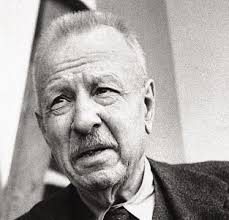
Open Croce's interactive page (graphs of influences, similar and opposing positions, and quotes)
Background
Benedetto Croce
Born: February 25, 1866 in Pescasseroli, Italy
Died: November 20, 1952 (aged 86) in Naples,
Italy
Profession: Historian, writer, landowner
Schools: Idealism, Liberalism, Historism
Main interests: History, aesthetics, art, politics,
literature, logic
Notable ideas: Aesthetic expressivism (art
expresses emotions, not ideas)
Influences: Giambattista Vico, Rousseau, Kant,
Johann Gottlieb Fichte, Schelling, Francesco de
Sanctis, Giovanni Gentile, Wilhelm Dilthey,
Hegel, Machiavelli, Antonio Labriola
Influenced: Giovanni Gentile, Antonio Gramsci,
Julius Evola, Georges Sorel, R. G. Collingwood,
José Carlos Mariátegui, George Mosse, John
Dewey
From Wikipedia
Croce was an Italian idealist philosopher, histori- an, and politician who wrote on numerous topics, including philosophy, history, historiography, and aesthetics. A political liberal in most regards, he formulated a distinction between liberalism (as support for civil liberties) and "liberism" (as support for laissez-faire economics and capitalism). Croce had considerable influence on other Italian intellectuals, from Marxists to Italian fascists, such as Antonio Gramsci and Giovanni Gentile, respectively.
Introductory Comments
Croce's political career reads like a cautionary tale about playing with fire. The renowned liberal philosopher voted confidence in Mussolini's government in 1924, hoping to moderate the movement's radical fringe - a strategy about as effective as trying to housetrain a wolf. By 1925, recognizing fascism as a mortal threat to liberal institutions, he broke publicly with the regime, authoring the Manifesto of the Anti-Fascist Intellectuals in reply to Giovanni Gentile's fascist manifesto. The regime retaliated by ransacking his home and library and banning his name from the state press, though his international stature spared him prison. When Allied forces liberated southern Italy in 1943–44, Croce was transformed overnight from pariah to elder statesman, briefly serving in the post-fascist government. But after his hopes for a reformed constitutional monarchy collapsed with the 1946 referendum that abolished it, he withdrew to his true kingdom: his magnificent library, there to read, revise, and rethink.
This ordeal reshaped Croce's philosophy of history. His earlier idealism had treated liberty's advance as a more or less the natural unfolding of Spirit. The brutal encounter with fascism taught him something far more sobering - liberty is no birthright but a hard-won achievement that each generation must defend anew. He came to see it as the bulwark against authoritarian temptation in any guise, whether fascist blackshirts, communist red flags, or ecclesiastical vestments.
Some of Croce's Key Positions
Reality is spirit: the living activity of mind, with nothing outside it. Because that activity unfolds in time, philosophy and history are one and the same, and every genuine history is "contemporary history," written from the questions of a living present. Religion is philosophy in mythical dress, reaching through images and dogmas toward truths that philosophy states in concepts.
Spirit has four distinct “moments.” In theory it knows, first through intuition, which grasps the individual, then through logic, which grasps the universal. In practice it wills, first the useful (the economic), then the good (the ethical). These moments are distinct, not opposed. Hegel rightly saw reality as a developing whole, but wrongly forced every difference into a clash of opposites.
Intuition and expression are identical, so an "inexpressible" intuition is no intuition at all. Art is therefore both intuition and expression, the shaping of feeling into image. It is not moral instruction, but pleasure and knowledge.
Liberty is the driving force of history and the highest political ideal. But liberalism is neither economic laissez-faire nor egalitarian democracy, whose faith in equal individuals and majority rule can flatten the quality of life and the meaning of freedom alike. Rather, liberty prizes cultivated individuality over numerical equality and is, in that sense, aristocratic rather than leveling.
Place in the History of Ideas
Croce's Place in History of Ideas
A. Robert Caponigri: The most important and influential aspect of Croce’s philosophy was his aesthetic theory, in particular his view that art is essentially expressive - an expression of an emotion, attitude, or experience of the artist. Croce was responsible for the contemporary distinction in aesthetics between the expressive and the representative functions of art. By introducing it, he sought to dismiss representation as aesthetically irrelevant and to elevate expression into the single, true aesthetic function.... Croce conceived his expressionism as providing the philosophical justification for the artistic revolutions of the 19th century and, in particular, for the Impressionist style of painting, in which representation gives way to the attempt to convey experience directly onto the canvas.
Gary Kemp: Croce claims that drawing, sculpt- ing, writing of music and so on are just as much "language" as poetry, and all language is poetic; therefore "Philosophy of language and philoso- phy of art are the same thing." The reason for this is that language is to be understood as expressive.... There is no doubt that... Croce was inspired by his great precursor, the Neapolitan Giambattista Vico. According to Croce, Vico was the first to recognise the aesthetic as a self-sufficient and non-conceptual mode of knowledge, and famously he held that all language is substantially poetry.
Random Thoughts on Croce
Croce divided the life of the spirit into four "grades": the intuitive/aesthetic, the logical, the economic, and the ethical. Each rests on the one below, like the floors of a building. Logic needs intuitions to think about, action needs knowledge to act on, and morality needs the useful to ennoble. Philosophers had long treated art as philosophy’s poor cousin, charming but not terribly bright. Croce turned the ranking on its head: before we can think anything, we must first intuit something, and that intuition, when expressed directly, is art.
Croce's sharpest aesthetic insight is his distinction between expression and mere representation. To represent, he said, is to arrange facts the way a taxidermist arranges animals - lifelike, but lifeless. In stark contrast, expression is the living act of intuition that makes inner feeling visible. A mere copyist traces the outline of a tree; a true artist catches the tremor of life within it. Croce therefore challenged artists to see themselves not as craftsmen of likeness but as explorers of emotional truth - and challenged the rest of us to see art not as decoration, but as a way of knowing. But knowing what? Our own intuitions made visible in the work of others, or simply the intuitions of others? Croce’s own answer was both. He held that to appreciate a painting is to re-create the painter’s intuition within ourselves, so that for a moment the viewer and the artist see as one. And if that resonates, we make the intuition our own.
Influences
Croce was influenced by: De Sanctis, F., Dilthey, Fichte, Hegel, Kant, Labriola, A., Machiavelli, Rousseau, Schelling, Vico
Croce influenced: Bassani, G., Collingwood, De Ruggiero, Dewey, Evola, Gentile, Gramsci, Mariategui, J., Montale, E., Mosse, G., Rosselli, C., Sorel
Similar and opposing positions
Thinkers with similar positions:
- Bergson (Intuition gives our minds direct access to the nature of reality.)
- Berlin (Though we study nature from without, we study culture from within.)
- Collingwood (Works of art are essentially expressions of emotion.)
- Fichte (Intuition gives our minds direct access to the ground & nature of reality.)
- Goethe (The true artist strives after a higher truth, not a mere naturalness.)
- Langer (By capturing our emotions, the artist lets us contemplate our world.)
- Proclus (All truth is interior. The objects of knowledge are inside the soul itself.)
- Vico (Human sciences require different methods from the natural sciences.)
Thinkers with opposing positions:
- Ayer (Language that is not verifiable is not true or untrue but meaningless.)
- Dewey (Art is not just intuition. It's an imaginative integration of experience.)
- Kant (Thoughts w/out content are empty, intuitions w/out concepts are blind.)
- Kierkegaard (Religion must be accepted on faith alone, never on reason.)
- Locke (Freedom is a birthright or natural right by virtue of our humanity.)
- Lukács (Art must not only express emotion: it must confront objective reality.)
- Mead (Mind arises out of and relies on the social act of communication.)
- Plato (Being a copy of a copy of a Form, art removes us even further from truth.)
What others said about Croce
- David D. Roberts: [Croce] was long respected as a champion of "the religion of liberty" in opposition to fascism.
- Gary Kemp: [For Croce] art is everywhere, and the difference between ordinary intuition and that of "works of art" is only a quantitative difference.
- Raffaello Piccoli: [Our] dissatisfaction will last until we succeed in lifting ourselves above [our] individual ends.... This passage... from the purely economic to the ethic, from pleasure to duty, is designed by Croce as the conquest of that peace which is not of a fabulous future, but of the present and real: in every instant is eternity, to him who knows how to reach it.
- Sidgwick: In stressing the character of ever new creation in life, Croce has failed to do jutice to the character of continuity, order, and repose which Aristotle long ago insisted on.
- H. S.Harris: [Croce thought it] is only to historical judgments that the predicates "true" and "false" are properly applicable.
- Gary Kemp: For Croce the intuition is an organic whole, such that to analyze it into atoms is always a false abstraction: the intuition could never be re-built with such elements.
- Cassirer: [Croce believes] the factor of "expression" is the true and only starting point [in understanding art]. He lays almost exclusive emphasis on the supposed fact that art must be expression of private feeling and of private states of emotion; to him, the manner in which they are captured, the direction pursued by the presentation, is immaterial.
- H. S.Harris: It is characteristic of idealist aesthetics to regard aesthetic experience as a kind of cognition. Following Vico and De Sanctis, Croce regarded it as the primitive form of cognitive experience.
Schools: Continental Philosophy, Historicism, Liberalism, Metaphysical Idealism, Secularism
Main interests: Art and Aesthetics, History, Literature, Logic, Political Activism, Politics
Croce's answers to philosophical questions
Art and Aesthetics
Art reveals fundamental truths about life. Logic and science may lead to certain insights, but only art truly edifies.
The art viewer "turns his eyes in the direction which the artist has pointed out to him." He see through the artist's eyes.
Art is not oratory. A work of art should never attempt to persuade its audience regarding political, social or moral matters.
"Not the idea, but the feeling, is what confers upon art the airy lightness of the symbol...."
"Art is not instruction or oratory: it is not circumscribed and limited by service to any practical purpose whatever...."
A work of art may describe behavior that is morally praiseworthy or blameworthy, but this description itself is neither.
Epistemology
Intuition is a genuine form of knowledge embracing perception, feeling, imagination and all forms of consciousness.
Ethics
"Morality [is] not the property of a given party or group, but a value that is fundamentally and universally human."
History
"Historical judgment… completely fills and exhausts the field of knowing, leaving no room for anything else."
"The writing of histories... is one way of getting rid of the weight of the past…. [Writing] history liberates us from history."
Metaphysics
Being is consciousness, but there are as many aspects of being as there are modes of consciousness.
Beauty, Truth, Utility, and Goodness are basic aspects of conscious life that together form a "philosophy of spirit."
Political Philosophy
Though democratic principles are no doubt important, true liberalism is aristocratic. Equal rights do not mean equal ability.