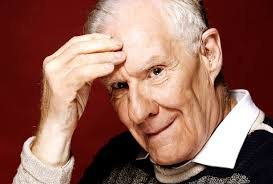
Badiou is is a... founder of the faculty of Philosophy of the Université de Paris VIII with Gilles Deleuze, Michel Foucault, and Jean-François Lyotard. Badiou has written about the concepts of being, truth, event, and the subject in a way that, he claims, is neither postmodern nor simply a repetition of modernity. Badiou has been involved in a number of political organisations, and regularly comments on political events. Badiou argues for a return of communism as a political force.
Introductory Comments
For Badiou, reality periodically erupts into something genuinely new - what he calls an "event." A mathematician stumbles onto a proof that rewrites the discipline; two strangers fall into a love that reorganizes their entire lives; a political uprising tears open what seemed historically inevitable; an artwork ar- rives that makes everything before it look a bit tired. Each of these belongs to one of four dis-tinct "truth procedures" - science, love, politics, and art - and each pursues truth by its own internal logic, answerable to no outside author- ity. A love affair is not validated by a scientific experiment, and a revolutionary political mo- ment is not judged by aesthetic criteria. These four domains are sovereign in their own territo- ries, like four brilliant eccentrics who happen to share a house but keep very different hours.
Yet Badiou insists truth does exist, against the postmodern habit of dissolving it into mere perspective or power. The catch is that no sin- gle procedure holds the whole of it. Mathemat-ics can tell you the deep structure of being, but not what it means to be faithful to someone else. Art can illuminate grief in ways that neuro- science cannot touch. Politics can tranform col- lective life in ways that no poem ever could. Philosophy's job, on this account, is not to com- pete with these procedures but to hold them together in conversation - a kind of elegant traffic management for the life of the mind.
Some of Badiou's Key Positions
Philosophy must address the four "truth proce- dures" (art, love, politics, and science) in a gen- uinely philosophical manner. This means that philosophers should respect the independence of the four procedures and the unique truths they pursue, while at the same time insisting on their own independence. Crucially, philosophy is also conditioned by these procedures - it does not simply observe them from outside, but is shaped by the truths they generate.
Philosophy should approach these procedures from its own unique vantage point and with its own terminology: meta-politics rather than politics; ontology rather than science - where ontology is identified with mathematics itself, specifically set theory, as the very structure of being. When philosophy does this, it does not replace or negate the truths of the four proce-dures, but adds its own theoretical perspective.
All this is to say that - despite what the postmodernists claim - truth does exist. We do have genuine knowledge of the world, but this knowledge is layered and multifaceted. Further- more, different types of truths emerge through different truth procedures and cannot be reduced to any single one of them. All this is not to say that the four truth procedures coexist quietly and peacefully. Quite the con- trary, they often rupture and disturb, forcing genuine transformations in thought.
Place in the History of Ideas
Badiou's Place in History of Ideas
David R. Brockman: Badiou’s philosophy offers a powerful and robust framework for talking about discursive processes of inclusion and exclusion generally, and for illuminating the dynamics of those processes. Equally important from a theological standpoint is the fact that Badiou’s framework, unlike the various post- modern discourses, allows us to speak of uni- versal truth, though that truth is intrinsically multiple and (in Badiou’s terminology) incon- sistent. Furthermore, the Badiouan approach affirms the possibility of transformative encounter with universal truth.... In other words, Badiou’s philosophy is both realistic and optimistic. It recognizes the constructed and contingent nature of the historical situations in which we find ourselves. Yet it also refuses to descend into relativism….
Roger Scuton: There is no evidence that I can find in [Badiou's] Being and Event that the author really understands what he is talking about when he invokes (as he constantly does) Georg Cantor's theory of transfinite cardinals, the axioms of set theory, Gödel's incomplete- ness proof, or Paul Cohen's proof of the inde- pendence of the continuum hypothesis. When these things appear in Badiou's texts it is always allusively, with fragments of symbolism de- tached from the context that endows them with sense, and often with free variables and bound variables colliding randomly.
Random Thoughts on Badiou
If Badiou is right that the four pillars of truth (science, love, politics, and art) share no com- mon criterion of truth whatsoever, on what grounds do we honor all four with the same prestigious word? "Truth" begins to feel less like a concept and more like a family crest hung over four very different houses. We tend to think genuine truths - wherever they appear - involve some shared minimum: a fit with reali- ty, a resistance to wishful thinking, an answer-ability to something beyond the subject's own enthusiasm. Badiou's answer is, roughly, that all four pillars share a formal structure: fidelity to an event that ruptures the established order. But doesn't "fidelity to an event" sound suspi-ciously like fidelity to whatever happened to move us deeply last Tuesday? Is that truth?
Moreover, saying truth is multifaceted is appealing - even obvious - but Badiou wants something stronger: that each facet is sealed off, governed by its own evental logic, with philosophy gently arranging the seating chart. Yet in practice the facets leak. Scientific truths reshape ethical and political ones; love is illumi-nated (and sometimes deflated) by biology and history; political truths are tested against empirical consequences nobody voted for. A picture in which the domains never genuinely correct one another or share insights with one another is tidier than the world deserves - and a good deal less interesting.
Adorno (Though capitalism is oppressive, it is also robust and adaptable.)
Bolzano (The nature and meaning of truth is complex and multifaceted.)
Hegel (History is largely a matter of conflict or ruptures within the status quo.)
James (Though truth is real. It exists in the context of metaphysical pluralism.)
Marx (From each according to his ability, to each according to his needs.)
Plato (Ontology should be modeled on the discipline of mathematics.)
Quine (Sets or collections are required abstract objects in science and math.)
Sartre (Existence precedes essence: Humans GIVE meaning & purpose to life.)
Thinkers with opposing positions:
Condorcet (Civilization inevitably leads to progress in morality & justice.)
Democritus (Since perceptions disagree, truth does not exist or is not evident.)
Derrida (Truth is relative and contextual - not objective and autonomous.)
Hayek (Only free market capitalism is consistent with freedom & democracy.)
James (Truth is merely that which works or proves useful in our endeavors.)
Popper (The search for truth should be completely fact-based and objective.)
Ruskin (Truth, beauty, and religion are inextricably bound together.)
Russell (Language is ultimately dependent upon a layer of atomic facts.)
What others said about Badiou
Peter Hallward: Badiou’s most fundamental principle is... simply the belief that radical change is indeed possible….
Hollis Phelps: … Badiou claims that truths can be produced in four domains: art, science, politics, and love. Philosophy, in this sense, does not produce truths but, rather, thinks them and their interrelation.
Robert Michael Ruehl: Badiou examines the mathematical developments of set theory found in the work of Georg Cantor, Ernst Zermelo... and Paul Cohen, and integrates them into his own philosophical system. He argues that set theory shows that there is no transcendent unity to the world - no "transcendent oneness" - nor is there a unity in the material realm.
Peter Hallward: Badiou is... one of the most... original philosophers working in France today and perhaps the only serious rival of Deleuze and Derrida for [the] unavoidable title of "most important contemporary French philosopher."
James Alexander: A lot of Badiou is rubbish. There is nothing to be done with it except laugh.
Roger Scuton: [For much of Badiou's ontology,] no proof is clearly stated or examined, and the jargon of set theory is waved like a magician's wand, to give authority to bursts of all but unintelligible metaphysics.
Stuart Jeffries: Badiou's philosophy of the subject is an extrapolation of Sartre's existentialist slogan "Existence precedes essence" and incorporates a communist hypothesis that Althusser might have liked. It's also a rebuke to postwar and often postmodern French philosophers such as Derrida, Lyotard... and Foucault with whom he argued and all of whom he has outlived.
Paul Austin Murphy: Alain Badiou is a Platonist. Or, more accurately, he’s a mathematical Platonist. This isn’t to say that Badiou expresses his Platonism in precisely the same way in which other Platonists have done so in the past.
Schools: Continental Philosophy, Dialectical Materialism, Marxism, Platonism, Post-structuralism, Western Marxism
Main interests: Alienation, Art and Aesthetics, Democracy, Desire, Fact–value distinction, Freedom, History, Human Will, Language, Law, Literary theory, Literature, Logic, Love, Mathematics, Metaphysics, Music, Personal Identity, Political Activism, Political Theory, Politics, Power, Psychoanalysis, Religion, Revolution, Science, Set Theory, Social Criticism, Social Philosophy, Tragedy, Will