Sextus Empiri. (c. 160 - c. 210)
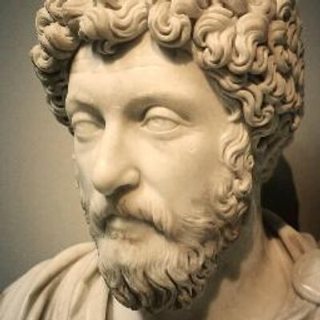
Open Sextus Empiri.'s interactive page (graphs of influences, similar and opposing positions, and quotes)
Background
Sextus Empiricus
Born: c. 160
Died: c. 210
Residence: He has been variously reported to
have lived in Alexandria, Rome, or Athens.
Era: Ancient philosophy
Region: Western philosophy
School: Pyrrhonism, Empiric school, Scepticism
Influences: Pyrrho, Timon of Phlius, Agrippa,
Aenesidemus, Herodotus of Tarsus, Carneades,
Arcesilaus, Asclepiades of Bithynia
Influenced: Michel de Montaigne, Descartes,
David Hume, Edmund Husserl, Hegel, Nassim
Taleb, Friedrich Nietzsche, Pierre Bayle, Blaise
Pascal, Pierre-Daniel Huet, François de La
Mothe Le Vayer, Michel Onfray
From Wikipedia
Sextus Empiricus was a Greek Pyrrhonist philoso- pher and Empiric school physician with Roman citizenship. His philosophical works are the most complete surviving account of ancient Greek and Roman Pyrrhonism, and because of the arguments they contain against the other Hellenistic philoso- phies, they are also a major source of information about those philosophies. As a skeptic, Sextus Empiricus raised concerns which applied to all types of knowledge. He doubted the validity of induction long before... David Hume….
Introductory Comments
For a man who wrote so much about how little we can know, Sextus Empiricus left us suitably little to know about himself. We can't even pin down when he lived - estimates wander anywhere from 100 CE to the mid-third century - and we can't agree on where, either. Alexandria, Rome, Athens: take your pick, or take all three. His name offers only teasing hints. "Sextus" suggests Roman citizenship, and "Empiricus" points to the empiric school of medicine. On that last clue historians finally nod in unison: Sextus was a Roman physician. Beyond that, the great skeptic has slipped into a fog of uncertainty.
And what a fitting fog it is. A philosopher who urged us to suspend judgment on nearly everything would surely be amused to find posterity suspending judgment on him. There is even a certain professional logic to it. A good doctor, after all, ought to be a bit of a skeptic - quick to question symptoms rather than rush to a diagnosis, and quick to ask one more question before reaching for the cure. The same wariness keeps medicine itself honest: if no one doubts the established theories, how could treatment ever improve? One hopes Sextus brought to his doubting the same deftness a good physician brings to the scalpel - knowing exactly when to cut and when to leave well enough alone. For, as Voltaire is said to have quipped, "the art of medicine often lies in amusing the patient while nature does the curing."
Some of Sextus Empiricus's Key Positions
All our reasoning can be doubted, however "rigorous" it claims to be. Even careful, empirical conclusions are open to doubt, for they rest, like all arguments, on premises that are simply assumed and on impressions that are inherently subjective and unstable.
We should therefore suspend judgment on virtually all matters, neither affirming any belief as true nor denying it as false. This suspension extends even to the question of whether true knowledge is possible. Such suspension leads, as Pyrrho held, to ataraxia - freedom from mental disturbance. Since beliefs, especially ones about what is good or bad, desirable or undesirable, are a source of inner turmoil, letting go of them brings peace of mind.
This is not the dogmatic claim that knowledge is impossible. To assert "nothing can be known" would itself be a knowledge claim, and so a self-contradiction. The skeptic makes no such assertion; he merely reports, of each matter in turn, "I do not know" - and says the same even about the possibility of knowledge itself.
Nor is so sweeping a suspension of judgment unlivable. One can act without holding beliefs, guided by habit and by the way things appear. And one may still speak freely of those appearances, provided one acknowledges that such talk reports only how things seem, not how they are.
Place in the History of Ideas
Sextus Empiricus's Place in History of Ideas
Johann Erdmann: In the larger work of Sextus his attacks on logic, physics, and ethics are especially important for the proper appreciation of his skepticism. The first of these is reproached with the untenableness of all criteria of truth and the uncertainty of the syllogistic method, the second with the difficulties and contradictions in the conceptions of space and time. Ethics finally have to endure an enumeration of the differences of moral precepts in different nations, from which the result is said to be, that there is nothing good or bad by nature and for all. In short, the result arrived at is complete subjectivism in theory and practice.
R. J. Hankinson: To look for consistency [in Sextus], then, in the ordinary philosophical way, is to mistake, radically, the skeptical enterprise.… The [skeptical] arguments work not by persuading people of the truth of their conclusions, but by inclining them away from rashness and dogmatism, by... causing them to abandon their troublesome beliefs.
Julia Annas and Jonathan Barnes: Many of Sextus’ arguments are feeble - Sextus says so himself. But to say that an argument is "feeble" is no criticism of it - any more than it is a criticism of aspirin to say that it is not a strong drug. An argument may be too feeble to cure your intellectual distempers, and yet quite powerful enough for the milder derangements.
Random Thoughts on Sextus Empiricus
Sextus drew a sharp line between two camps of doubters. The Academic skeptics, he charged, had quietly become dogmatists of a backhanded sort: they held that truth can never be discovered. But that, the "true" skeptic replies, is itself a truth claim - and a self-refuting one, since it confidently asserts the very kind of knowledge it denies. The genuine skeptic claims far less. He does not say truth cannot be found; he says only that, so far, it hasn't been. Perhaps one day it will be - who knows? In the meantime, he suspends his beliefs and simply gets on with living, guided by habit, custom, and the way things appear.
But is such a life actually possible? Can a person really tell himself, "It seems to me that such-and-such is the case, so I'll act as if it is - without ever believing that it is"? It's a curious state of mind, more like watching one's life from the bleachers than living it on the field. There seems to be a truck barreling down the street; I can't claim to know it as a fact, but as a rule of thumb I'll let the apparent truck pass before crossing. Workable enough at the curb. Yet stretch that perpetual as-if, might-as-well posture across an entire life - where nothing is ever quite real and all one has are habits and impressions - and the mind might rebel. Indeed, one might feel tempted to step in front of that seeming truck just to bring the whole flickering show to a close. But, of course, a true skeptic would hesitate - wondering, along with Hamlet, if in death perchance the dream goes on.
Influences
Sextus Empiri. was influenced by: Aenesidemus, Agrippa, Arcesilaus, Asclepiades, Carneades, Herodotus of T., Pyrrho, Timon of P.
Sextus Empiri. influenced: Bayle, Descartes, Hegel, Hume, Husserl, Le Vayer, Montaigne, Nassim Taleb, Nietzsche, Onfray, Pascal, Pierre-D. Huet
Similar and opposing positions
Thinkers with similar positions:
- Bayle (Reason is a guide that too often leads one astray. Be skeptical.)
- Cavell (Skepticism reflects the fundamental limits of human knowledge.)
- Democritus (Since perceptions disagree, truth does not exist or is not evident.)
- Gassendi (No one viewpoint captures all truth. Some skepticism is always good.)
- Hamann (Faith and belief, rather than knowledge, determine human actions.)
- Montaigne (Be a little skeptical when considering all views, even one's own.)
- Protagoras (No absolute truth exists - only what people deem to be the truth.)
- Pyrrho (Avoiding dogmatic beliefs frees us from mental disturbance.)
- Pyrrho (Given our human limitations, we can never be sure of what is true.)
Thinkers with opposing positions:
- Althusser (Knowledge springs more from reflection than from experience.)
- Bacon, Francis (All real knowledge rests upon observed facts & scientific method)
- Descartes (Everything we perceive both clearly and distinctly must be true.)
- Leibniz (Reason enables us to pass beyond the relative and subjective.)
- Nussbaum (Truth exists and reason is our best tool for finding it.)
- Pascal (Skepticism is a product of the devil and we must fight against it.)
- Popper (The search for truth should be completely fact-based and objective.)
What others said about Sextus Empiri.
- Charles Brittain: Sextus's… arguments and concepts were a major influence on Renaissance and early modern philosophers.
- Anthony Gottlieb: Many of the most interesting intellectual positions of the past four centuries may be seen as responses to [Sextus' skeptical] arguments, either as attempts to rebut them or as... attempts to come to terms with them.
- Anthony Kenny: Sextus' works are of value to us, not because they give a new turn to the skeptical discussion, but because they are a treasury of information about the reasoning of earlier and more original skeptics. He brought to an end the skeptical tradition he chronicled.
- Mary Mill Patrick: [Sextus'] Pyrrhonism as a whole lacked the essential element of all philosophical progress, which is a belief in the possibility of finding and establishing the truth in the subjects investigated.
- Michael Frede: For modern readers, the most interesting fact about Sextus's brand of scepticism is perhaps that it is meant to be therapeutic.
- Robert Solomon: The Skeptics' insistence on the suspension of belief was above all a form of therapy, a way of detaching oneself, a way of achieving [serenity]. It was quite different, therefore,... from [modern] skepticism....
- Anthony Gottlieb: Sextus says that Skeptics happily "go along with" everyday appearances in the way that a child unthinkingly follows his guardian.... [Most of our everyday] behavior constitutes a more or less... automatic response to appearances..., just as a cow unthinkingly eats grass. Judgment does not come into it, so there is no judgment to suspend.
- Archibald Alexander: The defect of Sextus is the assumption that, because of this relativity [of knowledge], the mind of man is incapable of ascertaining truth or of knowing what things really are.
Schools: Pyrrhonism, Quietism, Skepticism
Main interests: Epistemology, Free/Unfree Will, Medicine
Sextus Empiri.'s answers to philosophical questions
Epistemology
"[I]t is experience which more than anything else leads men to belief." However, we must not confuse belief with knowledge.
Though our senses "are naturally and necessarily false or deceptive, we say that one must live in accordance with them."
We in fact do not really know anything. Yet we can get through life quite well by relying on impressions, habits, and customs.
Even empirical conclusions can be doubted since they must rest on assumed premises and subjective impressions.
We should neither affirm as true nor deny as false any belief. Instead, we should simply admit that we do not know.
We can live without any firm beliefs, by simply relying on habits and acting in accordance with appearances.
Philosophy
skeptical philosophy shows how suspending judgment on all matters leads to peace of mind.
Psychology
"skepticism [is theapeutic in that it] relieved two terrible diseases that afflicted mankind: anxiety and dogmatism."
Suspending judgment on what is desirable and what is undesirable will in turn free us from all mental disturbance.