Moritz Schlick (1882 - 1936)
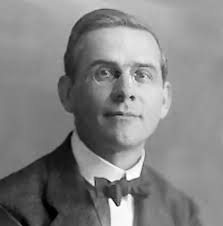
Open Schlick's interactive page (graphs of influences, similar and opposing positions, and quotes)
Background
Moritz Schlick
Born: April 14, 1882 in Berlin, German Empire
Died: June 22, 1936 (aged 54) in Vienna, Austria
Alma mater: University of Heidelberg,
University of Lausanne, University of Berlin
Schools: Analytic philosophy, Logical Positivism,
Vienna Circle
Main interests: Logic, philosophy of science,
science, philosophy of mathematics, ethics,
epistemology
Influences: Ernst Mach, Ludwig Wittgenstein,
Bertrand Russell, Max Planck, Albert Einstein,
Rudolf Carnap
Influenced: Albert Einstein, Kurt Gödel, Herbert
Feigl, Albert Blumberg, Ludwig von Bertalanffy,
Rose Rand, Hans Hahn, Otto Neurath, Rudolf
Carnap, Friedrich Waismann, Karl Popper, Hans
Reichenbach
From Wikipedia
Schlick was a German philosopher, physicist, and the founding father of logical positivism and the Vienna Circle…. Schlick offered one of the most illuminating definitions of positivism as every view "which denies the possibility of metaphysics." Ac- cordingly, he [dismissed] metaphysics as the doc- trine of "true being," ... a doctrine which obviously "presupposes that a non-true, lesser or apparent being stands opposed to it." [In constrast, positivism] holds that the only true beings are givens or constituents of experience.
Introductory Comments
Schlick, a physicist trained under Max Planck who went on to preside over the Vienna Circle, held that a statement means something only if we can say how it would be verified - what observations would show it to be true. The one exception is the truths of logic, which are true by form alone. Every other claim had to cash out in experience or be exposed as nonsense. His quarry was not the poet or the novelist but the metaphysician. This was the philosopher who speaks with perfect confidence about the Absolute, the Thing-in-Itself, or Being qua Being, without once saying what observation could bear on any of it. In Schlick’s household of ideas, metaphysics was philosophy’s embarrassing uncle: verbose, self-important, and unable to tell anyone anything about the world. He does not make meaningful statements. He merely effuses.
Schlick diagnosed metaphysics's problem as confusing knowing an experience with living through it. Living through experience is the business of art. Poetry and music enrich experience without asserting anything about the world, so art is not failed science. It needs no verification because it offers nothing to verify. Schlick was even willing to grant metaphysics a certain dignity on these terms, as a kind of poetry written in concepts. As long as poetry made no claims about the world, he was content to let it wax poetic. Whether poets are content with the bargain is another matter. Are they really willing to say, in effect, that they have nothing to say?
Some of Schlick's Key Positions
The physical sciences, grounded in observation and disciplined by mathematics and logic, are the model of genuine knowledge. Philosophy is not one of them. It is not a body of doctrine but an activity: the clarification of meaning. Science determines whether propositions are true; philosophy determines what they mean.
The meaning of a proposition is the method of its verification. To understand a claim is to know what observable state of affairs would make it true. Verification need only be possible in principle: a statement about the far side of the moon was meaningful long before anyone could look.
Metaphysics fails this test. Its claims about the Absolute or a reality behind appearances are neither tautologies nor verifiable, and so are not false but meaningless.
Many of philosophy’s oldest quarrels are pseudo-problems. No possible experience could settle the dispute between realism and idealism over whether the external world exists independently of perception, so neither side asserts anything.
Epistemology keeps a legitimate role in examining the methods, validity, and scope of knowledge. Knowing differs from mere acquaintance. Experience supplies raw content, but knowledge fits that content into a system of concepts, recognizing the new as an instance of the known.
Place in the History of Ideas
Schlick's Place in History of Ideas
Otto Neurath: The Vienna Circle was a discussion group of philosophically interested specialists who came together in 1923 and from 1925 to 1936 met regularly once a week in an institute of Vienna University. These gatherings were conducted by Moritz Schlick, the physicist and philosopher who was appointed professor of the philosophy of inductive sciences in 1922. Over the years, members included... Rudolf Carnap, Kurt Godel, Karl Menger, Bela Juhos and others. There was no conscious aim of radically revising traditional views on the task and place of philosophy, but the members were on the whole well aware that current findings of research into the foundations of logic, mathematics and the natural sciences had important philosophic consequences. Among subjects for discussion were... the character of the basic propositions of empirical science, and the devising of a meta-language for the syntac- tic analysis of scientific language systems.
Ayer: [Schlick] agreed with Mach in rejecting psycho-physical dualism, arguing that to speak in mental or in physical terms was just to adopt one or other way of describing the same phe- nomenon, but tended to treat the phenome- non as physical, in some degree anticipating the current fashion of identifying mental occur- rences with processes in the central nervous system. This was another view which he was later to revise in favour of neutral monism.
Random Thoughts on Schlick
Suppose we accept Schlick’s picture of philosophy as science’s faithful handmaiden, tidying up conceptual confusions and sweeping metaphysical cobwebs from the corners of thought. What then becomes of Kierkegaard's anguished meditations, Schopenhauer's dark pessimism, or Nietzsche's will to power? Do we revoke their philosophical credentials and reissue them as poets? Schlick's framework points that way. Their insights would belong to living rather than knowing: they might deepen experience, but they assert nothing anyone could check.
Yet the handmaiden was less tidy than she looks. Schlick never declared ethics meaningless. He treated it as an empirical inquiry into what people actually value and why. And in 1927 he published an essay titled "On the Meaning of Life," finding that meaning in play, in activity pursued for its own sake. The man who swept out the cobwebs, it seems, kept a room for the big questions after all. So the real question is not whether philosophers may think about how to live, but what such thinking amounts to. If insight into human existence counts as knowledge, then verification is too narrow a test of meaning. And metaphysics itself? Perhaps it was never trying to describe the world the way physics does, but to make sense - visceral sense - of our place in it. In that case it is might be, as Schlick half-conceded, poetry written in concepts. Whether that counts as a demotion depends on what you think of poetry.
Influences
Schlick was influenced by: Carnap, Einstein, Mach, Ernst, Planck, Max, Russell, Wittgenstein
Schlick influenced: Bertalanffy, L., Blumberg, A., Carnap, Einstein, Feigl, Herbert, Godel, Hahn, Hans, Neurath, Otto, Popper, Rand, Rose, Reichenbach, Waismann
Similar and opposing positions
Thinkers with similar positions:
- Ayer (Language that is not verifiable is not true or untrue but meaningless.)
- Ayer (Metaphysics should play no role in responsible human discourse.)
- Carnap (Many philosophical questions abuse language and are meaningless.)
- Collingwood (Methods of the humanities are not like those of science.)
- Mill (Logic is not an autonomous discipline, but a branch of psychology.)
- Peirce (The truth about an event or thing is the totality of its consequences.)
Thinkers with opposing positions:
- Cassirer (Human expression, not just impression, forms human understanding.)
- Feyerabend (Scientific pursuits should be subjected to democratic control.)
- Green (The entire mental structure we call knowledge is a product of our mind.)
- Husserl (Positivism imports common assumptions into its "pure" experience.)
- Kant (Some a priori concepts must be presupposed in our everday experience.)
- Lacan (To survive one must be taken in by signs and be the dupe of language.)
- Lewis, C.I. (It's only within experience that anything can have significance.)
- Popper (Observations can't confirm scientific hypotheses. They can only falsify)
- Quine (Scientific knowledge can't be reduced to a series of sense-data claims.)
- Vaihinger (If beliefs are useful, we should accept them as if they were true.)
What others said about Schlick
- David Rynin: [For Schlick] the moral philosopher seeks only to understand moral phenomena, moral conduct - not to guide or create them.
- Thomas Oberdan: Although Moritz Schlick made a lasting mark in the philosophical memory by his role as the nominal leader of the Vienna Circle of Logical Positivists, [he had] a broad range of philosophical achievements.
- Ayer: Perhaps the most remarkable feature of Schlick's book ["General Theory of Knowledge"] was that he anticipated Wittgenstein... in rejecting Kant's view that there could be such things as synthetic a priori truths and holding that all true a priori propositions, such as those of logic and pure mathematics, were analytic, or, in other words, tautological.
- David Rynin: Although... strongly motivated by the desire to... render philosophy more scientific in method and results, Schlick was sensitive to the whole range of problems of knowledge, human existence, and values.
- Béla Juhos: The problem of knowledge and its criteria had led Schlick to a further question: How is it possible to express knowledge linguistically?
- Thomas Oberdan: In the debates that flourished within the Vienna Circle he is famous for his commitment to the Principle of Verifiability and his defence of a correspondence theory of truth.
- Herbert Feigl: [Schlick gave] new impetus to the philosophical questings of the younger generation. Though many of his students and successors have attained a higher degree of exactitude and adequacy in their logical analyses of problems in the theory of knowledge, Schlick had an unsurpassed sense for what is essential in philosophical issues.
- Béla Juhos: ... Schlick held that the theses of [metaphysics] are just such sequences of signs put together in a way that violates the logical rules of language. For this reason metaphysics is to be denied the status of scientific knowledge.
Schools: Analytic Philosophy, Atheism, Behaviorism, Empiricism, Logical Atomism, Logical Positivism, Positivism, Vienna Circle
Main interests: Epistemology, Ethics, Free/Unfree Will, Logic, Mathematics, Science
Schlick's answers to philosophical questions
Metaphysics
"The moral freedom that the concept of responsibility presupposes does not stand in opposition to causality but [requires it]."
"The 'physical' [and the 'mental' do] not mean any particular kind of reality, but a particular kind of denoting reality...."
Because metaphysics by nature lacks an empirical foundation and a rigorous discipline, its claims are entirely meaningless.
Philosophy
"Philosophy elucidates.... In [science] we are concerned with the truth of statements, but in [philosophy with meaning]."
At heart, philosophy is the logical analysis of scientific statements. It requires an artificial use of language to avoid confusion.
Because the sciences are empirical and logically rigorous, they are the disciplines most worthy of philosophy's elucidation.